
Blog Posts

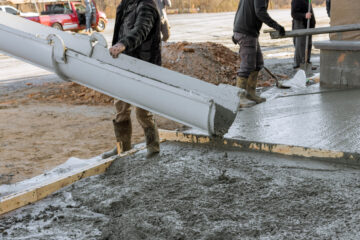
Pavement is being laid around new house with help of concrete mixing truck

Why the Same Concrete Mix Proportions Produce Different Results Across Plants 

Two plants run the same concrete mix proportions, same cement, same aggregate source, same water-cement ratio. One breaks well above the specified strength. The other barely clears it, and a superintendent is already asking why.  If you produce ready-mix concrete at more than one location, this is not rare. It shows…

Concrete Admixtures Meet Real-Time Data: A New Standard for Jobsite Performance

Concrete admixtures are chemical additions to a mix that modify workability, set time, strength development, or durability. They are standard on almost every project. But their performance between the plant and the pour has historically been invisible. What happens to slump during a 90-minute haul has always been…

Close-up of worker's hand operating machinery in concrete production plant, ensuring smooth operation and quality control

What Is a Concrete Cylinder Break Machine? 

What is a concrete cylinder break machine, and is destructive cylinder testing still necessary to verify in-place strength?  A concrete cylinder break machine, also called a compression testing machine, applies a controlled axial load to a cured concrete cylinder until it fails, producing the compressive strength value used for…

Aggregate Optimization: The Biggest Untapped Lever in Concrete Mix Design

Walk into any ready-mix plant, and you’ll find the same paradox. Producers fine-tune cement to the kilogram, dose admixtures to the milliliter, and debate supplementary materials for hours, yet the single largest component of the mix, the one bought by the truckload, is still managed largely by feel….

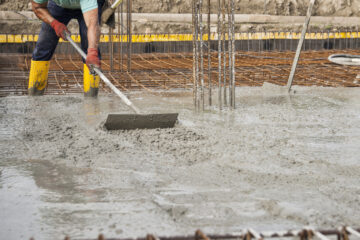
Workers pouring and finishing concrete surface flooring

Concrete Temperature Range: What’s Safe During Placement and Curing?

What is the acceptable concrete temperature range during placement and curing?  A ten-degree swing in concrete temperature can be the difference between a slab that cures on schedule and one that cracks, sets too fast, or never reaches its design strength. Most contractors know that extreme weather is a problem. Fewer know exactly where the safe concrete temperature range starts and ends, or what happens once you cross…

concrete-pour-at-construction-site-with-yellow-buc-2026-01-11-09-16-01-utc

What Is a Concrete Slump Test and What Does It Actually Tell You?

Concrete slump is one of the most familiar measurements in the construction industry. Whether at a ready-mix plant, a bridge project, a high-rise development, or a residential slab pour, one of the first questions asked before placement is usually simple: “What’s the slump?”  Despite being one of the…

Concrete Cure Time: How Long It Takes and How to Monitor Strength in Real Time

Concrete does not dry. It cures. That distinction matters more than most people on a jobsite realize, and misunderstanding it is one of the most common sources of costly delays, structural risk, and avoidable rework in concrete construction. Industry-wide, rework already eats an estimated 5% of total project…

SmartRock - Roxi Scan - Break Data-Thumbnail

Introducing Roxi™ Scan in SmartRock® Web: Improving Your Document Management 

Concrete break data management has always meant working across too many places at once. Lab reports land in inboxes, results get entered manually into spreadsheets, and your live SmartRock® sensor data tells one part of the story while your cylinder break results sit somewhere else entirely. Connecting those dots…

abstract-cables-on-concrete-surface-in-daylight-2026-01-09-14-43-25-utc-scaled.jpg

K-Type Thermocouples in Concrete: Accurate, But Are They Still Enough? 

If you have ever lost a temperature reading mid-pour because a wire got cut, you already know the real problem with thermocouples is not accuracy.  K-type thermocouples still measure temperature well. But modern projects need more than measurement, they need reliable, continuous, and accessible data. ACI 305R, ACI 306R, mass concrete thermal…

Matured man factory operator sitting at the table and working on desktop computer

Which Concrete Quality Control System Is Right for Your Ready-Mix Operation? 

Most ready-mix quality control (QC) decisions happen without real-time data behind them. New orders are dispatched every few minutes, requirements change on the fly, and by the time an issue surfaces, it has already left the plant. The platforms meant to manage this workflow have not kept pace with the pace of operations, which has…

Corrosion damage on a concrete bridge on a busy thoroughfare in Frankfurt.

Corrosion Mapping Equipment for Reinforced Concrete: What the Data Actually Shows 

Corrosion mapping equipment measures the electrochemical state of reinforcement across a defined survey area and presents the results as spatial contour maps. The gap between what these maps reveal and what a visual inspection finds is not a margin of error. It is the difference between detecting active corrosion before structural damage begins and responding to…

Aerial view of cement factory under construction with high concrete plant structure and tower cranes at industrial production area. Manufacture and global industry concept.

How Much Is Overdesigned Concrete Actually Costing Your Plant? A Mix Design Cost Analysis 

For ready-mix producers, materials are the single largest cost in the business, accounting for approximately 56% of total production costs according to the NRMCA Performance Benchmarking Survey. And yet, industry data shows that concrete mixes are statistically overdesigned in cementitious content by more than 20% on average. Roughly half of that overdesign…

Concrete pouring into reinforcement mesh

What’s the Ideal Temperature to Pour Concrete?  

Concrete gains strength through hydration, the chemical reaction between cement and water. Temperature controls the rate of that reaction from the moment water touches cement. Too cold and hydration stalls or stops. Too hot and it overshoots, locking in a weaker microstructure that no amount of curing will reverse. Understanding the…

Detailed view of reinforced steel rebar embedded in concrete, forming a grid structure for strength in construction foundations.

Post-Tensioned vs. Conventional Reinforced Slabs: A Structural and Field Comparison

When selecting between a post-tensioned vs. conventional slab, the system you specify affects span capability, material quantities, labor requirements, and long-term schedule performance. Getting that choice right requires understanding where each system performs well and where it introduces risk.  In this blog, gain an understanding of how post-tensioned…

Designed to Move Data Center Projects Faster

SmartRock® Long Range helps protect schedule and quality on data center construction. Get a FREE quote today!

We use cookies to provide you with a better experience, analyze site traffic and assist in our marketing efforts. By continuing to use this website, you consent to the use of cookies in accordance with our Privacy Policy Page.