


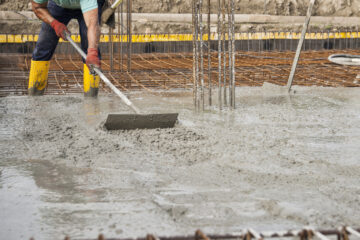
Concrete admixtures are chemical additions to a mix that modify workability, set time, strength development, or durability. They are standard on almost every project. But their performance between the plant and the pour has historically been invisible. What happens to slump during a 90-minute haul has always been a gap in the data.
In this blog, gain an understanding of what admixtures actually control, why that control breaks down in transit, and how real-time monitoring is closing the gap between batching decisions and field performance.
What Concrete Admixtures Do and What They Assume
Admixtures work by modifying specific properties of fresh or hardening concrete. The major functional categories are:
- Water reducers and superplasticizers: serve a dual function: they can either reduce water content while maintaining workability, or maintain water content while improving workability, depending on the dosing objective. Water-reducing agents held the largest share of the global admixtures market at 47.8% in 2025.
- Retarders: Slow the hydration reaction, extending the workability window for long hauls or large placements.
- Accelerators: Speed hydration, enabling faster strength gain in cold weather or fast-cycle formwork applications.
- Air-entraining agents: Introduce microscopic air voids to improve freeze-thaw resistance and workability.
Each of these works within a set of assumptions: a known temperature range, a controlled haul time, a predictable mixing history. When those conditions hold, admixture dosing decisions made at the plant are reliable. When they do not hold, results can diverge significantly from what was designed.
New to admixture chemistry or want a refresher on the fundamentals? Read Giatec’s Guide to Concrete Fundamentals!
Why Admixture Performance Degrades in Transit
Admixture effectiveness is not static from batching to discharge. Slump loss during transit is the most visible consequence.
Heat accelerates cement hydration and reduces the effectiveness of water reducers and retarders. According to ACI 305R, Guide to Hot Weather Concreting, an 11-degree Celsius increase in concrete temperature reduces slump by approximately 25 mm, a relationship first established by Klieger (1958). Mixing cycles add mechanical energy to the system. A truck that runs 60 to 90 minutes in summer conditions delivers concrete with a meaningfully different rheology than what left the plant.
Over-dosing admixtures at the plant to compensate for anticipated slump loss introduces its own risk: excess retarder can delay set unpredictably, and excess water reducer can affect air content and bleed behavior. The problem is that dosing decisions are made before the transit conditions are known. That is the core of the performance gap.
Traditional Slump Testing Cannot Capture In-Transit Variability
A manual slump test is a point-in-time measurement taken at discharge. It tells you the workability of the concrete at that moment and nothing about how it got there.
Traditional slump testing is manual and cannot assess concrete in transit. There is no way to evaluate workability between batching and unloading using conventional methods. If a load arrives out of spec, the test confirms the problem but provides no data on when the degradation occurred, at what rate, or whether it was driven by temperature, over-mixing, or delayed haul.
Want a deeper look at what happens to concrete between batching and discharge? Read our blog From Plant to Pour: The Concrete Monitoring Journey!
This matters operationally. A rejected load costs time and material. More importantly, decisions about whether to add water on site, whether to accept a marginal load, or whether to flag a pattern of slump loss require data that a single discharge test cannot provide. The 60 to 90 minute window between batching and pour is where admixture performance lives, and it has been a blind spot.
Real-Time Monitoring Changes What Operators Can See
Real-time in-transit monitoring closes the gap that manual testing leaves open. Giatec MixPilot™, uses a wireless hydraulic pressure sensor paired with a proprietary magnetic drum sensor to calculate slump continuously during transit. Data on slump, temperature, and volume transmits to a wireless gateway where Giatec’s patented algorithms automatically calibrate results, delivering live readings throughout the haul.
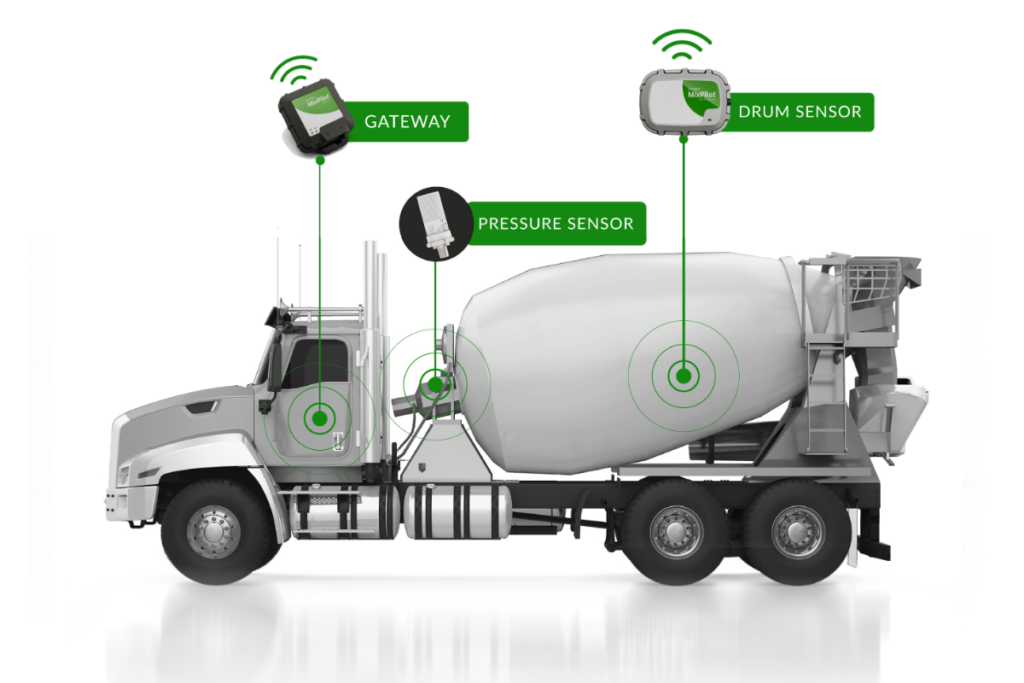
The operational value is in what becomes possible before discharge. An operator can see slump degrading at kilometer 30 of a 50-kilometer haul. A dispatcher can flag a load before it reaches the gate rather than after the driver has waited in a queue. A QC manager can identify that loads on a particular route in afternoon heat consistently lose 40 mm of slump and adjust the dosing protocol for that run.
After deploying MixPilot across more than 360 trucks, Tim Hurtack, VP of Quality Control at Silvi Materials, noted that the accuracy of the data and depth of reporting completely changed how the company thinks about concrete quality control. The decision to expand to a full SmartMix implementation was driven by the integration of real-time truck data with mix design and QC workflows. No competing solution could match that combination.
Mix Design Optimization Requires Closing the Data Loop
Real-time transit data is useful in the moment. Its longer-term value is in the pattern it reveals over time.
Giatec SmartMix™ , an AI-powered mix design platform, connects in-transit performance data from MixPilot with the mix design parameters that produced it. This allows QC teams to correlate admixture dosing decisions with actual field outcomes across dozens or hundreds of deliveries. Over-dosing patterns become visible in the aggregate. Under-dosing events that resulted in rejected loads can be traced back to specific conditions.
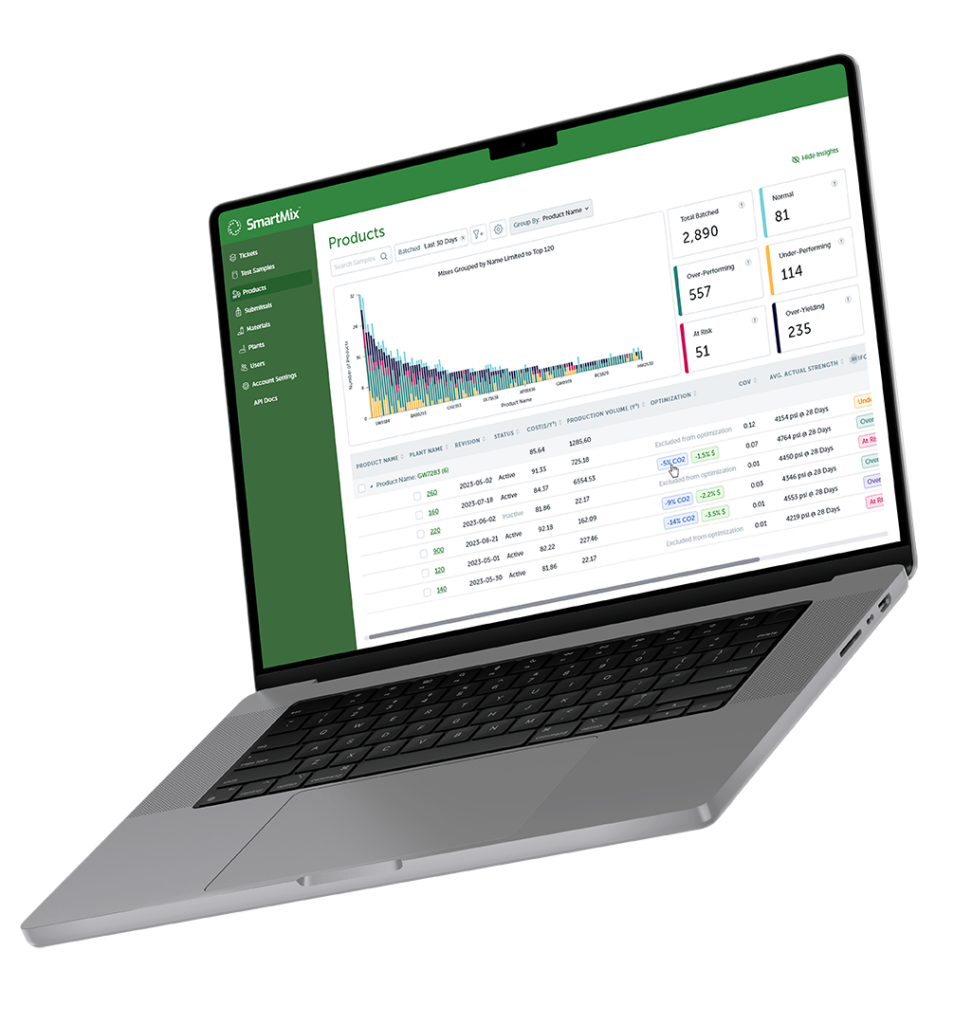
The practical result is a tighter dosing range. Admixture waste from over-dosing is a direct cost item: superplasticizers typically add $2 to $8 per cubic meter depending on type and dosage rate, and systematic over-dosing compounds that cost across an entire season. Under-dosing carries a different cost: rejected loads, added water on site, and non-compliance risk. SmartMix’s integration with transit data allows producers to narrow the dosing window based on real delivery history rather than conservative estimates.
This is the data flywheel. Every delivery generates performance data. That data refines dosing models. Better models reduce both waste and rejection rates.
See how Trio Ready-Mix used SmartMix to tighten dosing decisions and connect mix design to field performance. Read the full case study here!
What Real-Time Admixture Visibility Means for Operations
For QC managers and technical directors, the operational implication is direct. The decisions that have been made on the basis of batch records and discharge slump tests can now be made on the basis of continuous in-transit data.
Dosing protocols that were set conservatively because transit variability was unknown can be tightened. Load rejections that were accepted as an unavoidable rate can be traced to specific conditions and addressed. The carbon cost of over-dosing cementitious materials to compensate for uncertain workability retention can be reduced with data supporting leaner mix designs.
The global concrete admixtures market is projected to grow from $19.45 billion in 2025 to $28.13 billion by 2031. Producers operating in that market with real-time data on how their admixtures are performing in the field will have a measurable advantage over those still relying on point-in-time measurements.
When Chemistry and Digital Monitoring Converge
The gap between admixture chemistry and digital monitoring is where concrete quality variability has always lived. A producer working with a superplasticizer or retarder had no direct data connection between dosing decisions and in-transit performance. A general contractor receiving concrete had no visibility into what happened during the haul. These two domains operated independently, and that separation is a systematic source of quality risk.
When admixture expertise and real-time monitoring are combined, that gap closes. Dosing decisions can be informed by actual in-transit data rather than conservative estimates. Producers can trace rejected loads back to specific conditions rather than adjusting blindly. General contractors gain a direct line of sight into concrete performance before discharge, not after. The result is fewer surprises at the point of placement and a tighter feedback loop between plant decisions and field outcomes.
The Giatec and Sika partnership illustrates how this convergence is taking shape in practice. In June 2025, Sika made a strategic investment in Giatec, recognizing the value of pairing its admixture chemistry portfolio with Giatec’s digital monitoring platform. By March 2026, that relationship had developed into a full commercial partnership, deploying Giatec’s data-driven solutions across Sika’s global customer network. Ivo Schädler, Head of Construction at Sika, described the shared objective as helping the industry transition from reactive practices to proactive, data-enabled decision-making that improves quality, efficiency, and sustainability.
For ready-mix producers, this means the admixture products already specified can now generate performance data that feeds back into dosing decisions and mix design optimization. For general contractors, it means concrete arriving on site carries a verifiable in-transit performance record rather than a single discharge test result. The chemical layer and the digital layer are no longer separate.
Key Takeaways
- Concrete admixtures modify workability, set time, and strength development, but their effectiveness depends on temperature, haul time, and mixing conditions
- Water reducers and superplasticizers serve a dual function: reducing water content while maintaining workability, or improving workability without increasing water content
- According to ACI 305R, an 11-degree Celsius increase in concrete temperature reduces slump by approximately 25 mm, making in-transit variability a systematic risk
- Traditional slump testing captures a single point at discharge and provides no data on in-transit degradation
- MixPilot provides continuous slump, temperature, and volume data during transit, enabling intervention before discharge
- Real-time transit data connected to mix design platforms allows dosing protocols to be refined from actual delivery history
- Over-dosing admixtures carries a direct cost of $2 to $8 per cubic meter; data-driven dosing tightens that range
- Ready-mix producers and general contractors both benefit when admixture chemistry and digital monitoring operate as a single system
- The combination of in-transit visibility and mix design optimization reduces both rejected load rates and material waste
Conclusion
Concrete admixtures have always offered precise chemical control over mix performance. The limitation has been the absence of data between the plant and the pour. Real-time monitoring closes that gap by making in-transit behavior visible and connecting it to the dosing decisions that drive it. For plant managers and QC engineers, this means fewer rejected loads, tighter dosing ranges, and a direct link between field data and mix design. Managing admixture performance without in-transit data is managing the most variable part of the process with the least information.
Frequently Asked Questions
What are concrete admixtures and what do they control?
Concrete admixtures are chemical additions to a mix that modify specific properties of fresh or hardened concrete. The major types include water reducers, superplasticizers, retarders, accelerators, and air-entraining agents. Each targets a specific behavior: workability, set time, early strength, or freeze-thaw resistance. Their effectiveness depends on dosage, temperature, and the conditions of transit and placement.
Why do concrete admixtures behave differently in transit than at the plant?
Heat, time, and mixing cycles all degrade admixture effectiveness after batching. According to ACI 305R, an 11-degree Celsius increase in concrete temperature reduces slump by approximately 25 mm. Retarders lose effectiveness faster in hot conditions. Superplasticizers have a finite workability window. Dosing decisions made at the plant are based on estimated transit conditions, not measured ones, which is why performance at discharge can differ from design intent.
Can real-time monitoring improve admixture dosing decisions?
Yes. In-transit monitoring systems like MixPilot measure slump, temperature, and volume continuously during haul. This data allows QC teams to identify when and why slump loss occurs, correlate it with specific routes or conditions, and adjust dosing protocols based on actual delivery history rather than conservative estimates. Over time, this tightens the dosing range and reduces both waste and rejected loads.
What is the difference between lab-designed admixture performance and field performance?
Laboratory testing of admixture compatibility and dosage is conducted under controlled temperature and mixing conditions. Field performance introduces variables that bench tests cannot fully replicate: ambient temperature swings, variable haul times, drum rotation history, and batching tolerances. The gap between lab and field is where most admixture performance problems originate.
How does the Giatec and Sika partnership affect concrete producers and general contractors?
The partnership combines Sika’s admixture chemistry portfolio with Giatec’s real-time digital monitoring platform. For ready-mix producers, admixture products can now generate performance data that feeds directly into dosing decisions and mix design optimization. For general contractors, concrete arriving on site carries a verifiable in-transit performance record rather than a single discharge test result.
What does the concrete admixtures market growth mean for QC operations?
According to Mordor Intelligence, the global concrete admixtures market is projected to grow from $19.45 billion in 2025 to $28.13 billion by 2031, at a 6.34% CAGR. Growth is driven by demand for higher-performance and more durable concrete. As mix designs become more complex and performance specifications tighten, the cost of dosing errors increases. Producers with real-time data on admixture performance will be better positioned to meet tighter specifications without increased material cost.