


Two plants run the same concrete mix proportions, same cement, same aggregate source, same water-cement ratio. One breaks well above the specified strength. The other barely clears it, and a superintendent is already asking why.
If you produce ready-mix concrete at more than one location, this is not rare. It shows up in customer complaints, rejected loads, and QC teams reconciling data that should already match.
In this blog, you will learn why identical concrete mix proportions behave differently across plants, and how centralized data helps producers standardize performance without guesswork or blanket overdesign.
The Multi-Plant Consistency Problem
Customers notice first. A contractor calls to ask why the “same” mix from Plant 2 finished differently than the batch from Plant 1 last month. QA/QC teams end up defending a mix design that, on paper, should behave identically everywhere it is produced, when nothing on the batch ticket changed.

This is not only anecdotal. According to the 2025 NRMCA Quality Benchmark Report and our very own producer focus group research, we found that jobsite rejections doubled in a year when testing frequency hit a record high, across a sample of 49 producers representing 52 million cubic yards of production. More testing alone is not closing that gap. The report points to a shift in producer thinking, away from siloed plant-level tracking and toward connected, centralized systems.
Why Identical Concrete Mix Proportions Do Not Behave Identically
Concrete is not a fixed chemical formula the way a pharmaceutical compound is. It is a live material built from natural, quarried, and manufactured components, each with its own source-to-source variability. Research on concrete quality control has long shown that concrete carries a coefficient of variation of about 20%, compared to 6% to 10% for steel reinforcement. That gap alone explains why “the same mix” rarely behaves the same way twice, let alone across two different plants.
Four factors drive most of that plant-to-plant gap.
1. Raw Material Variability
Cement, aggregate, and supplementary cementitious materials are natural or manufactured products, not standardized chemical reagents. Cement fineness, particle size distribution, and clinker composition can shift between shipments, even from the same supplier. Aggregate moisture content, gradation, and surface texture vary by stockpile and by the weather the stockpile was exposed to that week.
Two plants sourcing from different quarries, different cement terminals, or even different silos at the same terminal are not working with identical raw materials, regardless of what the mix design specifies.
2. Batching Equipment and Calibration Differences
Scale calibration, moisture probe accuracy, and admixture dispensing systems age and drift differently at every plant. A batching system that is slightly out of calibration at one location introduces proportion errors that never appear on the batch ticket.
3. Environmental and Seasonal Conditions by Location
Ambient temperature, humidity, and haul time to the jobsite differ by plant location. These conditions affect hydration rate, slump loss in transit, and how quickly a mix gains early strength, all of which show up in break test results even when the mix design itself is unchanged.
4. Batching Sequence and Operator Practices
The order in which materials enter the drum, mixing time, and how consistently operators follow batching procedures all introduce variability. These are procedural, not chemical, but the strength results cannot tell the difference.
The Costly Response: Overdesigning to Compensate
Faced with this variability, most producers respond the same way: add more cement. It is the easiest lever to pull, and it works, at a cost.
Industry data confirms this is not an isolated habit. Giatec’s The Ready-Mix Quality Gap: An Industry Assessment found an average overdesign of 36% above spec across the industry, alongside a 17% rise in quality costs per cubic yard. That buffer is not a rounding error. It is real cement going into every load, at every plant, whether or not that specific batch needed it.
Overdesigning masks the underlying inconsistency instead of solving it. It raises the carbon footprint of every cubic meter poured, and it still does not explain to a customer why two plants running the same design produced different numbers in the first place.
Want to see how that overdesign and cost data break down across a typical production day? Download our assessment!
Why Spreadsheets and Manual Tracking Fall Short
Most multi-plant producers already know they have a data problem. The typical response is a shared spreadsheet, a folder of PDF break reports, or a QC technician who has memorized which plants tend to run hot or cold on a given design.
That approach breaks down as a company grows. Tomlinson Ready Mix, an Eastern Canada ready-mix producer, ran into exactly this wall. The team’s manual data management, physical folders and customized spreadsheets, could not keep pace as operations expanded, and staff spent more time entering and reconciling data than analyzing it.
Experience does not scale across plants, shifts, or new hires. Without a shared, structured dataset, every plant is effectively making decisions in isolation, even when they are producing the same design.
Centralized Intelligence: How Giatec SmartMix™ Standardizes Performance Across Plants
SmartMix is a mix management and optimization platform built to solve exactly this problem. Instead of each plant tracking performance in its own spreadsheet, SmartMix connects mix design and performance data from every location into one platform, so producers can compare plants side by side using the same dataset and the same analytics.
Powered by Giatec’s Roxi™ AI algorithm, trained on hundreds of thousands of concrete mix designs and tens of millions of cubic meters of real-world data, SmartMix identifies where a specific plant’s actual performance diverges from the design intent. Instead of assuming Plant 2 needs its own overdesigned buffer, QC teams can see the specific variable driving the gap and adjust with data instead of instinct. From there, teams can dig into the analytics with built-in visualizations, pull up the full revision history behind any mix to see what changed and when, and query the data directly through the third-party LLM their organization already uses.
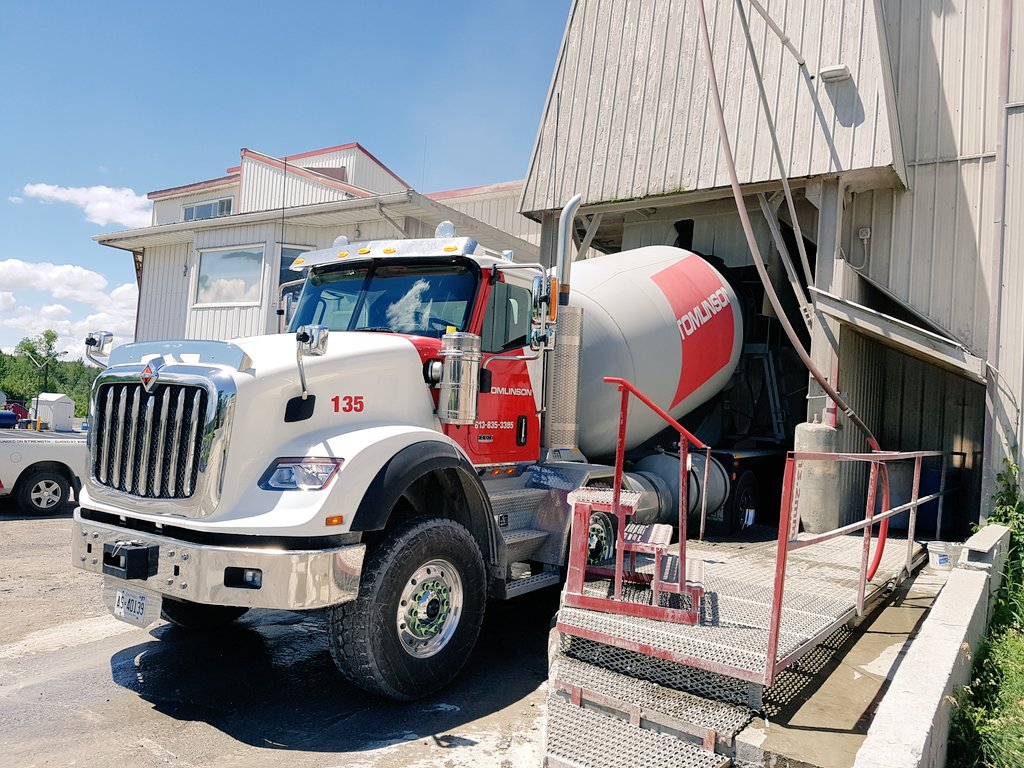
Tomlinson’s experience shows what this looks like in practice. After adopting SmartMix, the producer’s team confirmed that a mix originally overdesigned to guarantee early strength was actually reaching full design strength three days early. Using that insight, Tomlinson made three incremental mix adjustments over six weeks, cutting 35 kg/m³ of cement, an 8.8% cement reduction, and a 5% cost reduction, without sacrificing performance.
Tomlinson runs seven concrete plants, and the value did not stop at the one mix that started the investigation. The same centralized data that surfaced the overdesign in the first place now gives Tomlinson’s team a shared view across all seven plants, so a validated adjustment at one location becomes a starting point for the same mix family elsewhere, instead of a discovery that stays siloed at the plant that found it.
That is the value of a centralized intelligence layer. It turns plant-level variability from a recurring customer complaint into a solvable engineering problem.
What This Looks Like for Your Operation
If you manage mix design or QC across multiple plants, a few practices make the difference between chasing inconsistency and controlling it.
- Track mix performance by plant, not only by mix design, so location-specific patterns become visible instead of hidden inside an average.
- Log raw material source changes alongside strength results to catch correlation between supplier shifts and performance drift.
- Review batching calibration on a set schedule rather than only after a complaint.
- Centralize your data in one platform so every plant works from the same performance history instead of separate spreadsheets.
That centralized data only helps if your team can act on it. Look for a platform with built-in analytics dashboards, like SmartMix’s Smart Analytics dashboard, that allows your team to talk to the data directly, connectivity to your existing dispatch and telematics systems, and support for querying through the LLM your team already uses, so insight does not depend on pulling a specialist in every time a question comes up.

Conclusion
Identical concrete mix proportions do not guarantee identical results once raw materials, equipment, environment, and procedure enter the picture at each plant. Overdesigning every mix to compensate is expensive and does not fix the underlying inconsistency.
A centralized data platform gives you visibility into exactly where and why plant performance diverges, so you can make targeted adjustments instead of blanket ones.
Explore how SmartMix optimizes your operation. Watch our webinar!