
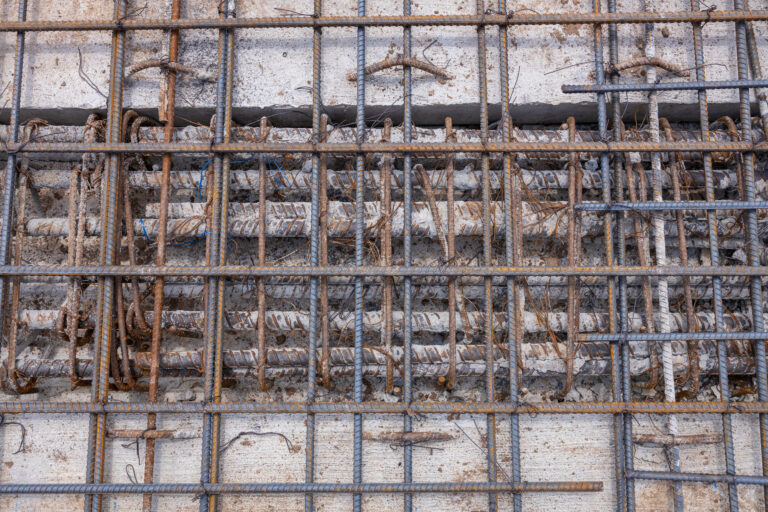
When selecting between a post-tensioned vs. conventional slab, the system you specify affects span capability, material quantities, labor requirements, and long-term schedule performance. Getting that choice right requires understanding where each system performs well and where it introduces risk.

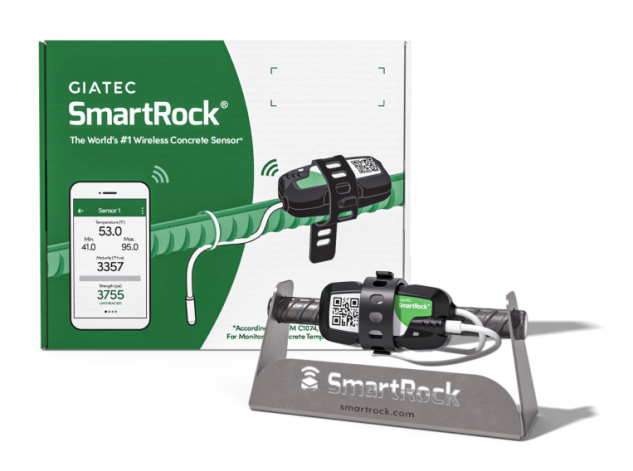
In this blog, gain an understanding of how post-tensioned and conventional reinforced slabs differ structurally, what variables drive the selection decision, and how field verification practices support both systems on real projects.
What Are Post-Tensioned and Conventional Reinforced Slabs?
A conventionally reinforced slab resists loads passively. Deformed steel rebar placed in the tension zones of the slab carries tensile stress after the concrete cracks under load. The system relies on cracking to mobilize rebar resistance, which is by design.
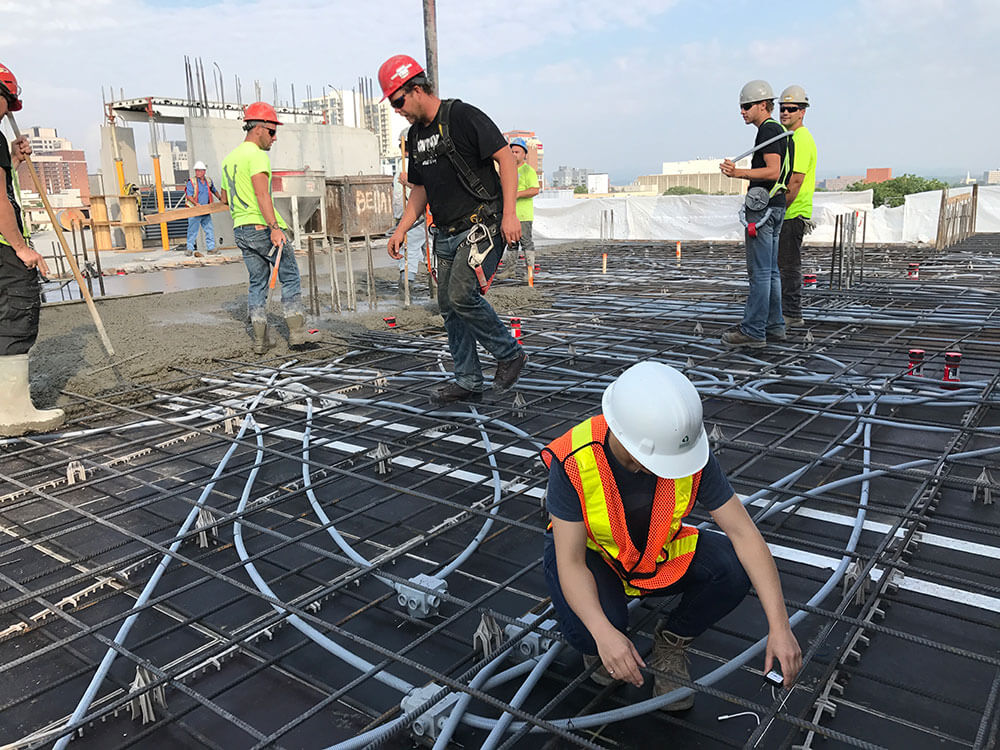
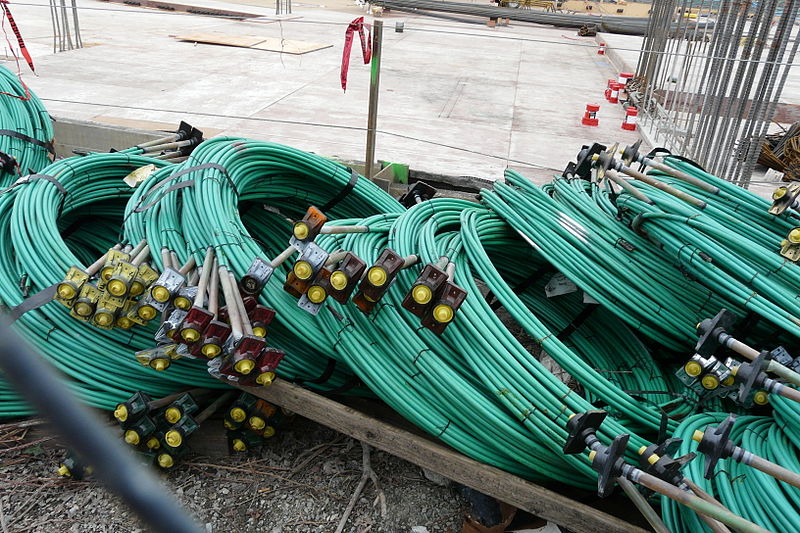
A post-tensioned (PT) slab introduces compressive stress into the concrete before service loads are applied. High-strength steel tendons, placed in ducts or encased in plastic sheathing, are tensioned against the hardened concrete using hydraulic jacks. This active precompression counteracts tensile forces and suppresses cracking under working loads.
Two tendon configurations are used in PT slabs. Bonded systems use grouted metal ducts, which provide a physical bond between the tendon and the surrounding concrete after grouting. Unbonded systems use individual strands coated in corrosion-inhibiting grease and enclosed in plastic sheathing, with no mechanical bond to the concrete. Bonded systems are more common in beam applications and bridges; unbonded systems dominate cast-in-place building slabs in North America.
A third configuration involves precast prestressed elements. Precast elements can be prestressed through either method. Pre-tensioning is the more common factory process. Tendons are stressed before casting and transfer their force into the concrete through the bond on release. Post-tensioning is used for large girders, segmental bridge components, and assemblies stitched together after erection. In building construction, double-tee slabs, hollow-core planks, and prestressed beams are typical applications in parking structures and long-span floor systems. Both configurations introduce connection and interface design requirements at structural joints that must be explicitly detailed.
Why the Choice Between the Two Systems Matters
The system you specify has direct consequences on how the building performs structurally, how it gets built, and what it costs over its service life.
Post-Tensioned Slabs
The structural efficiency of PT slabs translates directly into economic and schedule outcomes. PT slabs can span longer distances with less depth. It can cover 8 to 12 meters between columns with a slab thickness 20 to 30% less than an equivalent conventionally reinforced flat plate. Reduced slab thickness lowers floor-to-floor height, which, over a multi-story building, can recover additional floors within a fixed building envelope.
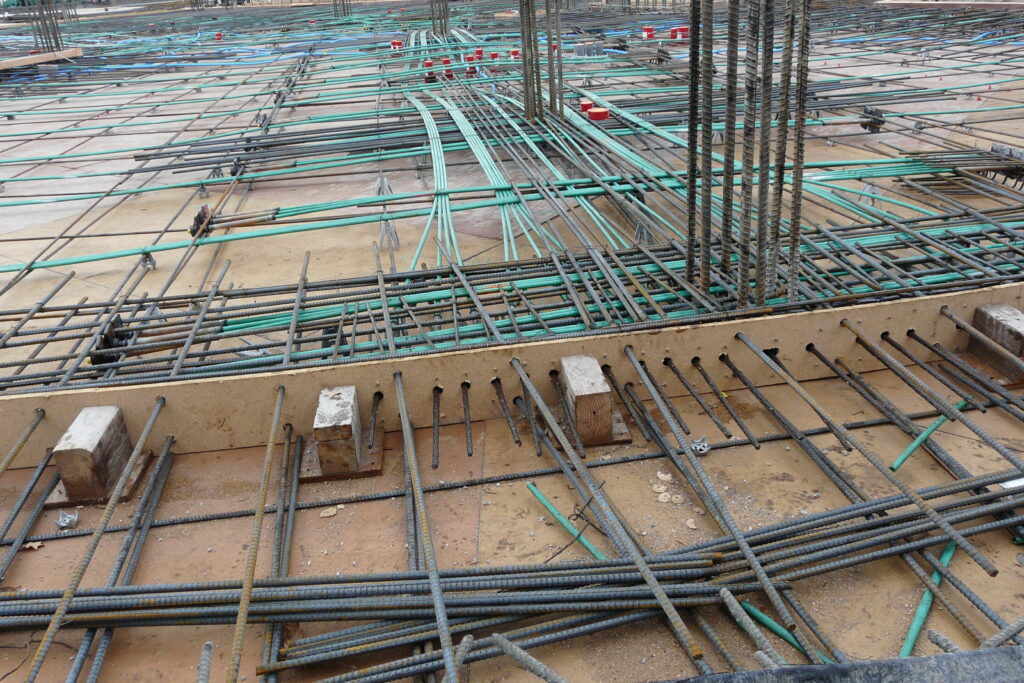
Material quantities shift accordingly. PT uses significantly less mild steel reinforcement but adds high-strength strand, anchorage hardware, and grouting or sheathing materials. Concrete volume is reduced due to shallower sections. Labor requirements also differ. PT requires specialized crews for tendon installation, stressing, and grouting that are not interchangeable with standard rebar placement labor.
Conventional Reinforced Slabs
Conventional reinforced slabs are simpler to construct. The detailing is widely understood, the labor pool is deep, and the sequencing is forgiving. For short spans, lower-rise buildings, or markets where PT labor and inspection expertise are limited, conventional systems often deliver better overall value. The tradeoff is structural efficiency: thicker sections, deeper floor-to-floor heights, and less span capability at equivalent depth.
Concrete Strength Requirements and Stressing Thresholds
Stressing operations in PT construction create hard schedule gates tied directly to in-place concrete strength. Tendons cannot be stressed until the concrete reaches a minimum compressive strength, typically 75 to 80% of the specified 28-day strength (f’c), as required by the engineer of record and consistent with ACI 318 provisions. Stressing before this threshold risks concrete crushing at anchorage zones and tendon pull-through.
In conventional slabs, strength milestones govern formwork removal and reshoring decisions. However, the consequences of a missed threshold are less immediate. A delayed strip is costly but recoverable. A premature stressing event can cause irreversible anchorage zone damage.
This distinction makes real-time strength verification more consequential in PT construction. Whiting-Turner Contracting Company used SmartRock® wireless maturity sensors on a remote casino project where the nearest testing lab was over an hour away. The sensors allowed the stressing crew to read in-place strength data each morning directly from the app and confirm stressing readiness without waiting for cylinder break results. The project team reported saving half a day per cycle on stressing decisions alone.
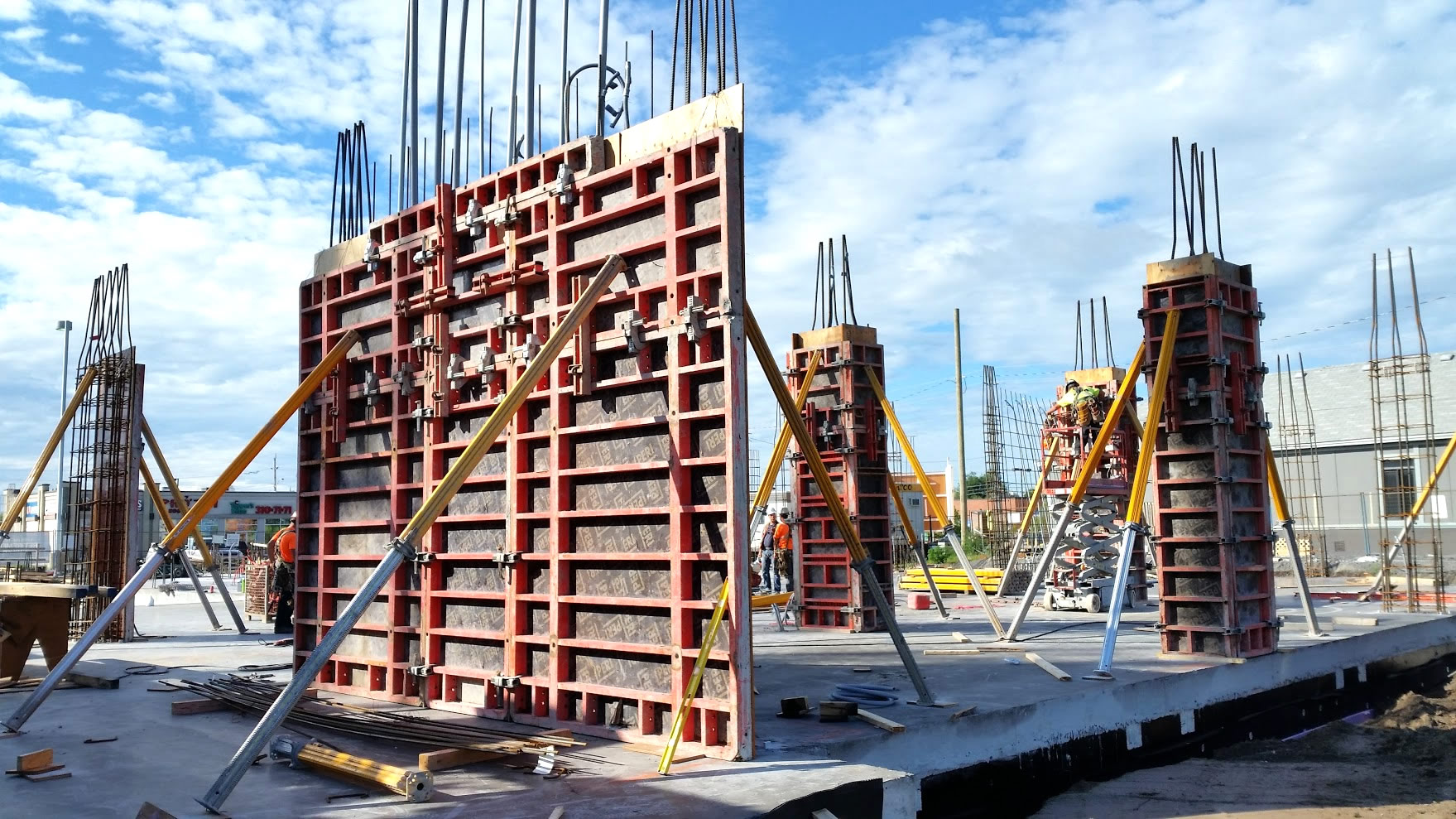
Formwork, Shoring, and Reshoring Strategies
Conventional slabs require shoring to remain in place until the concrete reaches sufficient strength to carry its self-weight and construction loads. Reshoring transfers loads upward through multiple floors in high-rise construction. The timeline is governed by cylinder break results or maturity-based strength estimates.
PT slabs allow earlier removal of shores in some zones once stressing is complete, because the post-tensioning introduces a self-supporting condition in the stressed direction. However, this benefit is conditional. The concrete must reach the required stressing strength first, the tendons must be fully stressed and anchored, and the engineer of record must confirm that the partial post-tensioning is sufficient to carry the applied loads at that stage.
Premature shoring removal based on assumed rather than verified strength is a recognized failure mode. ARW Concrete Contracting, a specialist PT contractor in North Carolina, described a critical scheduling constraint introduced by the Zero Void tendon system, which requires cables to be stressed, reported, and approved before construction joints can be prepared for the next pour. ARW used SmartRock sensors to determine when concrete had reached the required stressing strength, eliminating the lag between pour completion and stressing authorization.
Long-Term Durability Tradeoffs
The durability profile of post-tensioned vs. conventional slabs differs significantly, and understanding those risks is essential for matching the right system to the right exposure conditions.
Crack-width control is one of the primary durability advantages of PT slabs. Precompression keeps the concrete in compression under service loads, suppressing crack formation. In conventionally reinforced slabs, flexural cracking is expected and designed for. Crack widths are controlled by rebar spacing and cover requirements according to ACI 318, but cracks remain open pathways for moisture and chloride ingress.
In aggressive environments, including parking structures, coastal buildings, and freeze-thaw climates, the crack suppression of PT provides a meaningful durability advantage. However, this advantage depends on maintaining tendon integrity over the service life of the structure.
Corrosion risk is distributed differently in the two systems. In conventional slabs, corrosion affects mild steel rebar. Rebar has relatively low tensile stress and is more tolerant of localized cross-section loss before structural capacity is compromised. In unbonded PT systems, the tendon is protected by grease and plastic sheathing, but any breach of the sheathing at construction joints, anchorage zones, or mechanical penetrations exposes the strand to moisture. In bonded PT systems, incomplete grouting of ducts leaves voids that can trap water and initiate corrosion.
Hydrogen embrittlement is a specific and serious risk in PT systems that does not apply in the same way to conventional reinforcement. High-strength prestressing strand, typically with a tensile strength of 1,860 MPa, is susceptible to hydrogen embrittlement when exposed to acidic or electrochemically active environments. Embrittlement reduces ductility and can cause sudden fracture at stress levels well below the nominal tensile capacity. Conventional mild steel reinforcement, with tensile strength in the range of 420 to 500 MPa, is not susceptible to embrittlement under normal conditions.
The consequence of tendon failure in an unbonded PT slab is more severe than the failure of a single rebar in a conventional slab. A single unbonded tendon runs continuously from anchorage to anchorage, often spanning the full width of a bay. Complete failure of one tendon removes its contribution across the entire span simultaneously.
Seismic Behavior and Ductility Considerations
Conventional reinforced slabs offer higher inherent ductility in seismic conditions. Properly detailed mild steel reinforcement in a slab-column or slab-beam system can undergo significant inelastic deformation before failure. This ductile behavior is critical in seismic design, where the ability to absorb and dissipate energy without collapse is a primary performance objective.
PT flat plate slabs are vulnerable at slab-column connections under lateral drift. When a building sways under seismic loading, the slab-column connection must transfer combined gravity shear and unbalanced moment. PT slabs with low levels of mild reinforcement crossing the column face have shown brittle punching shear failures in this condition. ACI 318 Chapter 18 addresses this directly, requiring that in Seismic Design Categories D, E, and F, post-tensioned slab systems must include a minimum area of bottom mild steel reinforcement through the column, calculated to carry the full gravity load tributary to that column as a catenary after a punching shear failure. This is a life-safety provision, not a serviceability measure, and the contractor must place this reinforcement correctly regardless of the PT scope.
For high seismic zones, many structural engineers specify conventional two-way slabs or PT slabs with substantial mild steel, combined with a separate lateral force-resisting system such as shear walls or moment frames. The slab is then designed as a gravity-only element, and the lateral system carries all seismic demand.
Construction Sequence and Scheduling Implications
Conventional reinforced slabs follow a linear sequence with relatively forgiving milestones. Formwork and shoring are erected, rebar is placed and inspected, concrete is poured, and curing begins. Strength is monitored through cylinder breaks or maturity sensors. Once the concrete reaches the specified stripping strength, typically 70% of f’c or as directed by the shoring design, formwork is removed and the next level begins. The critical milestone is a single strength gate: strip strength. Missing it by a day is costly but recoverable.
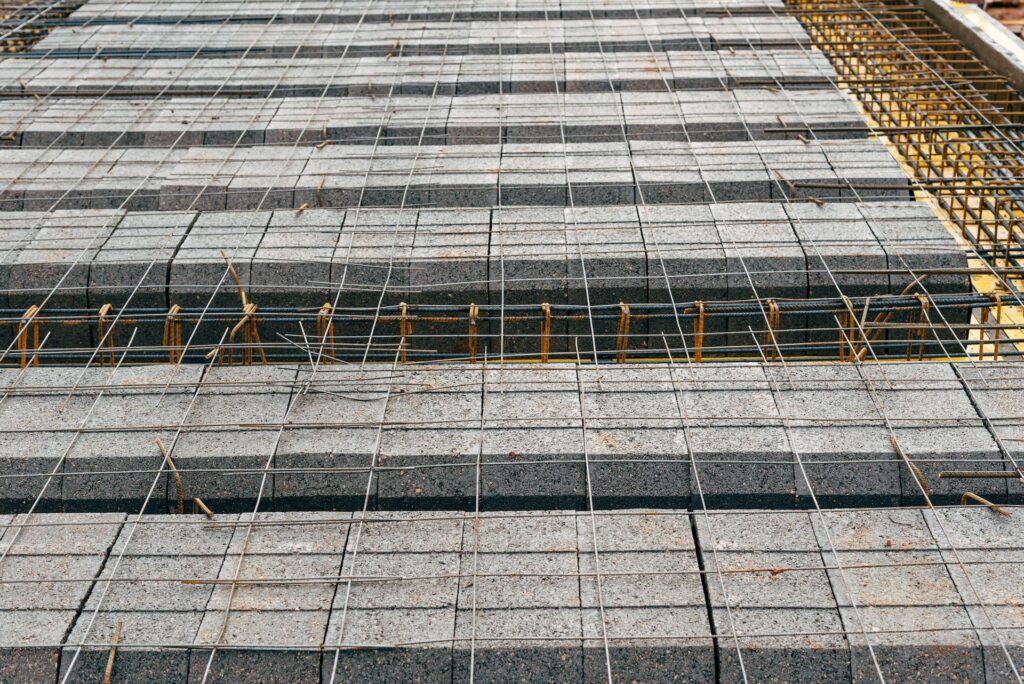
PT slabs introduce a more compressed and interdependent sequence. Formwork and shoring are erected, rebar and tendon layout are placed and inspected, concrete is poured, and curing begins. Once the concrete reaches the minimum stressing strength, typically 75 to 80% of f’c, stressing begins. After stressing, tendon tails are cut, anchorage pockets are patched, and in bonded systems, duct grouting must be completed and verified before the slab carries further construction load. Each of these steps requires inspection and, on many projects, written authorization from the engineer of record before the next activity proceeds. The critical milestones are sequential and dependent: stressing strength, stressing completion, grouting verification, and engineer authorization. A delay at any one gate holds everything downstream.
The table below summarizes the key sequence differences:
| Stage | Conventional RC | Post-Tensioned |
| Steel placement | Rebar only | Rebar plus tendon layout and anchorage hardware |
| First critical milestone | Strip strength (~70% f’c) | Stressing strength (75-80% f’c) |
| Post-pour activities | None before stripping | Stressing, tail cutting, pocket patching, grouting |
| Engineer authorization required | Typically for shoring removal | For stressing and grouting at each pour |
| Consequence of missed milestone | Delayed strip, recoverable | Delayed stressing, cascading schedule impact |
| Floor cycle potential | Moderate | Faster, but only with verified real-time strength data |
This is where real-time in-place strength monitoring changes the risk profile directly. For example, DIVCON Inc. used SmartRock sensors on a 40,000 square foot elevated post-tension podium slab deck, tagging 18 sensors around the slab perimeter to monitor temperature and strength continuously. Automated reports confirmed stressing readiness without waiting for third-party cylinder breaks.
Decision Checklist: Choosing Between Post-Tensioned and Conventional Slabs
The following factors should be evaluated before specifying a slab system:
- Span and load requirements. PT becomes structurally advantageous for spans greater than approximately 7 to 8 meters in flat plate construction. Conventional systems are efficient for shorter spans and heavier two-way loads with closer column spacing.
- Floor-to-floor height constraints. If the building envelope or zoning limits overall height, PT’s shallower slab depth may recover usable floor area or allow additional stories.
- Construction schedule and cycling speed. PT can support faster floor cycling if stressing strength is verified reliably. Without real-time strength data, stressing delays can erase the schedule advantage.
- Local contractor and detailer expertise. PT installation, stressing, and grouting require experienced specialty subcontractors. In markets with limited PT labor, execution quality risks may outweigh structural efficiency gains.
- Seismic design category. In Seismic Design Categories D through F, PT flat plates require supplemental mild steel at columns per ACI 318 Chapter 18. This adds cost and complexity. In high seismic zones, the structural engineer may specify a different lateral system configuration entirely.
- Exposure conditions and durability requirements. In parking structures, coastal environments, or aggressive industrial settings, evaluate tendon corrosion risk carefully. Unbonded systems require intact sheathing throughout the service life. Bonded systems require complete grouting.
- Repair and inspection access over the service life. Conventional slabs are more straightforward to inspect, repair, and modify. PT slabs require care around tendon routing for any future coring, cutting, or penetration work. Tendon location must be documented and accessible.
- Budget structure. PT typically reduces concrete volume and mild steel but adds strand, hardware, and specialty labor. The crossover point in total installed cost varies by market, project size, and span conditions.
Practical Perspective
Neither system is universally superior. PT is the right choice when spans are long, floor-to-floor height is constrained, schedule cycling matters, and the project team has the expertise to execute and verify the system correctly. Conventional reinforcement is the right choice when spans are short, seismic demands are high, local PT expertise is limited, or future modifications to the structure are anticipated.
The most consistent source of risk in PT construction is not the structural system itself. It is the gap between scheduled stressing and verified strength. Real-time in-place monitoring closes that gap directly, whether through maturity-based sensors or wireless embedded devices. In both PT and conventional systems, decisions made on cylinder break data alone carry the variability risks described in the companion piece on ASTM C39. Field-based strength data reduces that variability at exactly the moments when the consequences are highest.
Conclusion
Post-tensioned vs. conventional slabs are not competing technologies; they are tools suited to different conditions. PT delivers structural efficiency, thinner sections, and crack suppression, but introduces stressing thresholds, seismic detailing requirements, and tendon durability risks that must be actively managed. Conventional reinforced slabs are more forgiving to construct and modify, but cannot match PT’s span-to-depth efficiency at scale. The engineer and project manager who understand both systems, including where each one requires more rigorous verification, will make better decisions at every stage of design and construction.
If you’re ready to take the tension out of post-tensioning, watch our webinar!
Frequently Asked Questions
What is the main structural difference between post-tensioned vs. conventional slabs?
Conventional slabs resist tensile forces through passive rebar that activates after the concrete cracks. Post-tensioned slabs introduce active compressive stress into the concrete before service loads are applied, suppressing cracking and allowing longer spans at reduced slab thickness. The difference is between a reactive system and a preloaded one.
Are post-tensioned slabs safe to use in seismic zones?
PT flat plate slabs can be used in moderate to high seismic zones. However, ACI 318 Chapter 18 requires supplemental mild steel bottom reinforcement through column strips to prevent progressive collapse after a punching shear failure under lateral drift. In the highest seismic design categories, engineers often design the slab as a gravity-only element and assign all lateral resistance to shear walls or moment frames.
What is hydrogen embrittlement, and why does it matter in post-tensioned slabs?
Hydrogen embrittlement is a form of brittle fracture that occurs in high-strength steel exposed to hydrogen ions in acidic or electrochemically active environments. Prestressing strand, which operates at tensile stresses near 1,860 MPa, is susceptible to this mechanism. Failure from embrittlement can be sudden and occurs at loads below the nominal capacity. Conventional mild steel reinforcement operating at 420 to 500 MPa is not subject to this failure mode under normal construction conditions.
How do I know when it is safe to stress post-tensioned tendons?
Stressing should not proceed until the concrete reaches the minimum compressive strength specified by the engineer of record, typically 75 to 80% of the 28-day design strength. This should be verified by in-place strength testing or maturity-based monitoring, not assumed from elapsed time alone. Waiting for standard 28-day cylinder breaks introduces unnecessary schedule delay; real-time in-place data allows stressing as soon as the threshold is actually reached.
What are the main long-term durability risks in post-tensioned slabs compared to conventional slabs?
PT slabs suppress cracking, which reduces chloride and moisture ingress compared to cracked conventional slabs. However, PT systems introduce tendon-specific durability risks. Sheathing breaches in unbonded systems expose the strand to corrosion, incomplete grouting in bonded systems creates corrosion-prone voids, and high-strength strand is susceptible to hydrogen embrittlement in aggressive environments. Conventional slabs are more tolerant of localized corrosion because mild steel failure is gradual, localized, and detectable before structural capacity is compromised.
When should precast post-tensioned elements be used instead of cast-in-place slabs?
Precast PT elements, including double-tees, hollow-core planks, and prestressed beams, are most appropriate where geometry is repetitive, and factory production reduces cost and improves quality control. They are common in parking structures and long-span industrial floors. Their use introduces structural connection design requirements at joints and interfaces, and coordination between the precast producer and the structural engineer must address load transfer, tolerances, and fire and seismic detailing explicitly.