

Data center construction has become one of the most schedule-sensitive segments in commercial building. Hyperscale operators commit to power-on dates years in advance, and every day of slippage on a single pour can ripple across the mechanical, electrical, and IT fit-out trades that follow. For the general contractors leading these projects, concrete is rarely the largest line item on the budget, but it is consistently on the critical path.
That places enormous pressure on how concrete strength is measured and acted upon. Cylinder break tests, designed for an era when slab pours were measured in dozens of cubic yards rather than thousands, cannot keep up with the cadence a hyperscale build demands. Real-time, in-place strength data is no longer a nice-to-have. It is the operational input that determines whether a project hits its power-on date or misses it.
Why Data Center Schedules Are Uniquely Unforgiving
Data center construction operates under economic and operational pressures that few other commercial projects share. A hyperscale facility represents hundreds of millions of dollars in committed infrastructure, and the operator’s revenue model depends on a specific date when the building can accept power and begin serving compute load. That date is set in contracts with utility providers, network carriers, and end customers years before the slab is poured. Slipping it by even a single week carries direct revenue penalties for the operator, and contractual exposure for the general contractor, whose ability to deliver on hyperscale owner expectations is increasingly defined by schedule certainty.

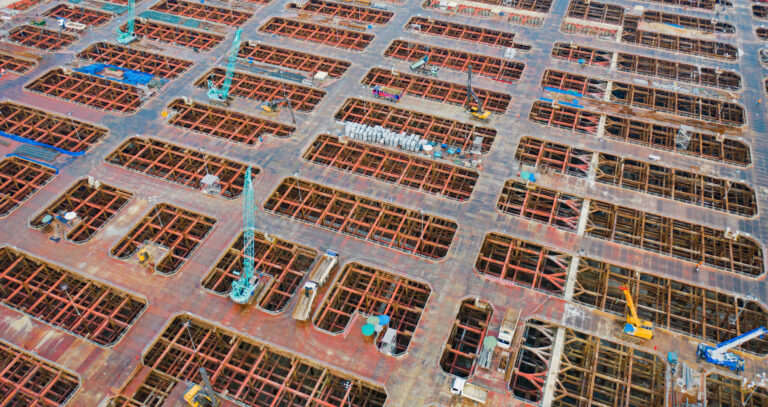
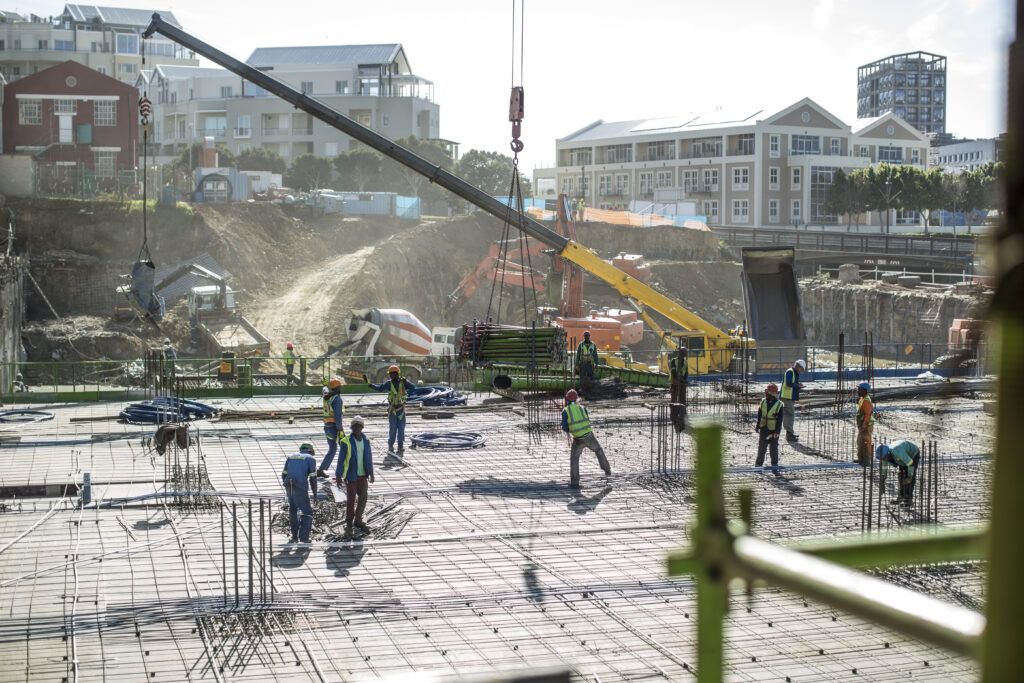
The structural sequence on these projects compresses every traditional construction allowance. Mat foundations supporting equipment can exceed several thousand cubic yards in a single placement, generating significant heat of hydration and creating thermal control demands that drive curing protocols. Elevated post-tensioned decks above electrical and mechanical rooms must reach defined strengths before stressing operations can begin, and stressing windows directly gate the start of follow-on trades. Suspended slabs supporting computer room air handlers, raised floor systems, and equipment laydown areas all sit in the path of the IT fit-out schedule.
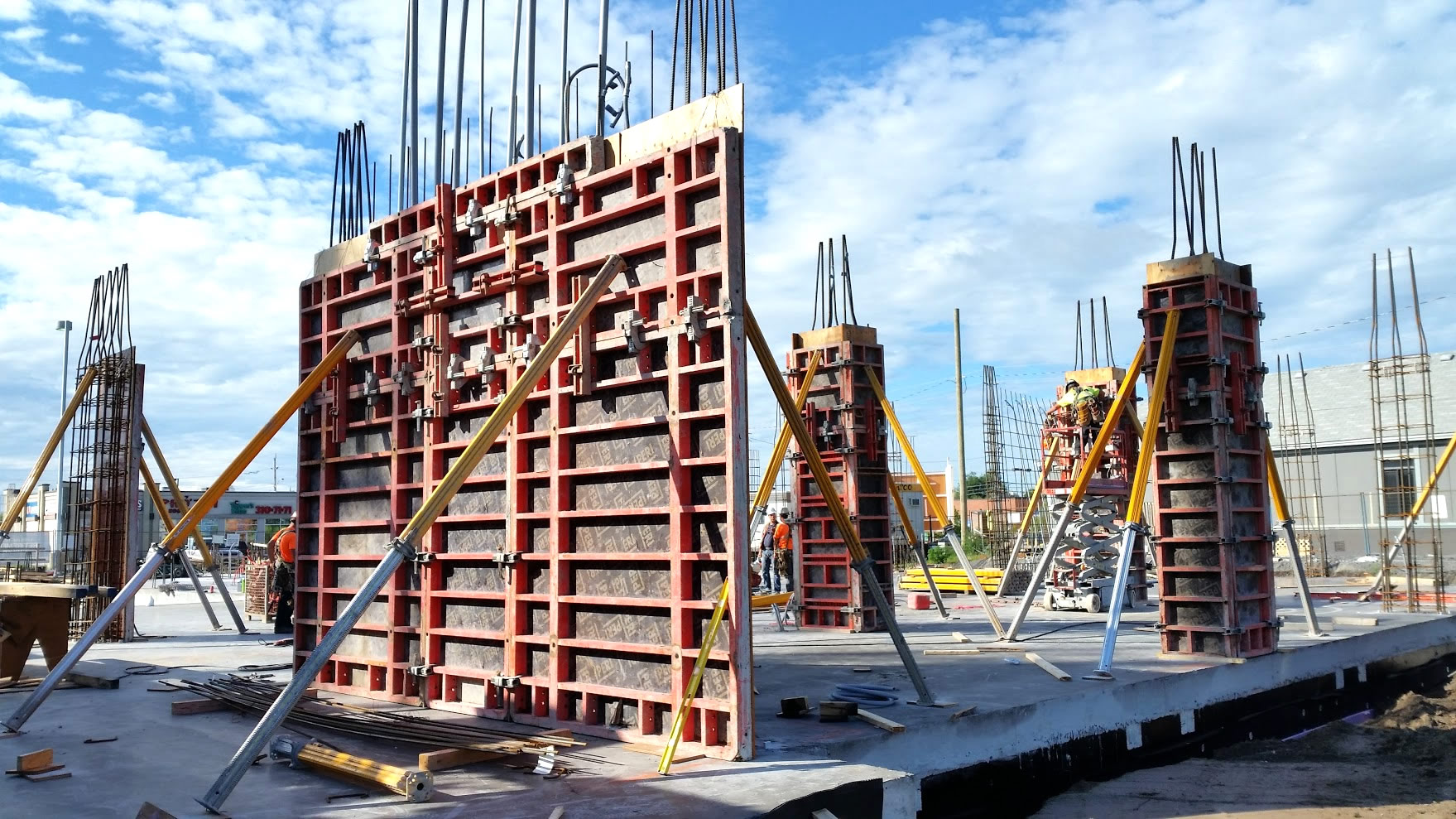
In this sequence, concrete strength is not a measurement detail. It is the gating condition that releases formwork crews, post-tensioning crews, mechanical contractors, and, ultimately, the commissioning team. When strength data arrives late, every trade behind it absorbs the delay. When strength data arrives in real time, the schedule has the flexibility to adapt around weather conditions, mix variability, and field events without compromising the power-on date.
The Limits of Traditional Concrete Strength Testing on a Hyperscale Build
For decades, the standard approach to verifying concrete strength on a commercial build has relied on cylinder break tests at fixed intervals, supplemented in some cases by short-range wireless sensors that report through a wirelessly connected handheld. Both methods were designed for a different scale and pace of construction.
Cylinder break testing has a well-understood role in acceptance, but it was never built for in-the-moment scheduling decisions. Cylinders must be cast on site, transported to a laboratory, cured under controlled conditions, and broken at predetermined ages. The earliest meaningful result rarely arrives in less than 24 hours, and even that result reflects the strength of a small specimen cured separately from the structure it represents. On a hyperscale deck, where multiple zones are placed within hours of each other, the sampling cadence simply cannot match the rate at which strength milestones must be confirmed.
Conventional wireless concrete sensors were designed for smaller pours and shorter transmission distances. On a hyperscale build, that creates operational friction. Sensors require regular in-person data pulls, and signals can be lost under a large area of placement.
The result is that on projects with the highest stakes, general contractors are often making schedule decisions on partial information, on a delay, or both, which is one of the most common drivers of data center construction delays.
What Real-Time, In-Place Strength Data Unlocks
When concrete strength is measured continuously and in place, the entire decision sequence on a data center build changes. Formwork can be stripped at the earliest defensible moment rather than at a conservative age-based default. Post-tensioning crews can be scheduled against actual strength. Loading and shoring decisions can be defended with documented in-place values rather than inferred from cylinders cured in a lab miles away.
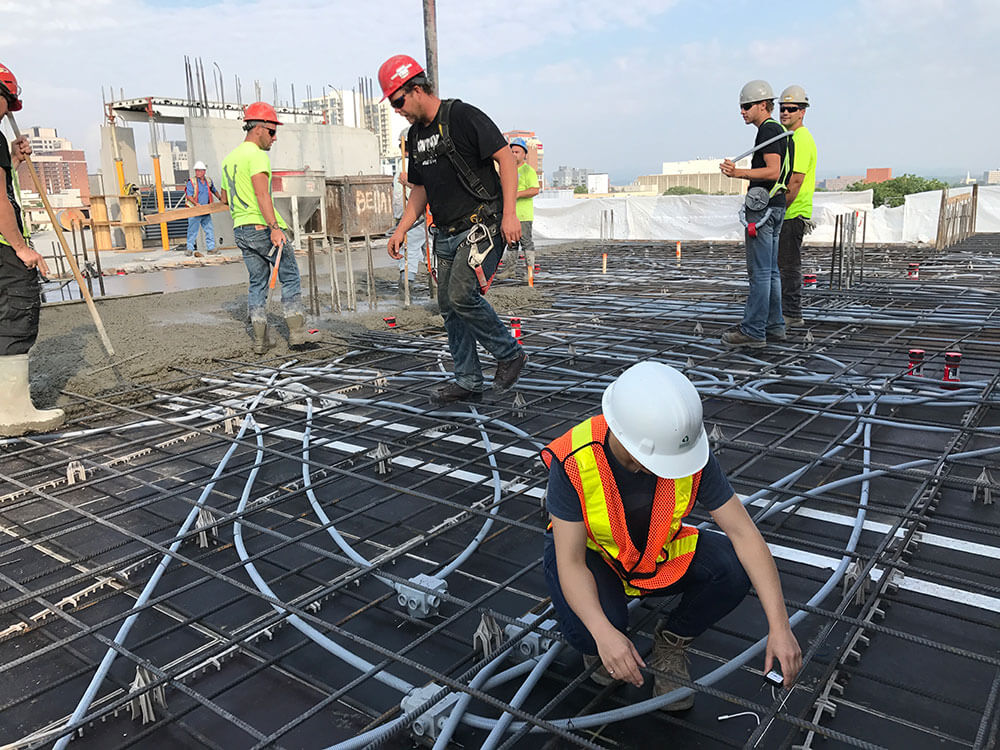
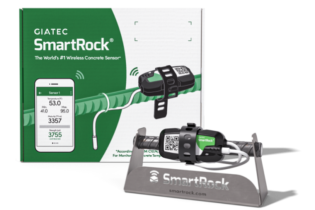
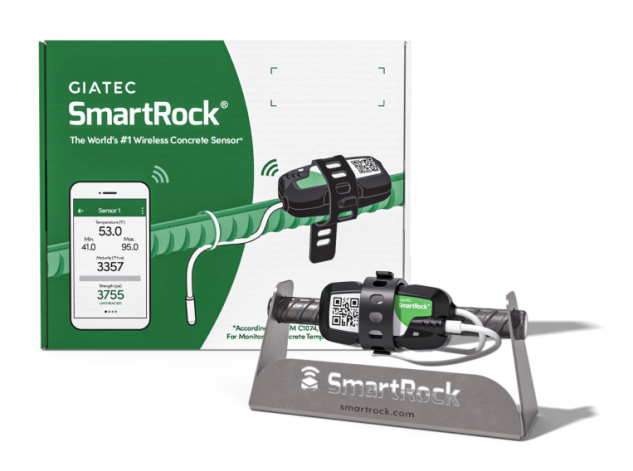
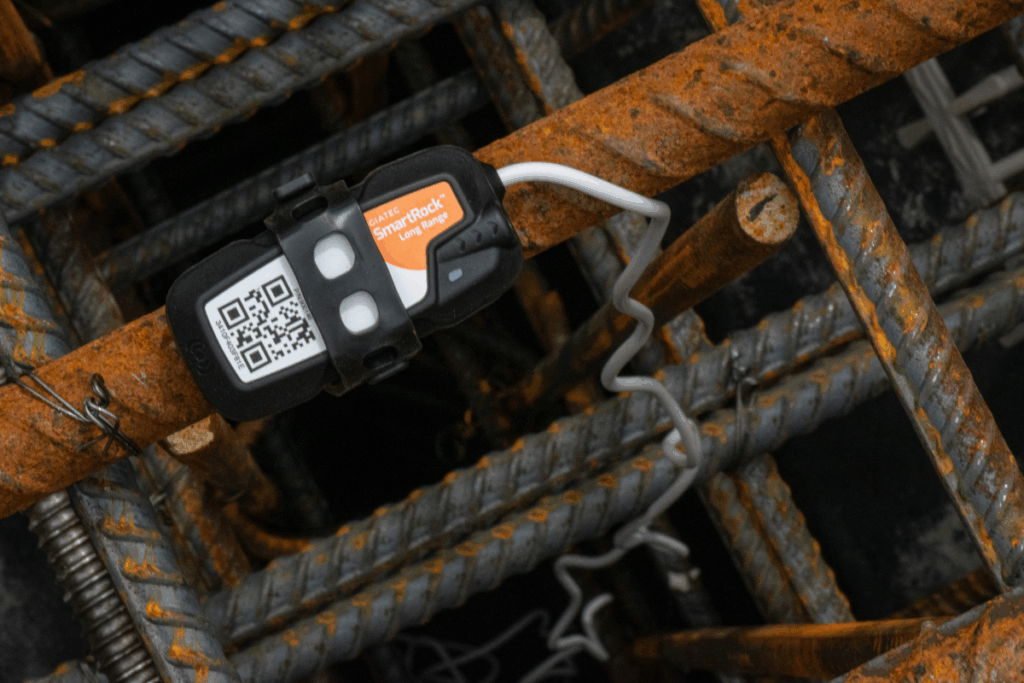
SmartRock® Long Range delivers this visibility by placing wireless sensors directly into the pour and transmitting strength and temperature data continuously across a range of up to 1000 ft (300 m). The sensors operate within the ASTM C1074 maturity method, the standards-backed framework recognized by structural engineers and inspectors across North America. That foundation matters: it allows the values reported on the project dashboard to be referenced in QA documentation, in submittals, and in the conversations a project team has with the engineer of record when a critical milestone needs to advance.
Three operational outcomes follow this capability on a hyperscale build.
- Formwork rotation accelerates. When the project team can see the moment a deck reaches stripping strength, formwork is released as soon as the structure permits, freeing material and crews for the next placement.
- Post-tensioning windows align with reality rather than estimates. Stressing operations can be scheduled with confidence, removing one of the most common sources of slip in the deck cycle.
- The project record becomes defensible. Every milestone is supported by continuous in-place data, which simplifies QA close-out, reduces back-and-forth with inspectors, and protects the general contractor in the event of any future review of strength-gated decisions. Real-time strength data does not replace engineering judgment. It gives engineering judgment something to act on, in the moment, at scale.
See how SmartRock Long Range fits your data center build. Explore the data center solution!
From Data Points to Schedule Decisions: Two Hyperscale Examples
The clearest way to understand what real-time strength data does for a data center build is to look at how it changes decisions in the field. Two recent hyperscale deployments make the point.
Hyperscale Campus, North Texas
The project team faced an aggressive delivery timeline set by an owner with both schedule certainty and sustainability as primary objectives. The build included massive foundations and large mass concrete pours, both of which carry significant thermal cracking risk if internal temperatures and core-to-surface differentials are not actively managed. Embedded SmartRock Long Range sensors gave the team continuous visibility into early-age behavior, enabling the curing protocol to be adjusted to prevent thermal cracking from temperature differentials. The same sensors then served as the strength record that supported accelerated sequencing, earlier formwork removal, and a defensible confirmation that slabs had reached the strength required to accept equipment loading before installation crews mobilized.
Cloud Region Build, South Texas
On a cloud region build in South Texas, the operational priority was the slab cycle. Continuous in-place strength monitoring allowed the team to release formwork as soon as the structure permitted, rather than waiting on conservative age-based defaults. Live temperature data helped optimize curing protocols in the regional climate. Across the deck cycle, those gains added up to days returned to the critical path on a project where every day carried a measurable impact on the owner’s commercial timeline.
Neither outcome required new structural engineering or new construction methods. They were the result of giving the project team the right data, in place, in real time, and at a range that worked across the actual footprint of the site.
Skyrise Engineering saved 140+ hours on a single high-rise schedule using real-time strength data! Read the full case study.
What General Contractors Should Look For in a Concrete Monitoring System
For general contractors evaluating concrete monitoring options on data center projects, four criteria separate a tool that supports the schedule from one that adds friction to it.
- Range without dependency on site infrastructure. A sensor system that requires reliable site Wi-Fi will fail at the moments it is needed most. Look for transmission ranges measured in hundreds of meters and gateway architectures that do not depend on conditions outside the project’s control.
- ASTM C1074 maturity method compliance. The data the system reports must be referenceable in QA submittals and in the conversations a project team has with the engineer of record.
- Scalability across hundreds of sensors. A hyperscale build will deploy more sensors than a typical commercial project, and the system must absorb that volume without operational overhead.
- Integration with QA documentation. Strength values that cannot be exported and traced are not values that can defend a strength-gated decision later.
Closing the Loop
Concrete strength on a data center build is no longer just a quality metric. It is the operational data point that determines whether a project hits the schedule the owner committed to. SmartRock Long Range was built for that reality, with continuous in-place monitoring, ASTM C1074 rigor, and the transmission range a hyperscale footprint demands.
Protect your schedule with real-time strength data across your entire site. See SmartRock Long Range in action!