








Mass Concrete

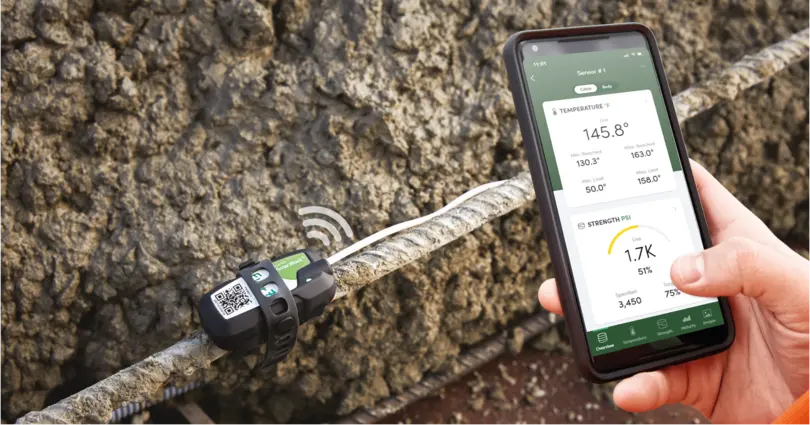
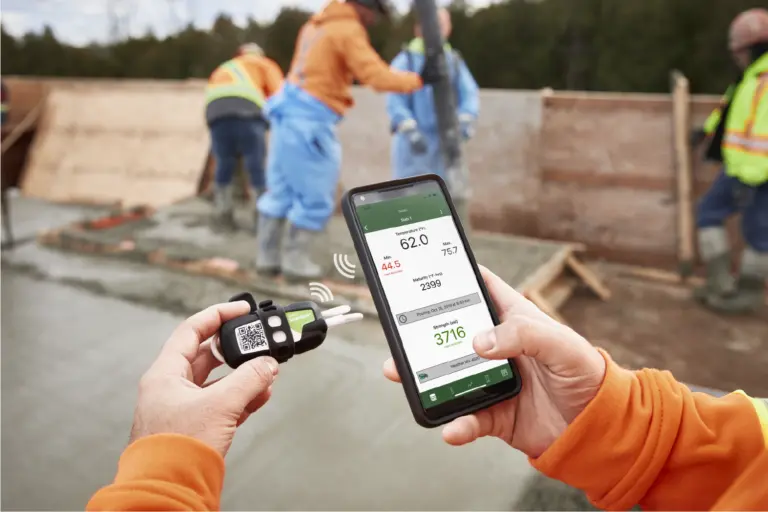
Enhance your mass concrete projects with SmartRock® Long Range remote monitoring solution for accurate temperature monitoring.

Track_Temp-icon

Temperature Differential
Analysis

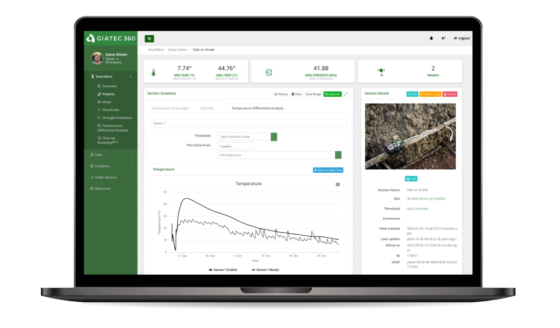
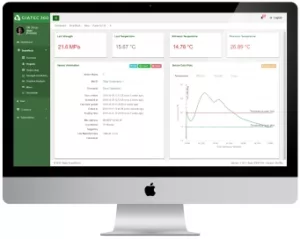
Gain real-time insights into concrete temperature differentials between core and surface using data from the Giatec 360™ platform and SmartRock App.

Temp_Diff-icon

Quality Control and
Assurance

Dual temperature monitoring of mass concrete with SmartRock Long Range sensors ensures optimal curing and enhances structural integrity and longevity. This prevents thermal cracking and improves concrete quality.

Remote_Monitore-icon

Long-Range Remote Monitoring Capabilities

Contractors can have an extended monitoring range up to 1000ft (300 m), giving them full control over concrete temperature data from any devices for their largest job sites.

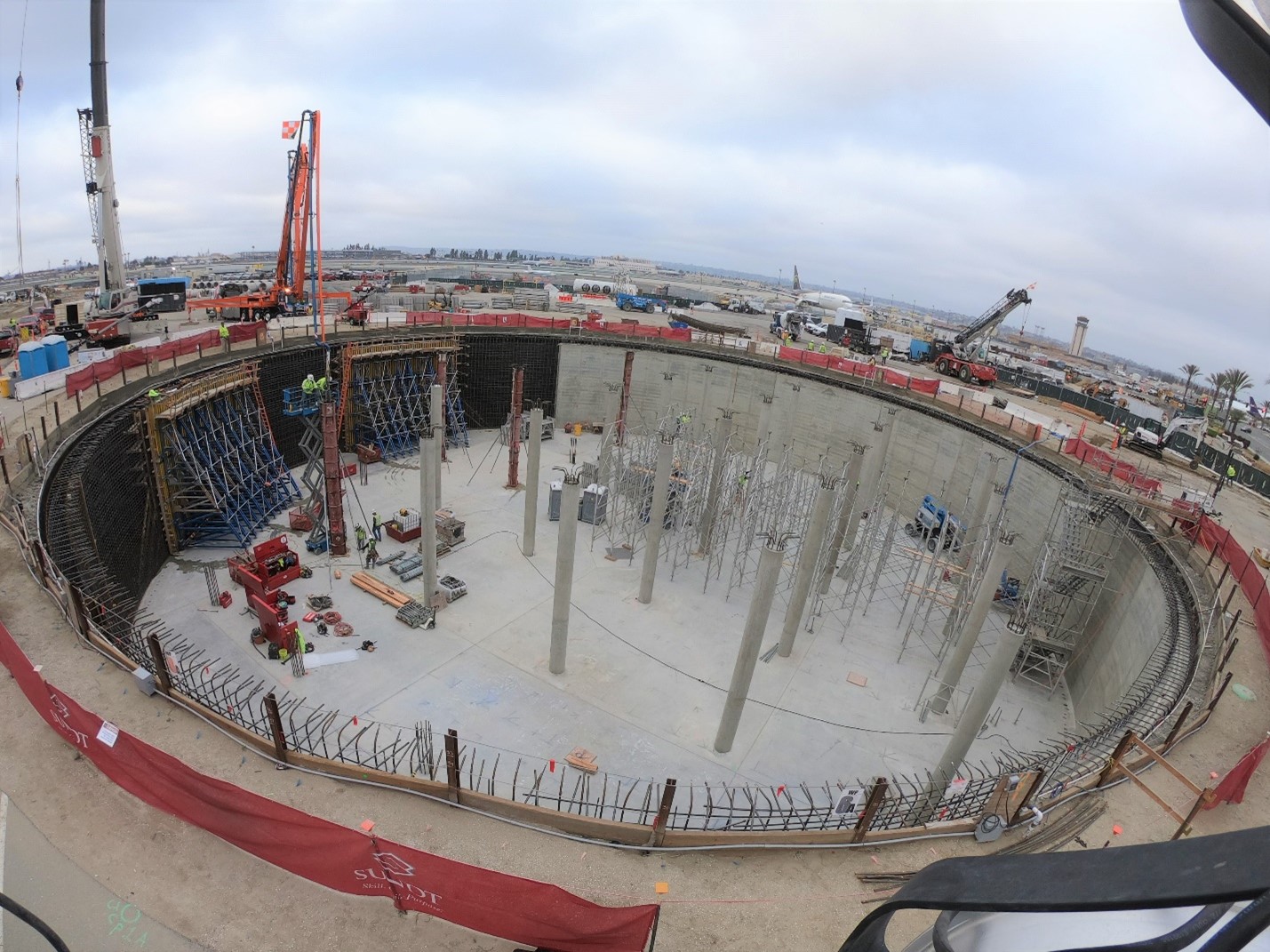
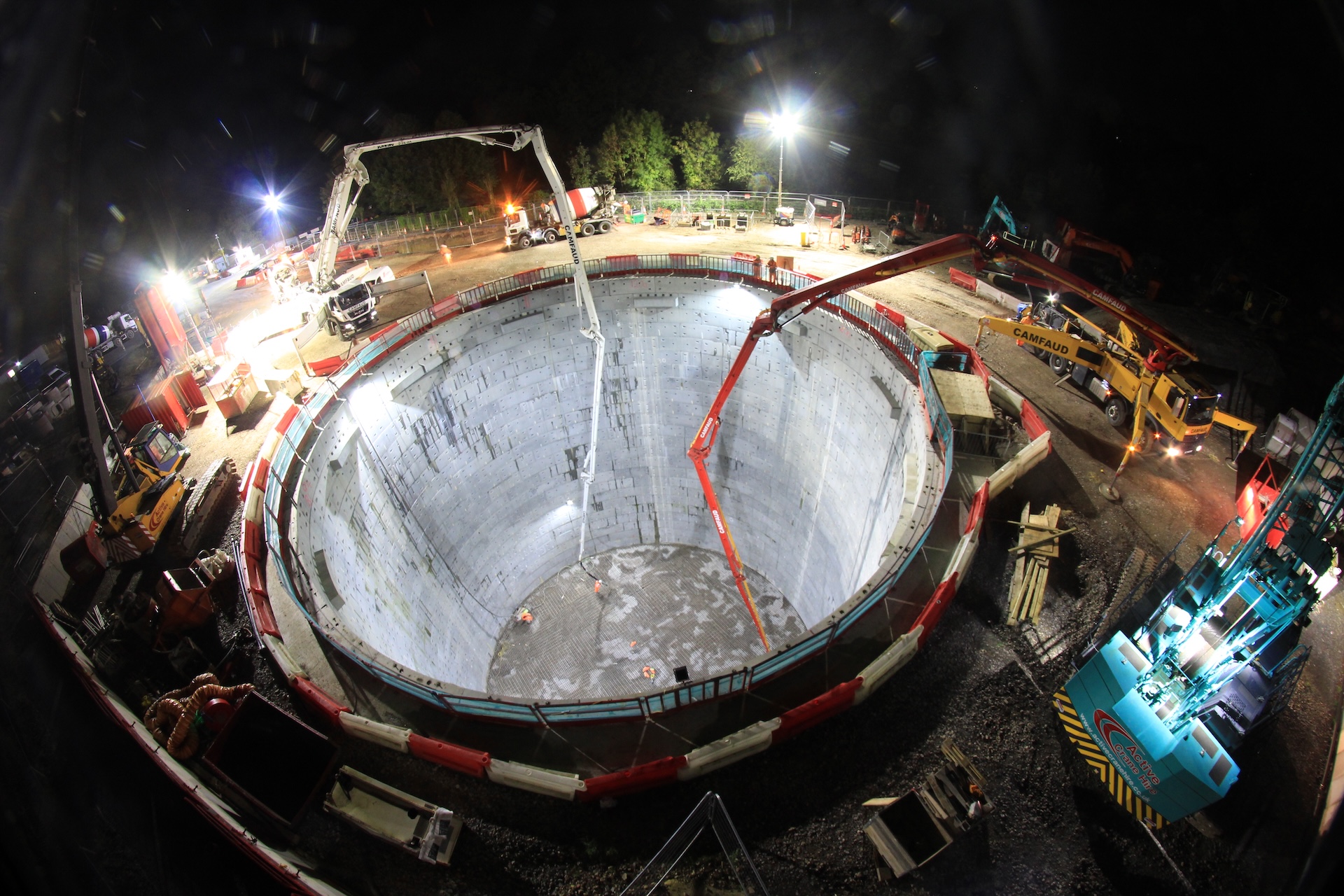
According to the American Concrete Institute (ACI), mass concrete is any volume of concrete with dimensions large enough to require that measures be taken to cope with the generation of heat from the hydration of the cement and attendant volume change to minimize cracking.

Temperature monitoring in mass concrete structures is a critical practice for ensuring the integrity, strength, and longevity of concrete. Due to the exothermic nature of the cement hydration process, large volumes of concrete can experience significant temperature gradients between the core and the surface. These gradients can lead to thermal stresses, which may cause cracking and compromise the structural integrity.

Section-Temperature-Diff-Lapop-img

Monitor Temperature Differentials

Monitoring temperature gradients in mass concrete elements becomes a vital task to ensure the difference in temperature between the core and the surface or edge does not exceed critical thresholds to prevent thermal cracking.

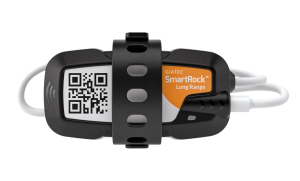
When pouring a mass element, construction professionals can place multiple sensors at different depths (using different cable lengths) if required. The dual capability simplifies its application in mass elements because it performs surface and core measurement simultaneously with one sensor.

Optimize Curing Conditions

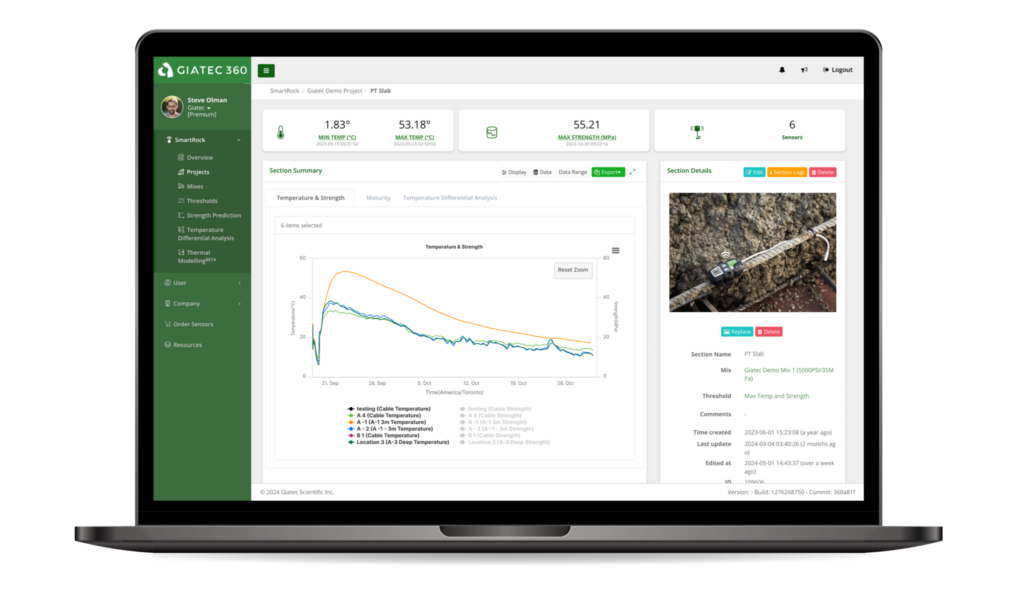
According to ACI 207 specifications for structural concrete, the maximum concrete temperature differential should not exceed 35°F (20°C) during curing. In mass concrete projects, like piers and large foundations, heat generation outpaces heat dissipation during curing, causing overall temperature to rise. Due to concrete’s slow heat release and low thermal conductivity, temperature gradients can form, trapping heat within the concrete.

This slow heat release can result in early-age thermal cracking. With SmartRock sensors and threshold alerts, one can take proactive measure and protect the element to ensure compliance with the specs and meet service life requirements.
Section-Temperature-Summary-Laptop
Thermal-Modelling-laptop

Thermal Modeling

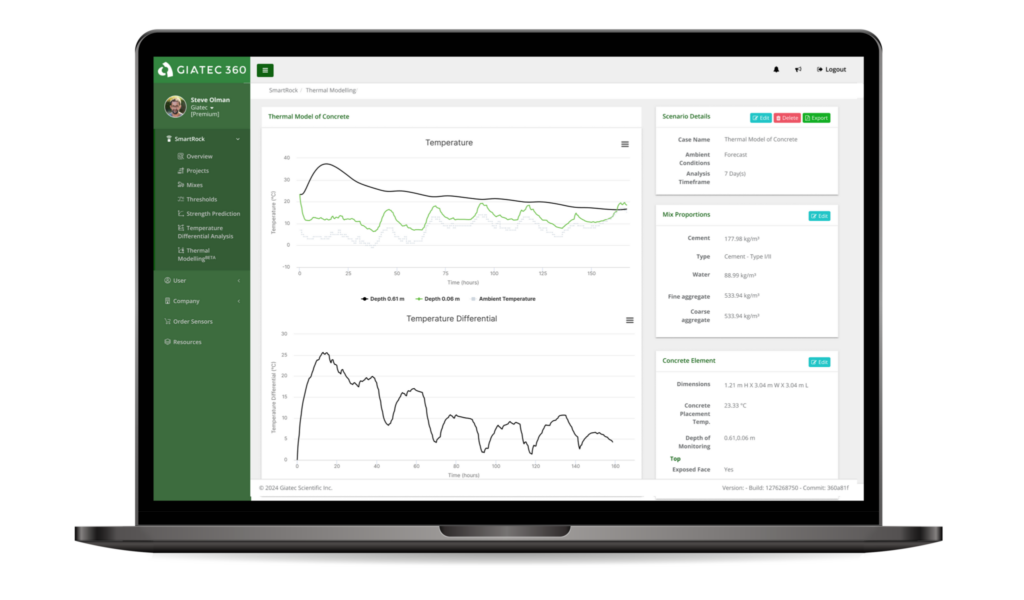
Our thermal model feature allows users with mass concrete elements to experiment with different inputs and produce forecast scenarios. Users can outline the anticipated behavior of the concrete at various depths to make sure they are prepared for anything. This user-friendly feature can be leveraged by multiple stakeholders to optimize planning, save time, validate important decisions and more. Thermal modeling allows users to optimize their mass concrete plans, validate cooling for temperature requirements, build thermal control plans and alter mix design iterations without physical testing. It is all compliant with ACI 207.2R. Read more about our thermal modeling feature here.
Many engineering projects have strict specifications regarding the maximum allowable temperature and temperature differential in concrete to prevent cracking. Real-time monitoring with SmartRock Long Range sensors helps in documenting compliance with these critical specifications.
SR3-Long-Range-Render-imprv

SmartRock Long Range Sensor
A Complete Solution for Your Mass Concrete Projects

Applications

Highrise-icon

High Rise

Concrete temperature and strength monitoring is essential to ensure proper curing, strength development, and prevention of thermal cracking in high-rise foundations and heavy civil projects like transition beams.

Bridges-icon

Bridges

In mass concrete projects like bridge elements, temperature monitoring ensures uniform curing, prevents cracks, and maintains structural integrity.

Pier-icon

Piers and Large Foundations

Concrete temperature monitoring sensors are essential in piers and large foundations projects to control mass concrete construction, optimize curing processes, ensure quality control, and comply with specifications.

Podcasts for Mass Concrete

Blogs for Mass Concrete

Giatec SR Signal

The Importance of Monitoring Temperature Differentials in Mass Concrete

Mass concrete temperature differentials are one of the leading causes of thermal cracking in large concrete pours. When the internal core heats up during hydration while surface temperatures cool, tensile stresses develop that concrete cannot withstand. Without proper monitoring, these stresses result in early-age cracking, reduced durability, and costly repairs. Closely monitoring concrete temperatures is critical for ensuring proper strength development of concrete structures and concrete sustainability regardless of their application or size. However, when it comes to mass concrete structures, we need to consider temperature differentials due to the risk of a large difference between the relatively hot internal temperature and the cool surface temperature. If a too-large temperature differential occurs, the surface of mass concrete will start cracking. This is detrimental to its durability and the length of its service life. In this blog, let’s take a look at why managing mass concrete temperature differentials is important for preventing thermal cracking and ensuring long-term structural durability. What Is Mass Concrete? Mass concrete is not defined by any specific measurements. According to the American Concrete Institute (ACI), mass concrete is “any volume of concrete with dimensions large enough to require that measures be taken to cope with the generation…

Learn More →
SmartRock3

New Generation Technology Part 2: The SmartRock® Long Range and its Applications

Every concrete professional aims to perform critical operations faster and with the highest possible quality. Remote monitoring systems such as the SmartHub™ Long Range developed by Giatec are valuable tools for this need. Following the first part of the long-range series, this blog will delve into the applications of the SmartRock® Long Range. Learn the ins and outs of mass concrete pours Fully Embedded Wireless Systems The proliferation of wireless sensory technology has been incredibly helpful in harnessing vital information from structural elements in the last couple of decades. A lot of construction projects are taking advantage of this technology and have fully embraced embedded solutions. This is because they are reliable and easy to use, giving real-time data of the in-place element. Due to this added value, some project specifications will specifically require the use of fully embedded and wireless systems.  However, despite technological advances, there are certain jobsite characteristics where the range of data transmissibility with standard solutions could be a challenge. Also, there could be a demand for real-time monitoring of concrete conditions, which requires constant data acquisition from the sensors installed. Remote project locations and on-site structural elements with limited accessibility of human personnel could hinder…

Learn More →

Big Projects Deserve Better Protection

Keep mega pours safe from cold-weather risks. Real-time insights, up to 1,000 ft away with SmartRock® Long Range

Get Real-Time Data with SmartRock®

See how it works today

We use cookies to provide you with a better experience, analyze site traffic and assist in our marketing efforts. By continuing to use this website, you consent to the use of cookies in accordance with our Privacy Policy Page.