
Think about the last time power access was a problem on one of your projects. Maybe it was a remote site with no utilities yet. Maybe it was a dense urban pour where running power to your monitoring equipment simply wasn’t practical. Maybe you were relying on a generator, only to find out that noise restrictions shut it down overnight, taking your monitoring with it.
In every one of those situations, the concrete kept curing. It does not wait for a power source, and neither does the clock on your project. The data gap did not care about the reason, leaving your team making decisions on instinct, conservative timelines, or an extra trip out to check manually.
That gap has always cost teams something. The Solar SmartHub™ was built to close it. Paired with SmartRock® Long Range sensors, it is a solar-powered gateway that keeps your monitoring running continuously, regardless of what the site looks like.
In this blog, we explore why power access has always been one of the biggest obstacles in concrete monitoring, across remote sites, urban cores, and generator-dependent setups. We introduce SmartRock Long Range, walk through the problems the Solar SmartHub was built to solve, and explain how it works in the field, from setup to connected monitoring to the decisions it helps your team make faster.
Wireless Concrete Monitoring Built for the Largest Projects
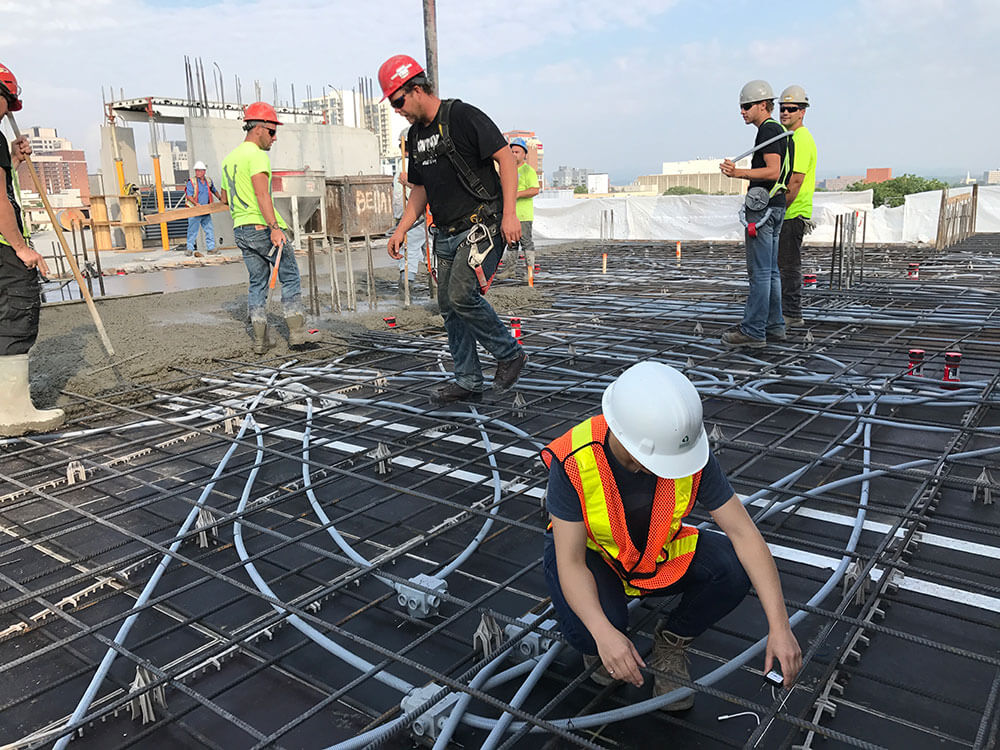
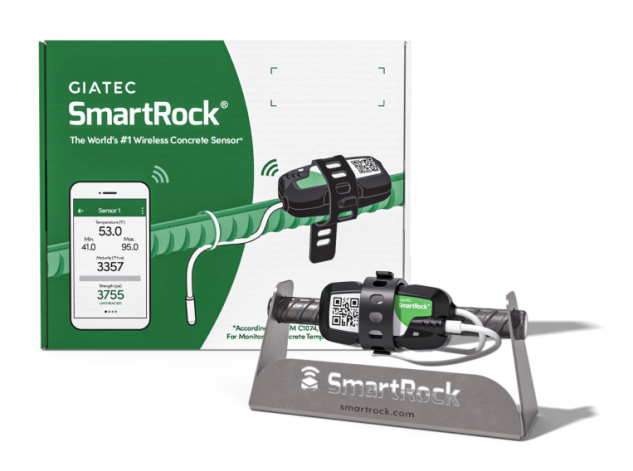
SmartRock Long Range is a wireless concrete maturity sensor that gives your team real-time temperature and strength data from inside the concrete itself. You attach the sensor to the rebar before the pour, and once connected to a gateway or via wireless connection, it immediately starts transmitting live readings to the SmartRock mobile app and the SmartRock Web dashboard, so you always know what the concrete is doing without having to be on site to find out.
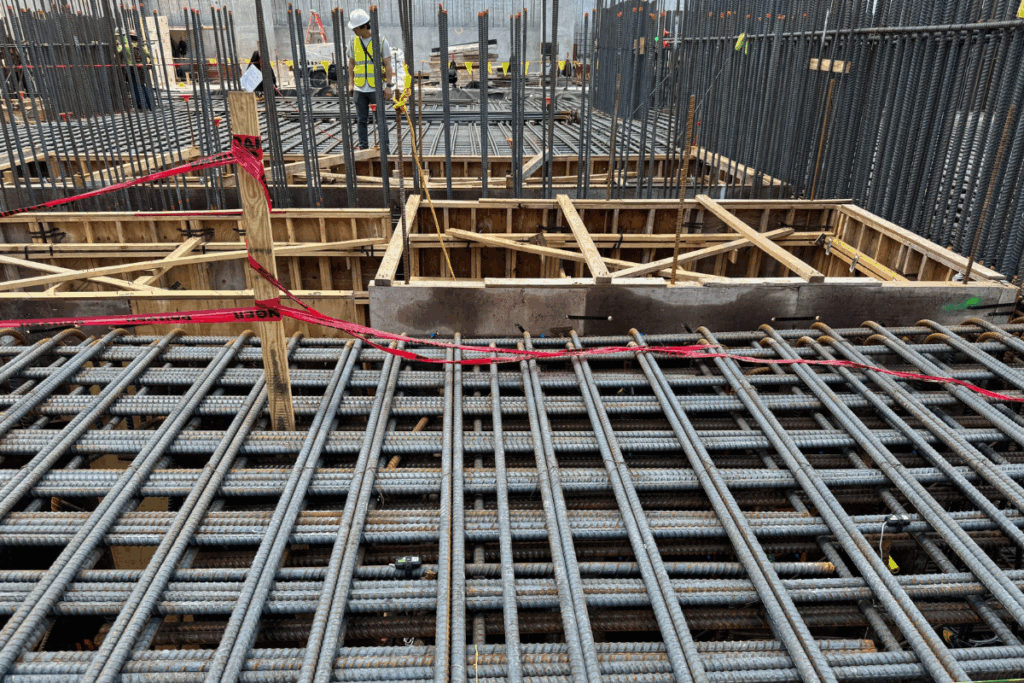
The long-range solution extends the wireless transmission distance to a radius of up to 1,000 ft (300 m), giving you the flexibility to position the gateway wherever it makes sense on site, without compromising the live monitoring your team depends on.
The one requirement it shares with most monitoring equipment is power. The gateway that collects and transmits your sensor data needs to be running continuously. On sites without reliable power access, that has been the limiting factor. Until now.
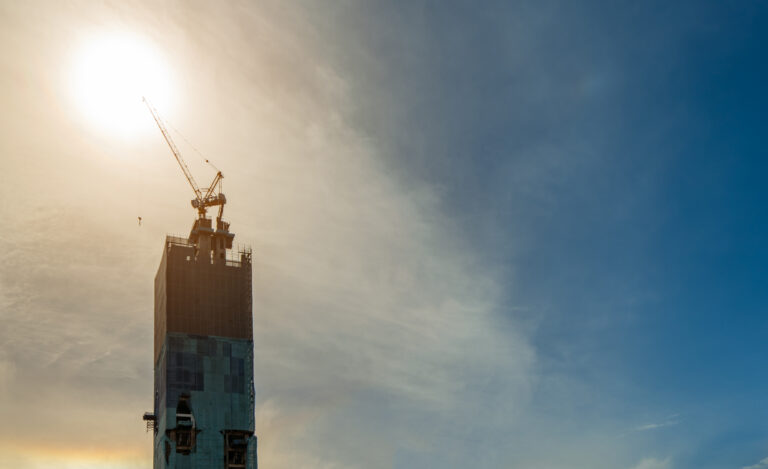
Skyrise Engineering used SmartRock Long Range on their high-rise building project. Learn how they saved hours on their schedule!
The Reality of Monitoring Concrete Without Reliable Power
Power access is not always a remote site problem. It shows up in more places than most teams expect.
- On off-grid and remote sites, there is simply nothing to plug into. Rural infrastructure projects, wind farm foundations, and highway expansions often break ground months before permanent utilities arrive. Traditional monitoring equipment does not run without power, so teams either go without real-time data or bring in a generator.
- On urban sites, the challenge is different but equally frustrating. Power may technically be available, but running it to your monitoring equipment means dealing with cable management across active work zones, coordinating with other trades, or waiting on temporary power hookups that are not always prioritized. The path of least resistance is often to skip the monitoring entirely.
- Generators seem like a practical fix until they aren’t. Noise restrictions on urban and near-residential sites frequently prohibit generator use overnight, which is exactly when unattended concrete monitoring matters most. A generator that shuts down at 10 PM creates the same data gap as having no power at all.
The knock-on effects are consistent across all three scenarios. Teams rely on manual check-ins that require someone physically on site. Form stripping and post-tension decisions get pushed back by conservative wait times built on estimates rather than data. Schedule buffer days accumulate. Every unnecessary site visit adds transport costs and people time that could have been avoided with a live data connection.
What the Solar SmartHub Looks Like on the Job
Setup is straightforward. The Solar SmartHub mounts to a pole or a wall in minutes. Adjust the solar panel to 15, 45, or 75 degrees depending on your site orientation, turn it on, and you are collecting data.
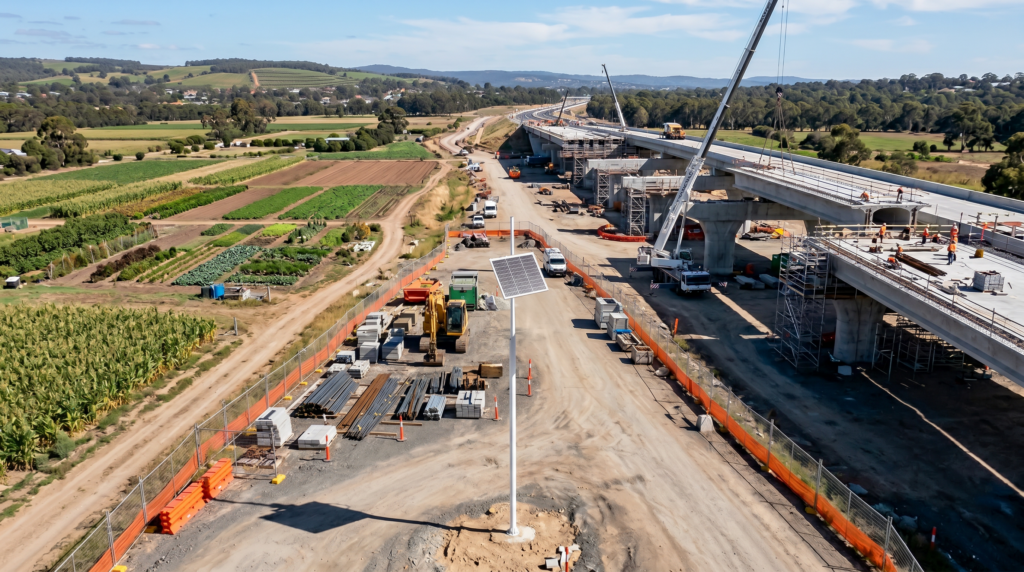
The panel keeps the Hub charged through normal daylight hours. When the sun goes down, clouds move in, or snow covers the panel, the built-in backup battery takes over. You get up to four full days of uninterrupted operation without any direct sunlight at all. For teams working in northern climates or through stretches of harsh winter weather, that means overnight hours, multi-day overcast periods, and seasonal conditions are all covered without any manual intervention.
The Hub transmits readings across a range of up to 1,000 ft (300 m) and is rated IP-67 for dust and water resistance. It runs reliably from -4°F to 158°F (-20°C to 70°C). It is built for real field conditions.
Your Whole Team, Connected
Once the Solar SmartHub is running, your SmartRock Long Range sensors push live temperature and strength data to the SmartRock Web dashboard and mobile app every 15 minutes. Every member of your team with access can see the same data at the same time, whether they are on site, in the office, or across the country.
You can set threshold notifications so the right people are alerted the moment the concrete hits a target strength or temperature. The data tells you when it’s time to act, and your team only needs to dispatch someone when the numbers call for it.
The result is faster decisions, fewer unnecessary site visits, and a shared understanding of pour status across everyone involved in the project.
One Less Variable to Manage
Your mental checklist on any pour is already long. Tracking down a power source should not be on it.
- The Solar SmartHub takes power access off that list entirely. Before, a form-stripping decision on a remote site meant either sending someone out to check, waiting until the next scheduled visit, or padding the timeline with conservative buffer days to avoid the risk of stripping too early. After, the call gets made remotely, based on real strength data, at the right time.
- The same applies to post-tension release. Before, teams without live data defaulted to time-based estimates. After, the threshold notification does the work. When the concrete hits the target, the right person gets the alert, and the decision gets made, without an extra trip, without a phone chain, and without unnecessary waiting.
Solar SmartHub Technical Specifications
| Specification | Detail |
| Connection Range | Radius 1,000 ft (300 m)* |
| Measurement Frequency | Once every 15 minutes |
| Solar Panel Dimensions | 22.5 × 15 × 0.7 in (570 × 380 × 17 mm) |
| Weight | 8.95 lb (4.06 kg) including solar panel and gateway |
| Solar Panel Tilt | 15°, 45°, 75° |
| Ingress Protection | IP-67 |
| Operating Temperature | -4°F to 158°F (-20°C to 70°C) |
*Following SmartRock Long Range sensor and Solar SmartHub installation instructions and requirements.
Distance Is No Longer a Limitation
Every pour deserves the same level of attention, whether it’s a data center, downtown high-rise, or a bridge deck three hours from the nearest city. The Solar SmartHub makes sure distance is never the reason you lose visibility on a critical pour with remote concrete monitoring. Your most remote jobsite is still your jobsite.
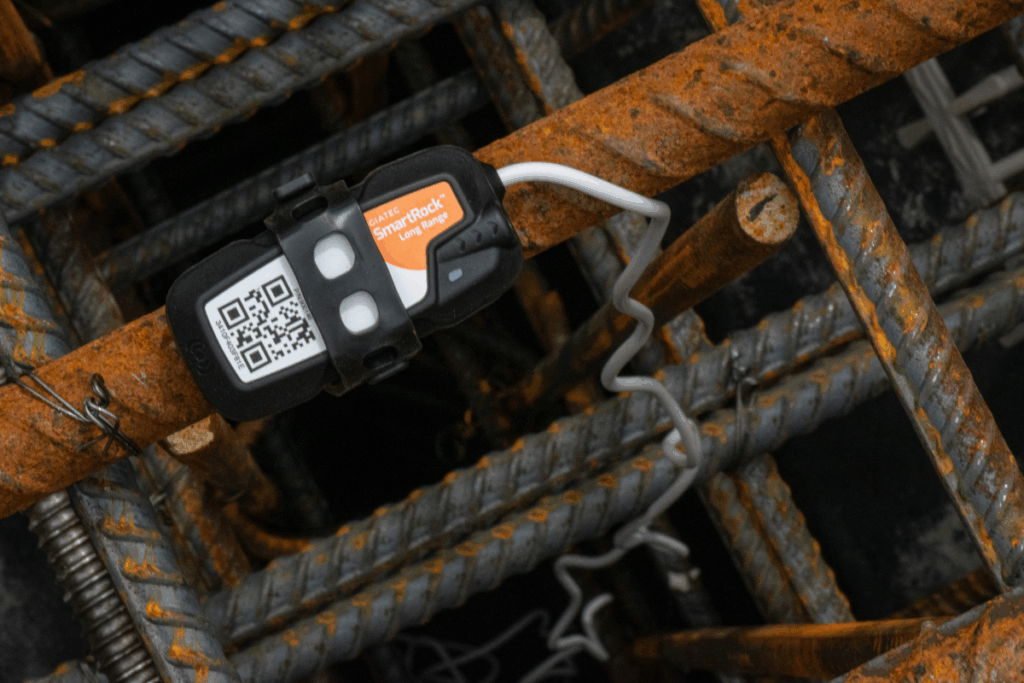
The Solar SmartHub is available now in North America and compatible wherever SmartRock Long Range is sold**. If you have been holding off on rolling out SmartRock at your more remote projects, this is what makes it possible.
Reach out to our experts to learn more about our complete SmartRock Long Range solution. Ask us about Solar SmartHub!
**Availability may vary. Please contact your Giatec representative to learn more.