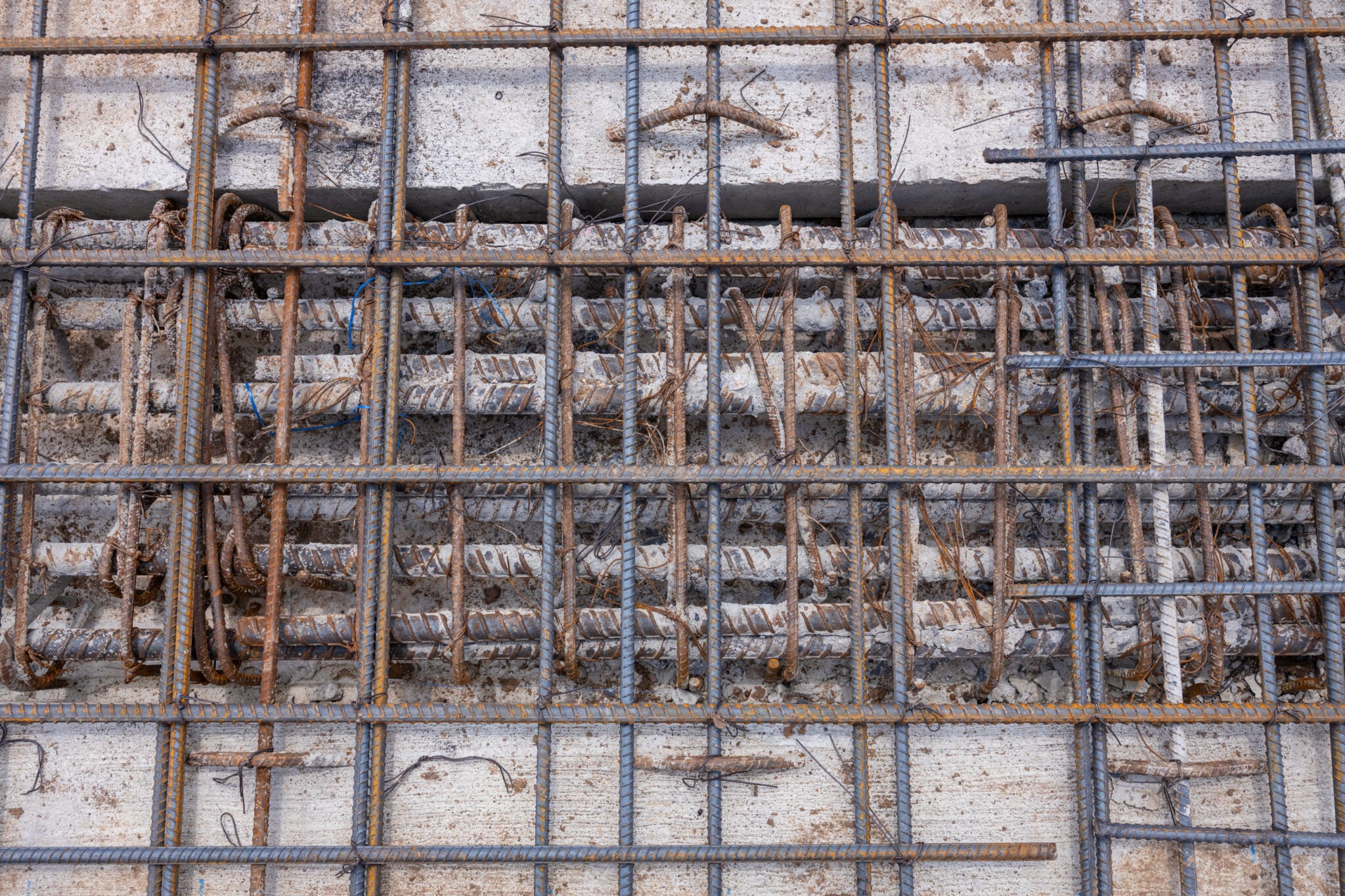



The Internet of Things (IoT) in the concrete industry means embedding sensors in the materials, trucks, and equipment that make and place concrete, then using the data they send back to make decisions while the work is still happening rather than after it. IoT Analytics counted 18.5 billion connected IoT devices worldwide in 2024, not counting phones, computers and tablets. In practice that comes down to three things: knowing what is in the mix and how it is behaving in transit, knowing what the concrete is doing inside the element once it is placed, and knowing the condition of the plant and equipment producing it.


The change this has driven is less about the technology than about timing. Concrete quality control was built around information that arrives late: a cylinder broken in a lab days after the pour, a delivery ticket reconciled at month end, a piece of equipment serviced on a fixed interval. Connected sensors move each of those decisions forward to the point where they can still change the outcome.
Powerful Data Collection in Construction Industries Using IoT
The Internet of Things can offer users complete lifecycle asset information through accurate data collection concerning various components of any integrated building. This allows end users to spot any potential performance issues, hone in on ways to improve performance, and extend their lifecycle. By aggregating performance data in real-time, operators can better understand the status of their structures anywhere around the world at any time.
Where IoT Is Actually Used in Concrete Today
| Application | What is instrumented | What the data supports | Where it stands |
|---|---|---|---|
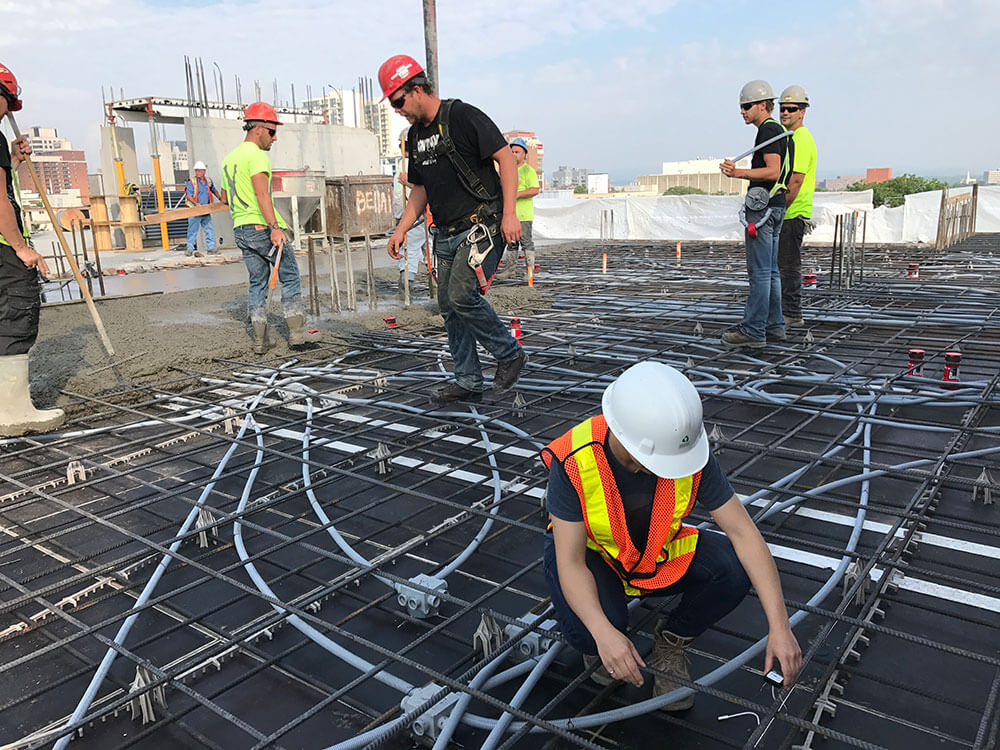
| Embedded concrete monitoring | Wireless sensors tied to the rebar before placement, logging internal concrete temperature continuously | Temperature differential control on mass and thermally sensitive elements, and in-place compressive strength estimated from maturity under ASTM C1074 for stripping, post-tensioning, and load release decisions | Mature and in routine use. This is SmartRock® |
| In-transit concrete monitoring | A non-invasive, calibration-less, in-transit slump sensor | Slump, temperature, and volume of the load on the way to site, with alerts | Established with ready-mix producers. This is MixPilot™ |
| Connected mix and quality data | Batch, test, and performance data from a producer’s plants brought into one platform | Mix optimisation, cross-plant performance comparison, and automated QC reporting instead of reconstructed spreadsheets | Established. This is SmartMix™ |
| Equipment telematics | Sensors built into mixers, pumps, and heavy plant by the manufacturer | Utilisation, fuel and idle time, fault codes, and condition-based rather than calendar-based maintenance | Mature. Standard on most new equipment from the major manufacturers |
| Delivery tracking and electronic ticketing | GPS on trucks, digital tickets replacing paper | Truck spacing on a pour, elapsed time from batching, and a delivery record that cannot be lost on site | Widely adopted, and increasingly required on large projects |
| In-service structural monitoring | Sensors left in or attached to a completed structure | Long-term condition data on strain, movement, temperature, and corrosion risk for asset owners | Growing, mostly on major infrastructure rather than routine buildings |
The first row is where IoT has changed concrete work most, because it addresses the thing that was previously unknowable. A cylinder tells you about a cylinder. A sensor inside the element tells you about the element.
Remote Operation
With tools and equipment connected through the Internet, users and operators can manage and multiple functions remotely. Amid the concrete and construction industries, this ability can be invaluable when it comes to productivity and site safety. For example, if there are on-site hazards that could endanger equipment operators, information on the extents of the danger and how to approach the situation can be communicated to and provided by experienced management personnel from anywhere in the world. Quality checks can also be received remotely, and workers can observe these notations in the database, allowing them to improve the quality of their performance, and ensure that materials and equipment are up to par.
Equipment Maintenance Notifications
IoT technology can provide intelligent, precise analytical information concerning much of the equipment used in concrete operations. By integrating sensors onto equipment, they become ‘intelligent’ machines and can effortlessly keep track of the condition of equipment and help users adjust their maintenance plans accordingly. Today, many of the leaders in the equipment industry such as Komatsu and Caterpillar are already installing telematic sensors and software into their machinery, making connectivity extraordinarily simple.
Smart Resource Allocation
Staying on budget is of vital importance to most construction site managers and their backing investors, and properly allocating equipment and human resources is a big part of making sure that costs stay on track throughout any project. IoT technology keeps employees connected and informed about the status of construction, the condition of the equipment involved, and even the quality and temperature of the concrete being mixed.
This makes it easier for management and staff as a whole to minimize delays and more adequately estimate time frames as well as the amount of human resources that are necessary to meet project goals. Simply put, the Internet of Things assists tremendously with site planning and allows one to get the most out of every resource being utilized during the project.
Where is the Internet of Things Amid the Concrete Construction Industry Headed?
The direction of travel is away from more sensors and toward better use of the data already coming off the ones in place. Most producers and contractors running connected equipment, drum sensors, and embedded concrete sensors are already generating more data than they act on, and the gap between collection and decision is now the constraint rather than hardware cost or connectivity.
Two shifts follow from that. The first is analysis moving into the platform: strength-maturity relationships validated automatically, anomalies in batch data flagged rather than found, and forecasting of when an element will reach a target rather than only reporting where it is now. The second is that the data becomes contractual. As electronic ticketing and continuous in-place records become normal on large projects, the pour record stops being an internal quality artefact and starts being the evidence base for acceptance, dispute, and payment.
Read next: the smart concrete data your operation is already generating and not using.
IoT in concrete FAQ
What is IoT in construction?
It is the use of connected sensors in materials, equipment, and structures to send operational data to a platform where it can be acted on in near real time. In construction that ranges from telematics on plant and GPS on delivery trucks through to sensors embedded in the concrete itself. The defining characteristic is not the sensor, it is that the data arrives while the decision is still open.
Can a sensor measure concrete strength?
No. Embedded concrete sensors measure temperature. Strength is estimated from that temperature history using the maturity method, following ASTM C1074, which requires a strength-maturity relationship developed in advance for the specific mix. The distinction matters because it is what makes the estimate defensible: it has a calibrated basis and a recognised standard behind it, and it should be described that way on a submittal.
Do IoT sensors replace cylinder break tests?
Not for acceptance. Standard-cured cylinders tested under ASTM C39 remain the basis for accepting concrete against its specified strength. What maturity-based monitoring replaces is the use of extra field-cured cylinders to decide when an element is ready for the next operation, which is where most of the waiting and most of the cost sits.
What does IoT actually save on a concrete project?
The recurring savings are schedule and labour rather than materials: fewer conservative waiting periods before stripping or post-tensioning, fewer field cylinders cast and transported, fewer trips to site to collect data from wired loggers, and fewer rejected or over-watered loads when in-transit data is available before discharge. The size of the saving depends on how much of the schedule is gated on concrete strength.
Is embedded sensor data reliable enough to make schedule decisions on?
It is, within the limits of the method. The estimate is only as good as the strength-maturity relationship it is built on, so that relationship has to be developed for the actual mix, revalidated when the mix changes, and checked against field results. ASTM C1074 sets out the calibration and validation procedure. Where those steps are followed, engineers accept maturity as a basis for in-place strength decisions, and as of April 2025, 36 US states accept maturity.
**Editor’s Note: This post was updated for accuracy and comprehensiveness in October 2026.