
Concrete is the world’s most widely used construction material, known for its strength, durability, and versatility. One of the most important properties of concrete is its compressive strength. This refers to concrete’s ability to withstand axial loads without failing. Testing compressive strength of concrete is critical for ensuring that the concrete mix used in a structure meets its design specifications. It will guarantee the safety and durability of the structure over time. When you know the compressive strength of your concrete, you can call load-bearing capacity, formwork removal, and the rest of the schedule with confidence. Two test methods dominate, and the region you’re pouring in usually decides which one applies: the cylinder test in North America, the cube test across the UK and Europe. This blog will explore cylinder vs. cube test, their pros and cons, and how to select the most appropriate test for your project.
Why Test Compressive Strength?
Compressive strength is the single most important indicator of the quality of concrete. Testing ensures that the concrete mix can handle the designed loads without experiencing failure, cracking, or deformation. Additionally, compressive strength testing helps:
- Validate mix proportions: Although not a direct measurement of mix proportions, the compressive strength helps to validate if the correct proportions were used in the mix delivered.
- Monitor curing processes: Understanding when concrete has reached the required strength for various construction stages (e.g., formwork removal, post-tensioning).
- Ensure safety: Compliance with structural and safety codes requires a specified strength for the concrete being used.
Without accurate testing, construction projects are at risk of structural failures, increased costs, and project delays.
Learn all you need about compressive strength. Read more here.
Cylinder vs. Cube Test: Key Differences
Two of the most widely adopted methods for compressive strength testing are the cylinder test (common in the Americas) and the cube test (preferred in the UK, Europe, and other parts of the world). Although both tests measure compressive strength, the procedures, equipment, and shape of specimens differ.
Cylinder Test
- Test Standard: ASTM C39
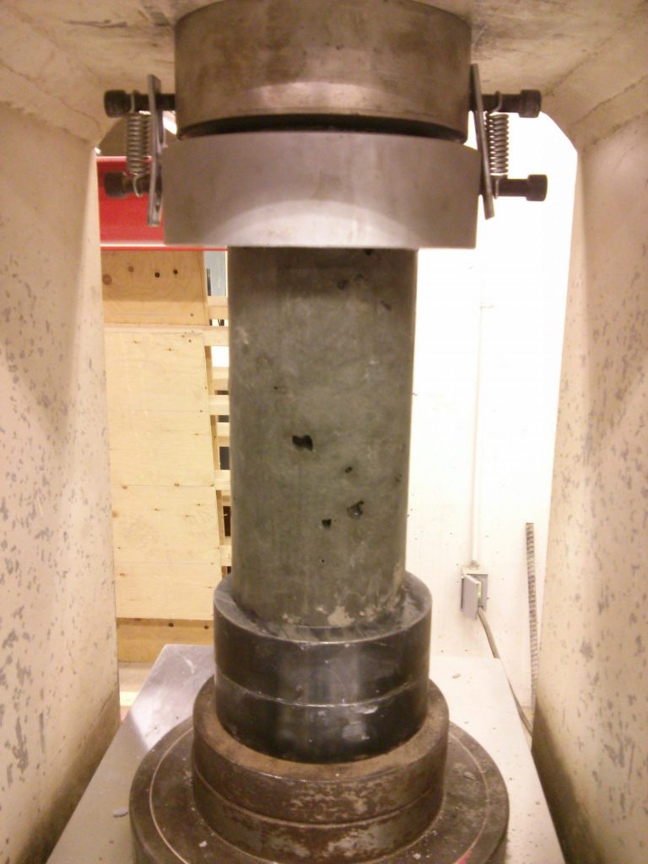
- Specimen Shape: Cylindrical, typically 100 mm × 200 mm (4 in × 8 in). The US and Canada also accept the larger 150 mm × 300 mm (6 in × 12 in) size. ASTM C31 calls for the tech to cast 4 × 8 cylinders in two layers and 6 × 12 cylinders in three layers, with 25 strokes of the tamping rod per layer.
- Process: The technician pours and consolidates concrete into cylindrical molds, then cures them for a set period (usually 28 days). The lab loads each cylinder into a compression machine and applies force until it breaks. Dividing the breaking force by the cross-sectional area gives you the compressive strength in psi or MPa.
Cube Test
- Test Standard: BS EN 12390-3
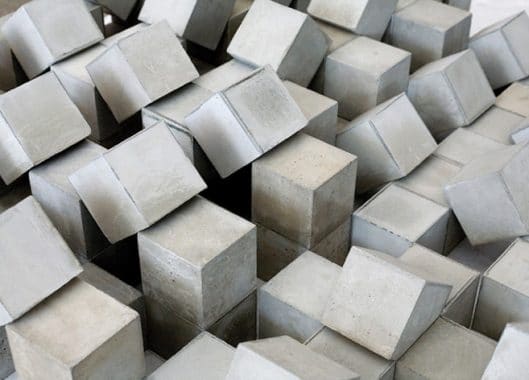
- Specimen Shape: Cube (150 mm x 150 mm x 150 mm, or 6 in x 6 in x 6 in), 3 layers, 25 rods per layer.
- Process: The procedure mirrors the cylinder test. The technician pours concrete into cube molds, consolidates it, and cures the cubes for the same standard period. The compression machine then crushes the cube, and the lab calculates strength from the cross-sectional area.
Pros and Cons of Cylinder vs. Cube Test
Cylinder Test
Pros:
- More representative for tall structures: Cylinder specimens more closely resemble vertical structural elements like columns, providing a better estimate of how concrete will perform in these scenarios.
- Industry Standard in North America: Adhering to ASTM standards, this test is widely accepted and used throughout the U.S. and Canada and most of Central and South America
Cons:
- Variable results: Differences in specimen height can introduce variability in results if curing or testing is not done correctly.
Cube Test
Pros:
- Easier to have a finished surface in contact with the compression machine: Since the cubes provide 5 evenly finished surfaces (bottom and 4 sides), it is easier to select a flat and uniform face that has a better finish.
- Faster setup in compression machines: Cylinders often require capping with sulfur/plaster or grinding to ensure parallel surfaces. This adds time, labor, and potential variability if the process isn’t done correctly.
- High accuracy for shorter elements: The cube test is often preferred for structures like pavements and foundations, where the behavior of concrete is best represented by a short, squat specimen.
Cons:
- Less applicable to tall structures: The uniform shape of cubes may not accurately reflect how concrete behaves in columns and other vertical structures.
- Regional preference: Cube tests are not as commonly accepted in regions like North America, making them less suitable for projects that require compliance with ASTM standards.
Learn more about cube testing in the UK. Click here.
How to Choose the Right Test for Your Project
Project managers and engineers should consider several factors when deciding which test to use:
1. Regional Standards
The most straightforward way to determine which test to use is to follow the standards and regulations of the region where your project is based. In North America, the cylinder test is the default method due to ASTM standards, while the UK and Europe predominantly use the cube test according to BS and Eurocode standards.
2. Structural Element Type
Cylinder specimens better represent vertical load paths in columns, walls, and other tall elements. Cube specimens are often preferred for slabs, pavements, and foundations, where the load behavior is closer to that of a squat specimen. If your project mixes both, your spec usually defaults to the regional standard, but flag the difference to your structural engineer early.
3. Lab Resources
Consider the equipment and expertise available in the testing laboratory. Labs in North America are often set up for cylinder testing, while labs in the UK are more familiar with cube testing. Choose the method that aligns with your available resources to ensure accurate results and compliance with regional standards.
4. Integration With Smart Technology
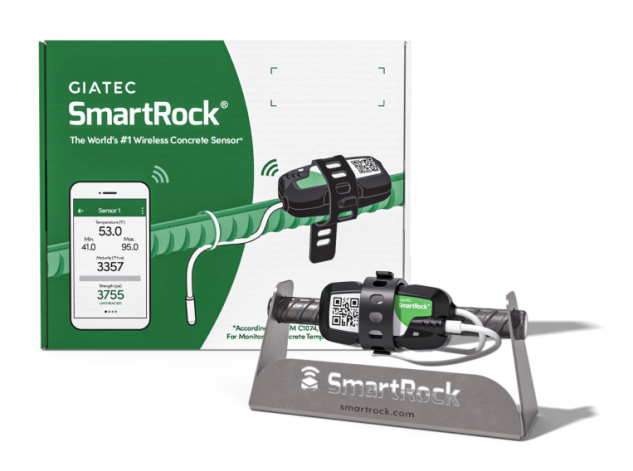
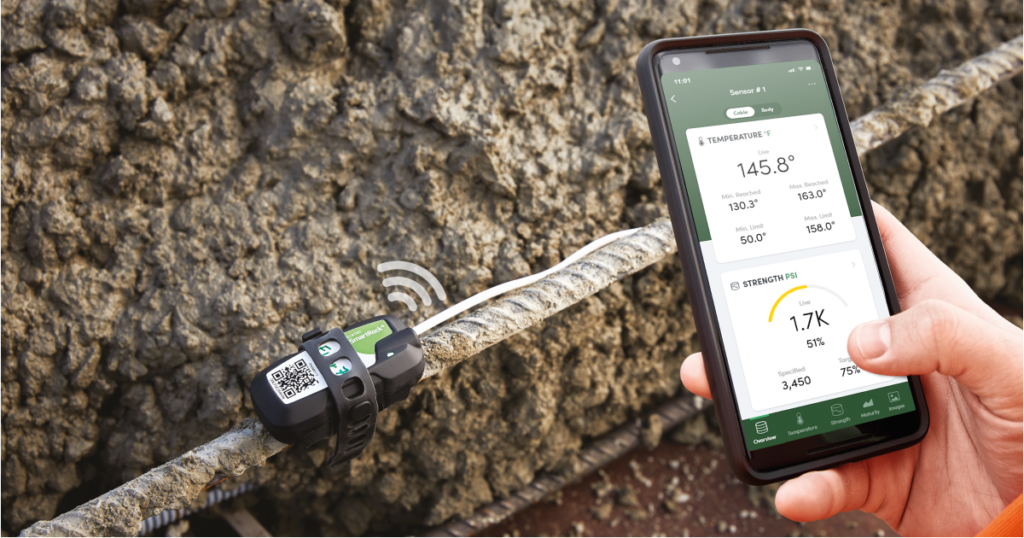
Regardless of which method you choose, integrating smart technology can offer real-time monitoring and valuable insights into concrete performance. Giatec’s SmartRock® sensors can be embedded into the concrete to provide continuous, real-time data on temperature and strength development. These sensors complement both the cylinder and cube tests by providing additional in-situ measurements, helping project managers make informed decisions about curing times and concrete performance.
Acceptability Norms: North America vs. UK
North America
North American projects use the cylinder test under ASTM standards. Most general concrete work specifies strengths between 3,000 and 6,000 psi (20 to 40 MPa). High-performance mixes push past 10,000 psi (over 70 MPa). Cylinders handle the full range. Whatever strength class you’ve specified, the cylinder method measures it.
Relevant Standards:
- ASTM C39: Standard for compressive strength testing using cylinders.
- ASTM C31: Standard for making and curing concrete test specimens.
- CSA A23.2-9C: Canadian standard for cylinder testing.
UK (and Europe)
In the UK, cube testing is the standard method to measure any strength class, with compressive strength typically reported in megapascals (MPa). For most general construction, cube strengths between 25 MPa and 50 MPa are common. Higher strengths are used for specialized applications, such as high-rise buildings or heavy infrastructure projects.
Relevant Standards:
- BS EN 12390-3: Standard for compressive strength testing using cubes.
- BS 1881: Part 116: Older standard still in use for some cube tests.
FAQs
1. Which test method is more accurate?
Both the cylinder and cube tests are accurate within their respective regions and contexts. The choice of test depends on regional standards, the type of structure being built, and the specific requirements of the project.
2. Can I use both tests on the same project?
Yes, some projects may benefit from using both cylinder and cube tests for different structural elements. It’s also common to integrate SmartRock sensors to monitor in-situ concrete conditions, providing real-time insights that complement these tests.
3. How do SmartRock sensors work with these tests?
SmartRock sensors are embedded directly into the concrete at the construction site. They measure concrete temperature and strength development in real time, providing data that can verify lab test results and give insights into in-situ performance. This helps project managers make timely decisions, such as when to remove formwork or when the concrete is ready for load-bearing activities.
4. What should I consider when choosing a test?
Consider the structural elements in your project, the regional standards (ASTM vs. BS), and the availability of lab resources. If you want more continuous, in-situ data, integrating SmartRock sensors will provide additional insights beyond what the standard tests can offer.
Conclusion
Understanding the differences between the cylinder and cube tests is critical for selecting the right method for your project. Each method has its advantages and drawbacks, and project managers should make their decisions based on regional standards, the type of construction, and the resources available. By combining traditional testing methods with modern technology like SmartRock sensors, you can ensure more accurate results, optimize timelines, and improve overall project efficiency.