
Construction Outlook
Inside Modern Construction Types: How Structural Systems Shape Building Designs
Construction types influence everything from structural performance and building layout to construction speed and long-term durability.
In this article, you’ll learn the major construction types used in modern projects and how they compare in real-world applications. We’ll also take a closer look at cast-in-place and post-tensioned concrete systems, which are two widely used approaches that shape everything from high-rise buildings to parking structures.
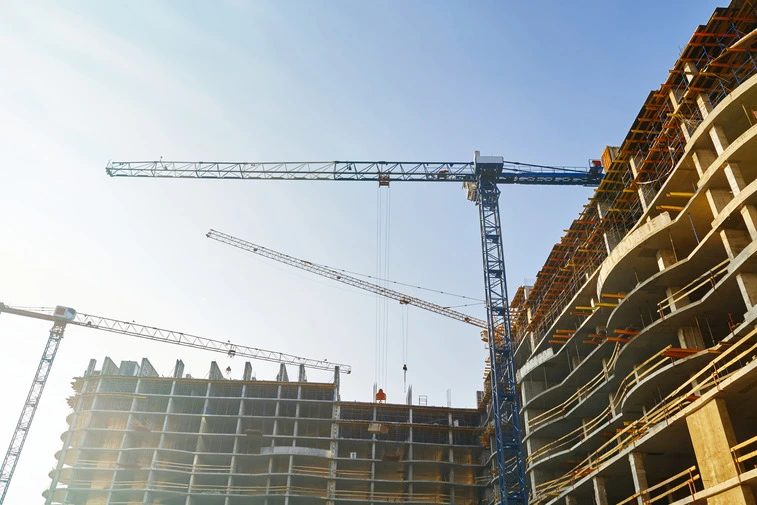
What Are “Construction Types”?
In construction, “type” has two meanings. Building codes define types (Type I-V) based on fire resistance and combustibility; Type I uses non-combustible materials like concrete or steel, while Type V allows wood framing with stricter height and area limits. Both definitions matter: a structure can be classified by its structural system while also meeting a specific code-based fire-resistance category.
Separately, industry professionals use “construction type” to describe the structural system, such as cast-in-place concrete, precast concrete, steel, or timber, defining how a structure supports loads.
Top 5 Structural Construction Types Used in Modern Building Projects
Modern structures rely on a blend of materials and assembly methods. These five construction types dominate building and infrastructure projects today:
- Cast-in-Place Reinforced Concrete: Concrete is poured and cured on site within formwork, with steel rebar added for strength. It’s known for versatility in complex shapes, strong bonding between elements, and excellent fire resistance. Used widely in high-rises, parking decks, and bridges, cast-in-place concrete is preferred where integrated design flexibility is required.
- Precast (and Prestressed) Concrete: Structural components are made in a controlled factory setting, often prestressed for added strength, then transported and assembled on site. This method ensures consistent quality, enables higher early strength, and accelerates construction since no on-site curing is needed. Common in parking structures, industrial buildings, and bridge girders, precast excels in repetitive, large-scale projects but requires careful logistics for delivery and lifting.
- Post-Tensioned Concrete: This is a variation of cast-in-place concrete where steel tendons are tensioned after the concrete hardens. It enhances span length, slab thinness, and crack resistance by compressing the concrete to offset tensile stresses. Post-tensioned slabs are ideal for garages, podiums, and high-rises needing open layouts and reduced floor-to-floor heights but require specialized expertise during construction and design.
- Structural Steel Framing: Prefabricated steel beams and columns are bolted or welded into a skeletal frame. Steel offers high strength-to-weight efficiency and enables rapid floor-by-floor erection, especially suitable for tall buildings and long spans. Downsides include the need for fireproofing and more flexible behavior, which must be addressed in vibration-sensitive buildings.
- Timber Construction (Wood Framing and Mass Timber): Lightweight and renewable, timber is widely used in residential and mid-rise buildings, especially with modern products like glulam and CLT. While limited by code for height and combustibility, engineered wood can perform structurally and resist fire through charring. Timber suits sustainable projects and competes with concrete and steel in the mid-rise market, especially where aesthetic warmth or carbon footprint reduction is a priority.
Other systems, like masonry or hybrids, exist but are less dominant. This article focuses on cast-in-place, precast, and post-tensioned concrete, critical systems in buildings, parking, and infrastructure.
Wood vs. Concrete... What Should You Choose to Build With?
Explore the building properties of wood and concrete in construction projects in our blog.
How Does Cast-in-Place Concrete Work?
Cast-in-place (CIP) concrete is poured and cured on site, creating a continuous, monolithic structure. It remains a core structural method due to its versatility, strength, and integration capabilities.
- Design Flexibility: CIP concrete can be formed into nearly any shape: curved walls, complex layouts, or irregular geometries, which makes it ideal for projects with architectural complexity or site-specific needs.
- Integrated Strength: Structural elements such as slabs, beams, and columns can be poured together, forming strong bonded connections. This monolithic behavior improves ductility, seismic performance, and load transfer, especially in high-rise cores and shear walls.
- Fire Resistance and Mass: Concrete is naturally fire-resistant and meets fire ratings through thickness alone. Its mass also contributes to acoustic separation and thermal stability, making it suitable for hospitals, towers, and schools.
- On-Site Adjustability: CIP allows limited changes during construction such as adjusting rebar, shifting formwork which is valuable for last-minute coordination. In contrast, precast components are fixed in shape and design once produced.
Where It Excels: CIP concrete is preferred in high-rises, bridges, and foundations where scale or complexity makes precast impractical. In parking garages, post-tensioned CIP slabs reduce joint count, which lowers maintenance and leakage over time.
Challenges: Cast-in-place systems require significant labor, formwork, and curing time. Projects may progress more slowly due to the 28-day curing cycle. though early stripping is possible. Urban sites may face congestion due to formwork and concrete delivery needs. Quality depends on field conditions, and CIP is more vulnerable to weather than factory-made precast systems. Despite these constraints, CIP concrete remains indispensable for complex, high-load, or large-scale projects where customization, durability, and integration matter most.
How Weather Affects Cast-in-Place Concrete Quality (and How to Control It)
Weather significantly impacts the quality of cast-in-place (CIP) concrete. Each condition poses unique challenges:
- Hot Weather: High temperatures, wind, and low humidity accelerate evaporation, reducing workability and risking plastic shrinkage cracks. Thermal shock can also occur if internal temperatures rise too quickly. To control this, contractors use chilled water, shade materials, pour during cooler hours, and add retarders to slow hydration. Curing compounds or wet coverings help retain moisture immediately after finishing.
- Cold Weather: Low temperatures delay setting and strength gain. If concrete freezes early, it may suffer permanent damage. Solutions include pre-heating materials, insulating formwork, using heated enclosures, and adding accelerators to promote early strength. Maintaining the concrete above 10°C (50°F) in its early days is essential.
- Rain: Rain can disrupt surface finish and alter the water-cement ratio if it hits fresh, unprotected concrete. Crews typically delay pours during storms or use covers and tents to shield the surface.
- Wind and Low Humidity: These conditions increase surface drying, raising the risk of shrinkage cracks. To mitigate this, teams use windbreaks, misting, and fast application of curing compounds.
Weather affects curing and moisture retention which are the key to concrete strength and durability. But with smart planning, mix adjustments, and curing techniques, crews can deliver quality pours even in challenging conditions. Tools like maturity sensors help monitor and optimize the curing process in real time
What Does Cast-in-Place Concrete Process Look Like?
Let’s get back to the basics! Learn more about cast-in-place concrete in our blog.
Precast and Prestressed Concrete: Key Benefits and Use Cases
Precast concrete systems involve casting structural elements like beams, slabs, and wall panels off-site in a controlled factory environment, then transporting them to the construction site for assembly. Prestressed concrete, often combined with precast, uses tensioned steel strands to boost strength and reduce cracking.
- Factory-Controlled Quality: Precast components are manufactured under consistent temperature, humidity, and curing conditions. This results in higher strength concrete (often 5,000–6,000 psi) and more uniform finishes compared to site-cast work. Factory production also reduces variability and human error in mixing or placement.
- Faster Project Timelines: Because components cure off-site while foundation work proceeds, precast shortens the critical path. Once delivered, elements can be erected rapidly using cranes, accelerating shell construction by weeks or months. This speed is especially valuable in fast-track commercial or infrastructure projects.
- Prestressing for Strength and Slenderness: Prestressed precast beams and slabs resist cracking and can span longer distances with slimmer profiles than non-prestressed elements. This improves material efficiency and opens up column-free spaces in garages, offices, and warehouses.
- Reduced On-Site Labor and Weather Risk: Precast limits the need for formwork, scaffolding, and concrete placement crews on site. It’s less vulnerable to weather delays, as structural elements are ready to install regardless of on-site conditions.
- Common Applications: Precast is widely used in parking garages (double tees), bridge girders, modular culverts, and tilt-up wall systems. It excels in repetitive or modular projects where economies of scale reduce cost and improve productivity.
- Design Considerations: While highly efficient, precast requires early design finalization and careful coordination for transport, lifting, and connections. Complex layouts or late-stage changes are harder to accommodate than with cast-in-place systems.
Precast concrete combines high-quality production with fast, efficient site assembly, making it ideal for projects prioritizing speed, consistency, and reduced field labor.
Precast and Prestressed Concrete vs. Cast-in-Place
Cast-in-place and precast concrete systems both offer reliable structural performance but differ significantly in how and where the concrete is formed. Cast-in-place provides flexibility and monolithic strength on site, while precast delivers speed, quality control, and reduced site labor through off-site fabrication.
This comparison helps teams choose the right system based on site, schedule, performance, and design needs.
| Aspect | Cast-in-Place Concrete | Precast Concrete |
| Fabrication Location | On-site, poured into formwork | Off-site in a controlled factory |
| Quality Control | Dependent on field conditions and crew skill | High: consistent curing and controlled environment |
| Design Flexibility | High: easily adapted on site, suited for complex geometry | Moderate: requires early finalization and modular-friendly layouts |
| Construction Speed | Slower: pours must cure before progressing | Faster: elements installed rapidly once delivered |
| Labor Requirements | High on-site labor: for forming, placing, curing | Lower on-site labor: factory handles most production |
| Weather Sensitivity | Highly affected by temperature, wind, rain | Minimal: weather impacts erection, not production |
| Structural Continuity | Monolithic structure with integrated load paths | Segmental: connections needed between elements |
| Transport and Logistics | No special transport needed | Requires heavy lifting equipment and planning for transport |
| Typical Uses | High-rises, bridges, foundations, water structures | Parking garages, modular buildings, bridge girders, tilt-up walls |
| Lifecycle Considerations | Fewer joints, potentially less maintenance | More joints; maintenance may be higher without careful detailing |
Is Cast-in-Place Better Than Precast for High-Rise Buildings?
In many regions, cast-in-place (CIP) concrete is commonly preferred for high- rise structures, especially in residential and mixed-use towers. While precast has advantages in speed and quality, tall buildings present unique challenges that CIP addresses more effectively.
- Design Integration: High-rises typically feature cast-in-place concrete cores for shear walls, elevators, and stairs. These are often integrated with floor slabs and columns, forming a continuous, monolithic frame. This structural continuity simplifies design and ensures robust load paths without relying on complex mechanical joints.
- Construction Rhythm: With CIP, crews establish a floor-by-floor cycle (e.g. every 4-7 days) using flying forms and pumped concrete. Precast high-rises would require lifting large components to great heights, which demands heavy cranes and precise coordination, especially difficult in windy conditions. Many builders find CIP more manageable and efficient at height.
- Connections and Seismic Robustness: Precast frames require specialized connections to handle gravity and lateral forces. This can be difficult in seismic zones, where moment-resisting joints must absorb energy during shaking. While improved precast seismic systems exist, cast-in-place offers inherent ductility and joint continuity that many engineers trust for seismic performance.
- Fire and Vibration: CIP concrete provides excellent fire resistance and acoustic separation, both critical in high-rise living. Post-tensioned flat slabs, commonly used in CIP towers, also reduce floor thickness while maintaining strength; a benefit hard to replicate with precast at extreme heights.
Cast-in-place concrete remains the go-to for high-rises due to its structural integrity, construction flow, and adaptability. Precast may support parts of a high-rise (e.g., façade panels), but full structural frames are rare in tall towers.
Post-Tensioned Slabs: Fundamentals, Benefits, and Risks
Post-tensioned slabs use high-strength steel tendons placed in ducts before pouring concrete. Once the slab cures, tendons are tensioned with hydraulic jacks, compressing the concrete. These prestressing offsets tensile forces during loading, improving crack control and allowing longer spans with thinner slabs. Unlike conventional rebar, post-tensioning actively reinforces the structure. It’s done on site and is especially effective where structural depth and deflection need to be minimized.
Benefits of Post-Tensioned Slabs
Post-tensioned (PT) slabs offer structural efficiency and design flexibility that often surpass conventional reinforced concrete. Key benefits include:
- Longer Spans with Thinner Slabs: Post-tensioning offsets deflection, allowing slabs to span greater distances or achieve reduced thickness compared to conventionally reinforced concrete. In typical design practice, PT systems are often used to either extend spans or reduce slab depth by several inches, depending on loading and layout. For example, in parking structures, a PT slab may be designed at approximately 7-8 inches thick, while a comparable conventional slab often requires 9-11 inches or more. Thinner slabs reduce self-weight and floor-to-floor height, an advantage in high-rise construction where maximizing usable space is a priority.
- Fewer Columns, More Open Space: Longer spans enable wider bays, minimizing the need for columns. This is ideal in open-plan offices, retail spaces, or parking structures where uninterrupted layouts are preferred. In podium slabs, PT efficiently supports heavy loads over large, open transfer areas like lobbies or ballrooms.
- Improved Crack Control and Durability: PT compresses the concrete, reducing tension and minimizing shrinkage and service cracks. This leads to longer joint spacing and less water ingress. In parking structures, PT decks exhibit long-term performance with minimal cracking under heavy use. The compression can also help “self-heal” hairline cracks when loads are removed.
- Material Efficiency and Structural Lightness: PT reduces the need for thick concrete and heavy reinforcement, lowering structural weight and foundation loads. This is beneficial in seismic zones and poor soil conditions, where lighter buildings are safer and more cost-effective.
- Architectural Freedom: PT enables bold, cantilevered designs like balconies and curved forms that traditional concrete struggles to achieve. It expands design possibilities in modern architecture, allowing more expressive structures without sacrificing strength.
PT slabs combine strength, efficiency, and design flexibility, especially valuable in high-demand structural and architectural applications.
Common Applications of Post-Tensioned Slabs
Post-tensioned (PT) slabs are widely used where long spans, high loads, or open layouts are required.
- Parking Garages and Podium Slabs: PT slabs are ideal in parking structures, allowing two-bay spans without intermediate supports. In podiums, they carry heavy point loads from towers above, minimizing columns in lobbies or commercial spaces.
- High-Rise Residential and Office Floors: PT flat plates reduce slab thickness and floor-to-floor height, which is valuable in tall buildings to fit more levels within zoning limits. Offices benefit from PT’s ability to create column-free interiors and efficient MEP coordination.
- Slab-on-Grade in Expansive Soils: In areas with swelling or unstable soils, like Texas, PT foundations help slabs resist cracking by bridging across ground movement.
- Bridge Construction: PT is used in segmental bridges with girders and box segments stressed together, allowing longer spans and making concrete competitive with steel in medium-span applications.
- Circular and Water-Tight Structures: Tanks, pools, and LNG containment structures often use circumferential post-tensioning to improve water resistance and crack control.
PT’s adaptability makes it suitable for many building types, especially where structural depth, span, or cracking is a concern. Its use continues to grow in complex, high-performance concrete applications across infrastructure and vertical construction.
Risks and Considerations with Post-Tensioned Slabs
While post-tensioned (PT) slabs offer clear structural advantages, they also require specialized knowledge, careful planning, and ongoing awareness throughout a building’s life cycle.
- Design and Technical Complexity: PT design is more involved than conventional reinforced concrete systems. Engineers must account for prestress losses, creep, shrinkage, and long-term deflections. Proper tendon layout, profile control, and stressing sequence are critical. Errors like misaligned ducts or incorrect jacking forces can compromise safety and performance.
- Skilled Labor and Equipment: PT construction requires trained crews, hydraulic jacks, stressing equipment, and anchor hardware. Not all contractors are experienced in PT, and unfamiliarity can lead to costly mistakes or schedule delays.
- Safety Concerns: Tendons are stressed to extremely high forces. If a tendon snaps or an anchorage fails, it can cause serious injury or damage. During stressing, safety zones and proper end protection (like grease caps or grout) are mandatory precautions.
- Future Modifications: Cutting into a PT slab is risky. Severing a tendon can reduce load capacity or cause tendon whip-back. Coring or rework often requires scanning to locate tendons. Repairs are possible but require skilled intervention, often including de-tensioning nearby strands.
- Maintenance and Durability: Modern PT systems are durable, but older ones suffered from corrosion due to poor sheathing or grouting. Today’s systems use plastic ducts and improved protection, but regular inspections of exposed anchor zones are still recommended.
When properly designed and executed, PT slabs deliver high performance and long-term value. But they require experienced teams and disciplined construction practices to manage these unique challenges.
Take the Tension Out of Post-Tensioning!
Stressed about post-tensioning? Learn how you can progress smoothly on critical jobsite operations.
Application-Focused Guidance: Buildings, Parking, and Bridges
Structural material selection often depends on the type of project. Let’s break down considerations for buildings, parking structures, and bridges/infrastructure, the three common application areas, and see which construction types tend to suit each, including cast-in-place, precast, post-tensioning, steel, etc.
Structural Systems in Building Projects: Low to High-Rise
The choice of structural system in buildings depends heavily on height, function, cost, and construction priorities.
- Low-Rise Buildings (1-3 stories): These often use combustible materials where codes permit, like wood framing for homes or small offices. Wood is affordable and easy to build with, though limited in height and area by fire regulations. Masonry load-bearing walls (e.g., CMU) are also common in schools or warehouses. For open interiors, developers may use structural steel or reinforced concrete, but cost usually keeps smaller projects in wood or masonry.
- Mid-Rise Buildings (4-12 stories): This category includes hotels, apartments, and small offices. Cast-in-place concrete is common for repetitive floor layouts, offering mass and fire resistance. Steel frames with composite floors speed up construction and are often used in institutional projects. Mass timber (CLT or glulam) is gaining ground as a low-carbon alternative, now code-compliant for 6-12 stories. The optimal system depends on goals: if speed is key, steel or precast may be ideal; if cost is tight, wood with supplemental steel works well; if acoustics or fire performance are critical, concrete leads.
- High-Rise Buildings (12+ stories): These typically use cast-in-place concrete for its stiffness, mass, and integrated shear walls, or structural steel for speed and flexible layouts. Offices often favor steel; residential towers often lean toward concrete. Hybrid systems like concrete cores with steel frames combine benefits. Material choice may also shift with height: concrete below, steel above.
- Architectural Influence & Scheduling: Aesthetic goals (e.g., exposed concrete, timber warmth, industrial steel) also shape choices. So does construction flow: cast-in-place progresses slower but with flexibility; steel frames rise quickly; precast demands early design but offers rapid enclosure. Aligning structure with schedule and delivery method is key.
Scheduling and trade coordination impact system choice. Cast-in-place sets the pace for other trades, while steel allows earlier MEP starts. Precast requires early design but enables fast enclosure. Aligning structure with project timeline is critical.
Parking Structures
Parking structures rely heavily on the structural system for cost, speed, and long-term durability. The two leading options precast concrete and cast-in-place (CIP) post-tensioned concrete each offer distinct advantages.
- Precast Concrete Parking Garages:
These use factory-produced elements include double-tee decks, girders, columns, and wall panels, assembled rapidly on site. Speed is the major advantage: skilled crews can erect large sections daily, allowing garages to open sooner for use and revenue. Precast suits tight urban sites, where forming and pouring would be disruptive. The quality is high, with durable finishes and corrosion-resistant prestressed strands. Architectural treatments can be integrated into precast panels, offering both function and aesthetics.
Considerations:
Precast systems have many joints between tees, beams, and columns that require sealants. These joints are vulnerable to leakage and need periodic resealing, raising lifecycle maintenance. Connections (bolts, welds) also need inspection over time. Interior beams spaced at 5-6 feet may interrupt sightlines and lighting, though design adjustments can mitigate this.
- Cast-in-Place Post-Tensioned Garages:
These are built with concrete poured on site and post-tensioned slab bands or flat plates. The result is a monolithic frame with fewer joints, reducing leakage and maintenance. The layout is often more open, with fewer beams and a flatter ceiling that improves lighting and aesthetics. Custom shapes (helices, ramps) are easier to form in place.
Considerations:
CIP PT construction is slower, with curing time required for each level. Upfront costs may be higher due to labor and formwork. On constrained sites, post-tensioning may be difficult due to limited stressing space at slab edges.
Which to Choose?
Precast is ideal when speed and lower initial cost matter most, commercial projects often favor this to open sooner. CIP PT suits projects where durability, fewer joints, and smoother ride are top priorities. Hybrid systems are increasingly popular using cast-in-place at podiums and precast above, or combining precast beams with CIP toppings.
Ultimately, both systems are proven. The best choice depends on site constraints, project timeline, maintenance expectations, and contractor capability.
Bridges and Civil Infrastructure
In bridges and civil projects such as highway overpasses, viaducts, tunnels, and water facilities structural systems must balance strength, durability, speed, and site logistics. Material selection and construction method directly influence cost, lifespan, and community impact.
- Short to Medium Span Bridges (≤30m):
Precast prestressed concrete girders are the dominant choice for highway and overpass bridges. Elements like AASHTO I-girders, bulb-tees, and box beams are fabricated in plants, then transported and installed rapidly. After erection, a cast-in-place concrete deck is poured to tie the system together, creating a composite structure. This method supports Accelerated Bridge Construction (ABC), allowing crews to replace or build bridges over a weekend or during short road closures. Precast systems offer factory-level quality, reliable durability, and minimal disruption to traffic. Modular solutions like full-width bridge units with deck and beams, further cut on-site work and boost safety.
- Long Span Bridges (>50m):
Steel is often favored for longer spans due to its strength-to-weight efficiency. Suspension, cable-stayed, and truss bridges often use fabricated steel girders, which reduce dead load and simplify erection over wide crossings. However, steel requires ongoing corrosion protection and repainting, which adds life-cycle maintenance. An alternative is post-tensioned concrete segmental bridges, which can reach spans of several hundred meters. These are built from precast or cast-in-place segments, stressed together to form a continuous structure. Segmental concrete bridges offer low maintenance, excellent durability, and no need for painting, making them appealing for high-exposure environments.
- Bridge Decks and ABC Components:
Even on steel superstructures, bridge decks are typically cast-in-place concrete, though precast deck panels are increasingly used for rapid replacement. These can be dropped in and joined with post-tensioning or grouted shear keys, minimizing downtime. Precast arch culverts and box structures also speed up small bridge or drainage replacements with minimal environmental disruption.
- Substructures and Foundations:
Bridge piers and abutments are often cast-in-place due to unique site conditions, though precast pier caps or pier segments are used in modular projects. Foundations range from driven steel or precast piles to cast-in-place drilled shafts, chosen based on soil and water conditions.
- Tunnels, Dams, and Water Infrastructure:
Civil structures with complex or massive shapes (like dams and tunnels) often use cast-in-place concrete for adaptability. Bored tunnels frequently use precast segment linings, installed as the TBM advances. Water tanks and treatment facilities may incorporate post-tensioning wraps for crack control and durability, with both cast-in-place and precast elements used depending on site logistics and performance goals.
In bridge and infrastructure projects, they balance speed, durability, and life-cycle performance. Precast concrete is commonly used for short- to mid- span applications due to quality control and construction speed, while CIP concrete remains preferred for large or complex structures. Steel is often selected for long spans, and post-tensioned concrete provides a durable, low-maintenance option where appropriate.
Pouring Concrete for Your Bridge Project?
Learn how a South African arch bridge project saved days on their timeline with wireless concrete monitoring sensors.
In all these civil applications, the trend is toward prefabrication (precast) where feasible, as part of a broader movement to improve safety, quality, and speed in infrastructure delivery. At the same time, cast-in-place concrete isn’t going away; it’s indispensable for certain large-scale pours and will remain a staple wherever we need concrete’s adaptability in the field.
Cost, Schedule, and Sustainability Considerations
Choosing the right construction type requires balancing cost, speed, and sustainability. These three pillars often dictate what system makes the most sense for a project’s goals.
Construction Cost Factors
Costs break down into initial construction and lifecycle maintenance:
- Initial Construction Cost: Cast-in-place (CIP) concrete often has lower material costs but higher labor costs due to on-site formwork, placement, and finishing. Precast concrete, while requiring upfront investment in factory production and transportation, can reduce on-site labor significantly. When repetition is high (like in garages or modular buildings), precast becomes highly economical, as unit costs drop with volume. However, for small or complex projects, mobilizing precast crews or equipment may not be cost-effective.
Post-tensioned (PT) concrete uses less material by design, thinner slabs, fewer columns, but adds costs for tendons, hardware, and skilled labor. On paper, PT is often slightly more expensive than conventional reinforced concrete per square foot, but it can deliver overall project savings by reducing floor count, foundation loads, or structural depth.
Steel frames typically have higher per-ton material costs, especially when market prices spike. But they offer speed in erection, potentially cutting general conditions and financing costs. Once fireproofing and composite decking are included, steel vs. concrete frames can cost similarly for medium-scale buildings.
- Lifecycle and Maintenance Cost:
Durability varies. CIP concrete offers fewer joints and seamless integration, often lowering maintenance over time. Precast systems introduce more joints especially in parking decks and façades which must be regularly sealed. Steel requires ongoing corrosion protection, paint touch-ups, galvanizing, or full repainting, which adds long-term cost. Timber demands inspection for moisture and pests. PT systems, if neglected, can face tendon corrosion issues, though modern systems use better protection (plastic ducts, grease caps, grout) to mitigate this. Still, repairing PT is more specialized than standard concrete or steel.
Project Schedule Impacts by Construction Type
Time is money. Structural systems that accelerate project timelines can significantly impact cost and owner revenue:
- Faster Systems (Precast, Steel, Timber):
Off-site fabrication enables parallel workflows. Precast concrete structures can be erected rapidly once foundations are ready which is ideal for time-sensitive projects like parking structures. Steel frames go up fast, with bolted connections and no curing required. Timber panels (e.g., CLT) also arrive ready to install, reducing weather delays.
- Slower Systems (Cast-in-Place):
CIP is inherently slower due to formwork setup, pouring, and curing cycles. Even with high-early-strength mixes or flying form systems, sequencing limits progress (especially in towers). On tight timelines, steel or precast often wins out.
- Hybrid Solutions:
A common strategy is using a CIP core for stiffness and fire resistance, with steel or precast floors for speed. This can allow overlapping trades, improving total delivery time.
- Site Constraints:
Urban infill sites may struggle with crane access for precast, making CIP a better choice despite slower speed. Conversely, a congested city site might favor precast to reduce truck deliveries and noise.
Sustainability Considerations Across Structural Systems
Sustainability today includes embodied carbon, operational energy, and site impact. Each material type contributes differently.
- Concrete (CIP and Precast): Cement is carbon-intensive. However, precast plants optimize mix designs, using low water-cement ratios, fly ash, slag, or recycled materials and reduce waste. Forms are reused hundreds of times. Some studies show precast systems reduce embodied carbon by 10–40%, especially when combined with efficient design and insulation. CIP concrete can be sustainable too, using local materials and adjustable mix designs on site. Its downside is often higher waste, single-use formwork and less mix control. It typically uses more rebar than prestressed systems, increasing carbon intensity.
- Steel: Steel has a high embodied carbon per kg but contains 90%+ recycled content in many regions. At end-of-life, steel can be fully recycled, supporting a circular economy. Lighter than concrete, steel structures can reduce foundation size and seismic loads.
- Timber: Wood excels in carbon performance. Mass timber can store carbon during its service life, and when responsibly sourced, can offer lower embodied carbon compared to concrete or steel. However, performance must be balanced with longevity, fire design, and sourcing integrity.
- Operational Energy: Material choice also affects energy use. Concrete’s thermal mass reduces HVAC loads, while precast insulated panels can boost envelope efficiency. Timber may need more insulation, but it is faster to heat/cool. These factors affect total building emissions over time.
- Site Impact and Waste: Precast and modular methods generate less on-site waste, reduce dust and noise, and shorten construction timelines, beneficial in sensitive urban or environmental zones. Cast-in-place concrete requires careful washout control to avoid harming stormwater systems.
Choosing the Right Construction System for Your Project
There is no universal best system, just better fits for specific priorities:
- Tight budgets might lean toward conventional CIP.
- Fast-track schedules often favor steel or precast.
- Low-carbon goals may prioritize timber or lean PT concrete.
- Complex forms or foundations often call for CIP’s adaptability.
Often, a hybrid approach, concrete cores, steel frames, precast façades, balances cost, speed, and sustainability best.
Owners and engineers today use life-cycle analysis tools, carbon calculators, and digital design software to model trade-offs before construction. The optimal choice comes from aligning structural performance with project constraints and long-term goals.
Smarter Builds Start With Smarter Documentation.
Check out our guide to learn how to enhance your project workflows!
The Bottom Line
Understanding construction types, from cast-in-place concrete to precast, post-tensioned slabs, steel, and timber, is essential for making informed building decisions. Each system offers distinct advantages: cast-in-place provides flexibility and continuity; precast delivers speed and quality control; post-tensioning enables slender, high-performance structures; steel supports rapid, tall frames; timber contributes to lower-carbon, visually warm designs.
The right choice depends on alignment with project goals. Fast, repetitive projects may favor precast, while high-rise buildings requiring acoustic and fire performance often rely on cast-in-place or post-tensioned concrete. Long-span bridges and complex infrastructure frequently benefit from hybrid approaches that combine durability, strength, and constructability.
As the industry evolves, sustainability, digital tools, and modular construction are reshaping how systems are selected and executed. Ultimately, the best outcomes emerge when structural decisions are made deliberately, balancing performance, schedule, and long-term impact, to build not by default, but by design.