The Project
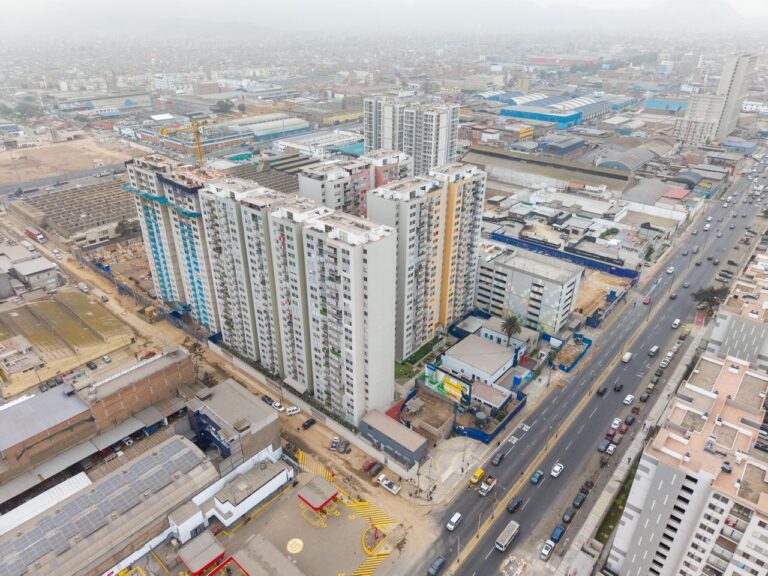
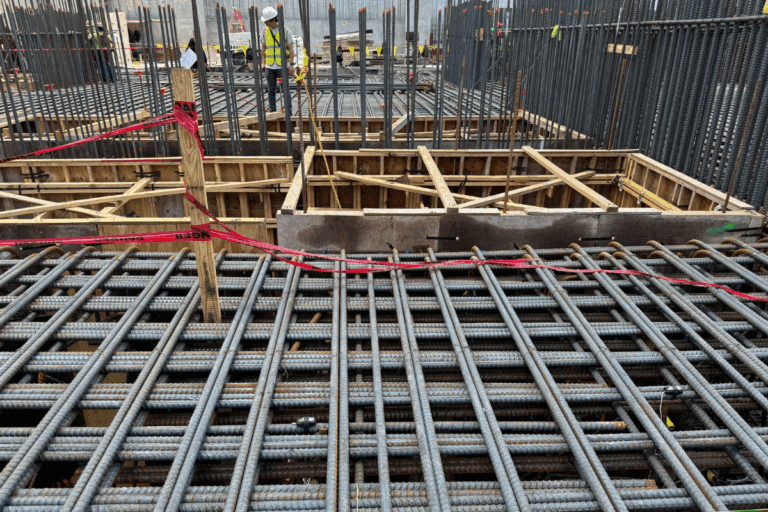
Two Towers is one of the most complex construction projects ever undertaken in Kosovo. Two 24-story commercial towers, a foundation poured in two phases totaling roughly 11,000 m³, and varying slab thicknesses across the same structure.
Add Kosovo’s cold weather conditions, the thermal demands of mass concrete, and a tight construction schedule, and CONTEST Laboratory was managing quality control on a project with little room for error at any stage. The foundation alone would prove to be where the most critical monitoring decisions were made.
A Foundation Too Complex to Leave to Lab Results
Before SmartRock®, concrete temperature monitoring was not standard practice in Kosovo. Teams relied entirely on lab-tested cube specimens, with no field visibility and no real-time data. Results came back after a delay, by which point the window to intervene had already closed, and every decision that followed was reactive.
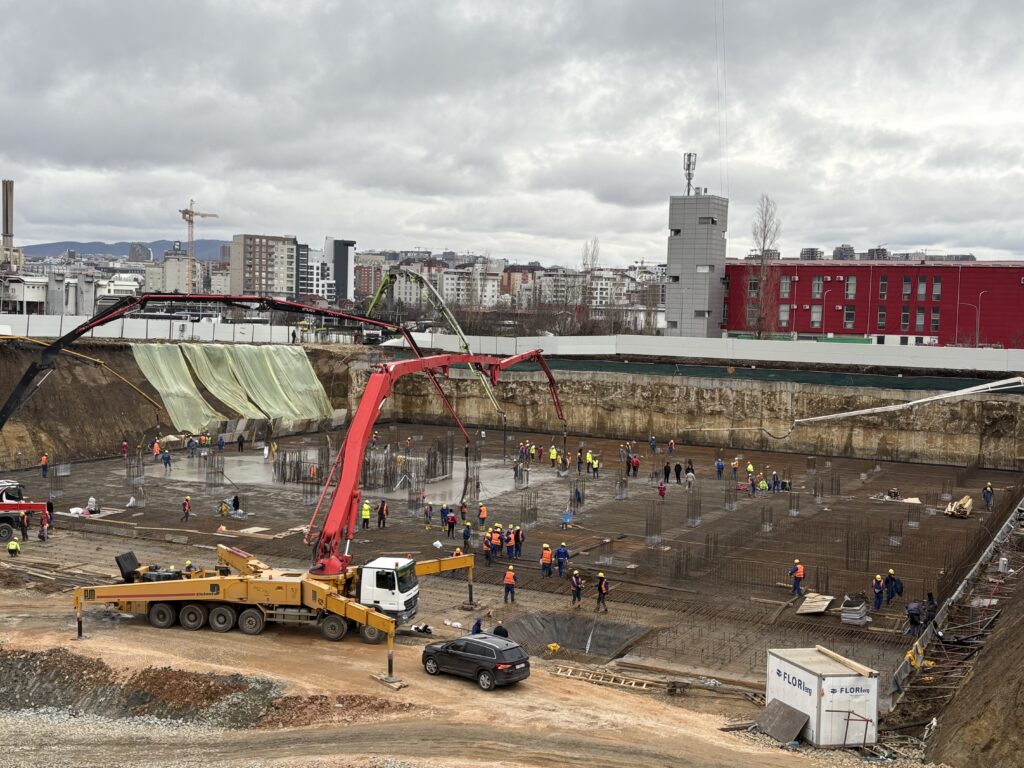
On a foundation of this complexity, that gap had real consequences. Temperature directly affects both compressive and tensile strength development, and without accurate data on site, that relationship was impossible to manage. In high heat, rapid drying and shrinkage cracking could develop before anyone had numbers to act on.
In cold weather, especially in climates like Kosovo, the risks ran deeper: delayed setting, freezing, or in the worst case, concrete failure. On a pour of this scale, getting it wrong meant a schedule overrun at best.
From Manual Checks to Real-Time Confidence
Driton Kryeziu, Civil Engineer at CONTEST Laboratory, first introduced SmartRock sensors to Kosovo in 2019 alongside his colleague Armend Mujaj, Civil Engineer.
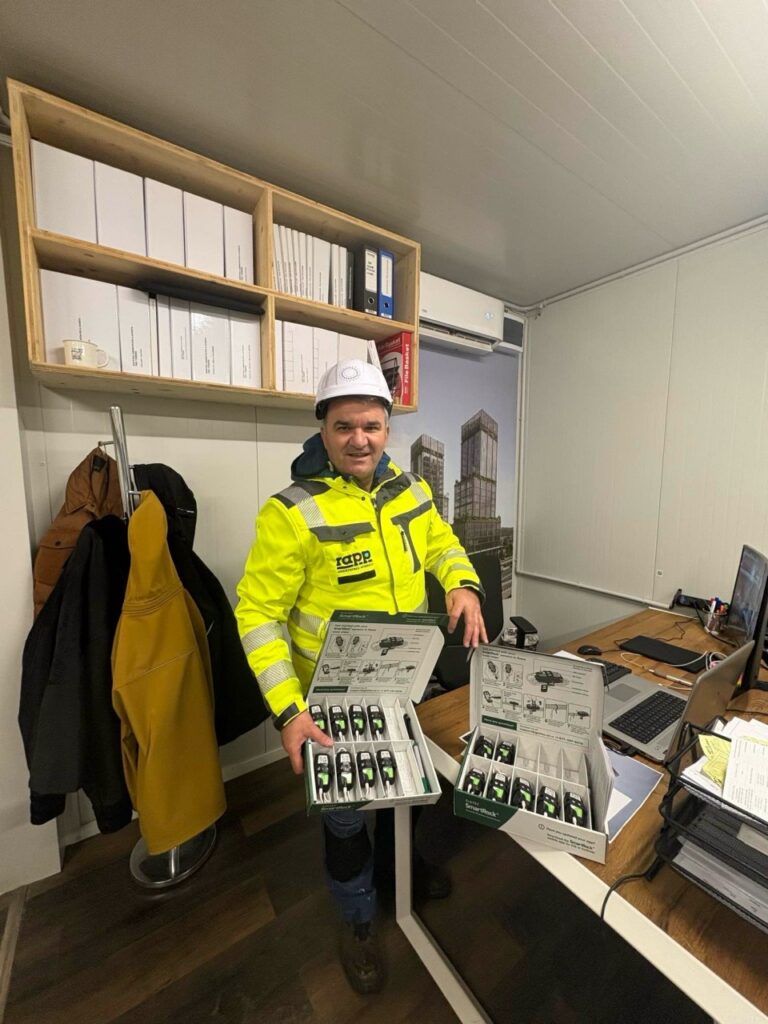
By the time Two Towers broke ground, the team had already deployed it across several high-rise projects. The validation process was second nature. Kryeziu developed maturity curves and compared sensor readings against cube break results pour by pour until the correlation was confirmed. What the data showed every time was the same: SmartRock could be trusted to drive decisions on site.
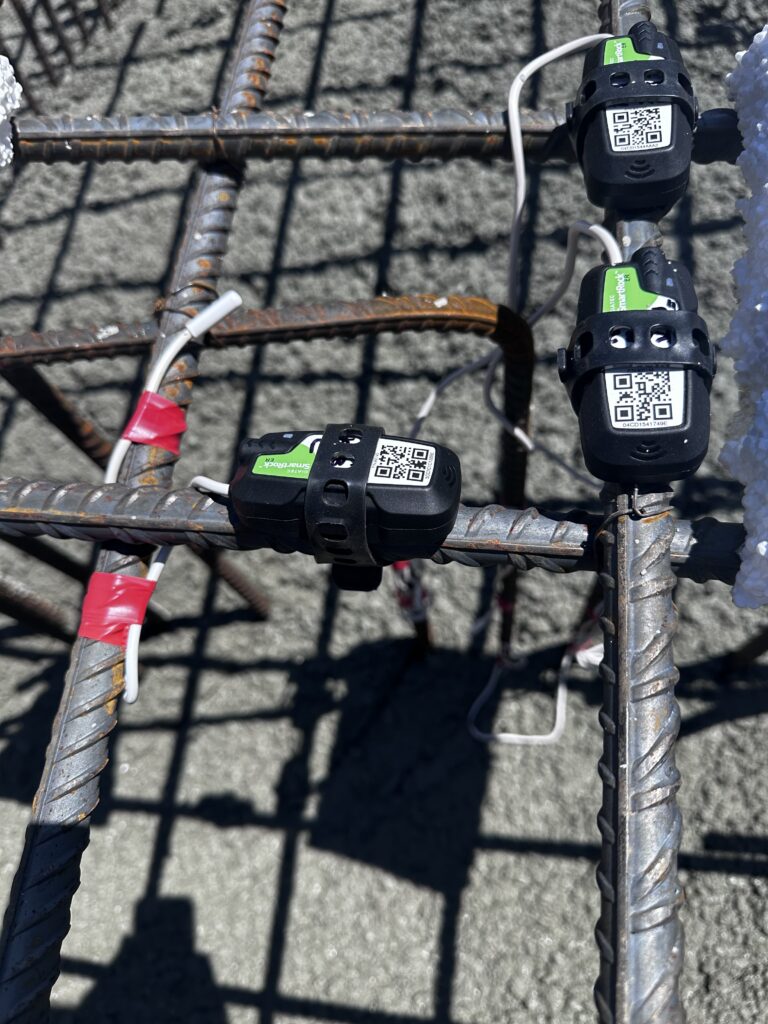
That confidence carried directly into Two Towers. Where traditional thermocouples took 15 to 20 minutes to install per point, SmartRock sensors were in and reading in 3 to 5 minutes. The daily manual temperature walk that had consumed up to an hour every morning was replaced by a quick app check that gave the whole team the same picture in minutes. Weekly reporting that once took most of a morning was done in under an hour.
“SmartRock is a practical tool that provides real-time data on concrete temperature and strength directly on site, without delays or guesswork. It helps you make faster, safer decisions with less risk. This comes from hands-on experience, not from something seen or heard online.”
– Driton Kryeziu, Civil Engineer, CONTEST Laboratory
5 Days Recovered Across a One-of-a-Kind Pour
Across two foundation pours, real-time maturity data returned an estimated 2 to 3 days to the project schedule per pour. With in-place strength confirmed on the spot, the team could move forward as soon as the concrete was ready. On top of that, they saved hours of labor from manual site checks on the foundation element alone.
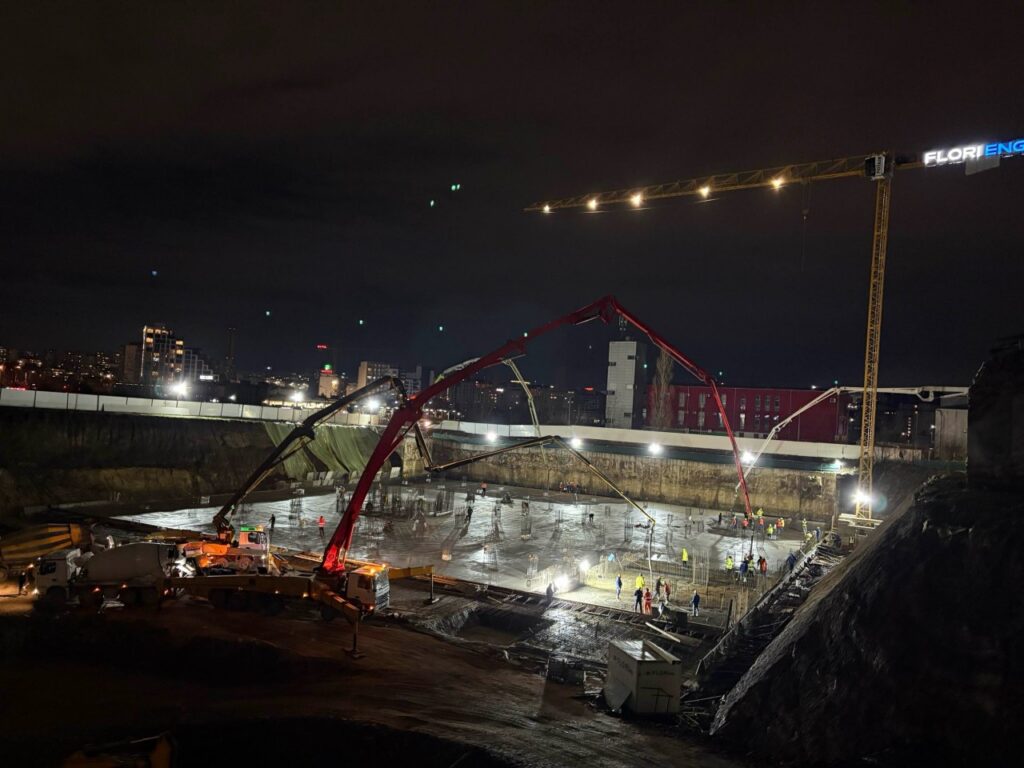
The gains mattered most where the risks were highest. In mass concrete, live temperature visibility meant differentials were caught and managed before they became cracks. In cold weather, strength data confirmed on site replaced the uncertainty around insufficient strength development. When the schedule tightened, the team had answers in minutes. The reactive cycle of waiting on lab results was gone.

The benefits extended beyond speed. In a market where manual data collection introduces real risk of human error and data integrity cannot always be guaranteed, SmartRock removed that variable entirely. Every temperature and strength reading was automatically recorded, timestamped, and traceable, giving the developer, contractor, and designer a quality assurance record that no paper-based system could match. Most importantly, the team could pursue target strength with confidence rather than caution. Stripping times were optimized on real numbers, not guesswork.
“In practice, it has been evident that the project can be executed faster and at lower cost by using SmartRock sensors. It gives you a level of control that traditional methods simply don’t offer.”
– Driton Kryeziu, Civil Engineer, CONTEST Laboratory
Results at a Glance
| Metric | Impact |
| Project Scale | Two 24-story towers; foundation poured in two phases totaling ~11,000 m³ |
| Installation Time | Reduced from 15-20 min per point with traditional methods to 3–5 min per sensor |
| Daily Data Collection | Reduced from 45-60 min of manual on-site checks to 10-15 min via the SmartRock app |
| Weekly Reporting Time | Reduced from 2-3 hours to 30-45 min |
| Days Saved per Pour | Estimated 2 to 3 days |
A New Standard for Concrete Monitoring in Kosovo
For Kryeziu and his team, SmartRock has become a standard part of quality control practice in Kosovo. As the country’s construction sector takes on more complex projects, concrete monitoring with live, on-site data is no longer a specialty tool. It is a baseline expectation.
“Before SmartRock, concrete temperature monitoring was not standard practice in Kosovo. Now it is,” said Kryeziu. “The construction sector here is taking on more complex projects, and the expectations around quality documentation are growing. When clients and developers ask for a transparent, traceable record of how their concrete was monitored, SmartRock is how we deliver that.”