


Data center construction is accelerating rapidly as demand for cloud services, AI computing, and digital infrastructure continues to grow. These projects are delivered on compressed schedules with little tolerance for setbacks, and concrete is often the first major scope that determines whether a site stays on track.
In this blog, learn how innovative long-range concrete monitoring supports faster data center construction by providing real-time visibility into in-place strength and temperature development.
Why Concrete Performance is Mission-Critical in Data Centers
Data center projects are complex, multi-year builds delivered under aggressive schedules with little tolerance for delay. Many data center construction delays begin during curing.
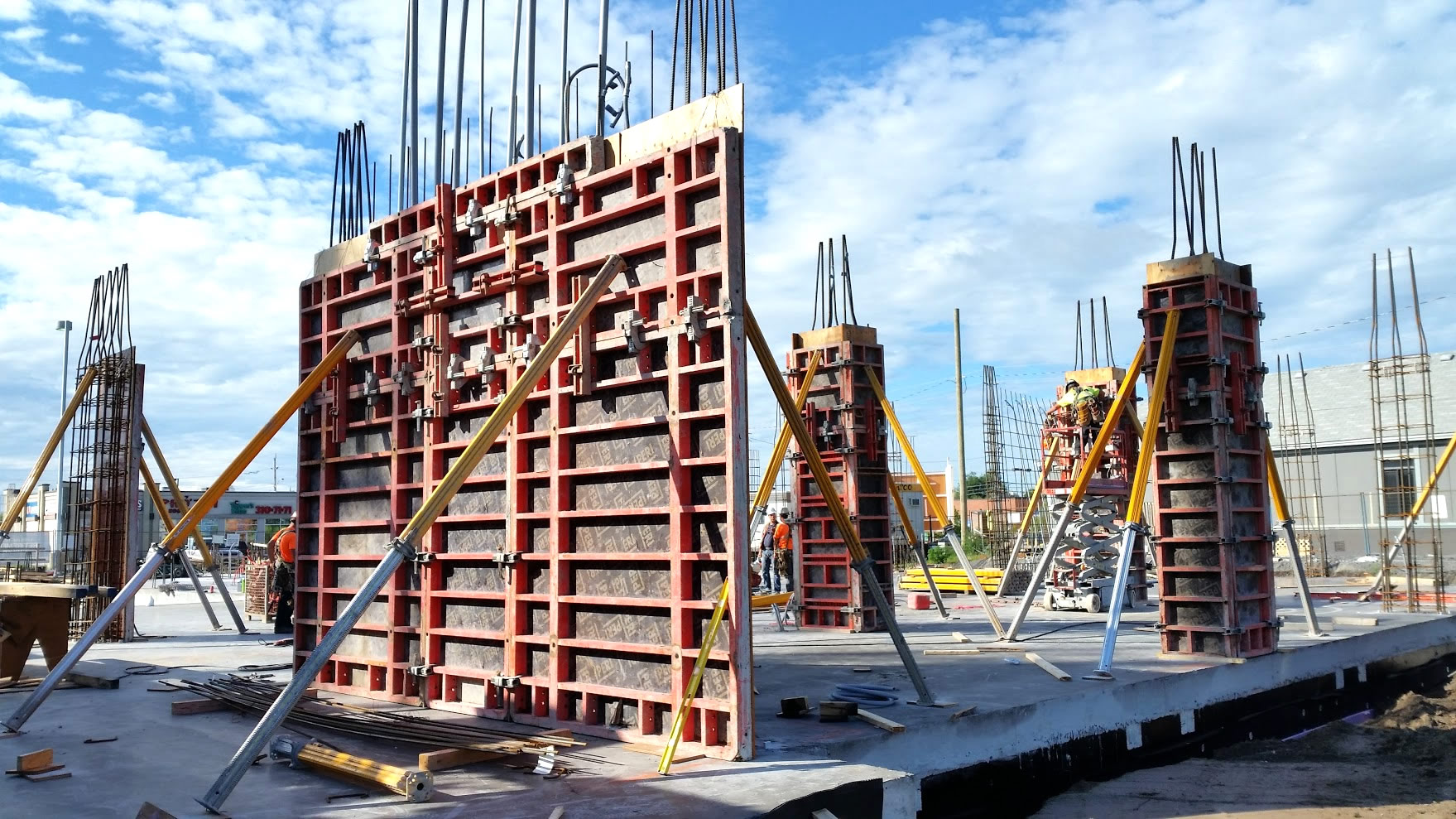
Concrete is one of the earliest and most schedule-sensitive scopes on site because nearly everything follows it. Foundations, slabs, and equipment pads must reach strength targets before crews can proceed to the next step in the project schedule, such as stripping formwork. When concrete operations slip, downstream activities, such as structural erection, MEP installation, equipment placement, and commissioning, can be pushed off the critical path.
This leads to missed milestones, disputed testing results, premature loading, and durability issues that can affect warranties and long-term reliability, while also driving detrimental delays across the construction schedule.
Where Data Center Construction Delays Begin
Many concrete-related delays on data center projects are not caused by placement issues, but by uncertainty.
Common causes include:
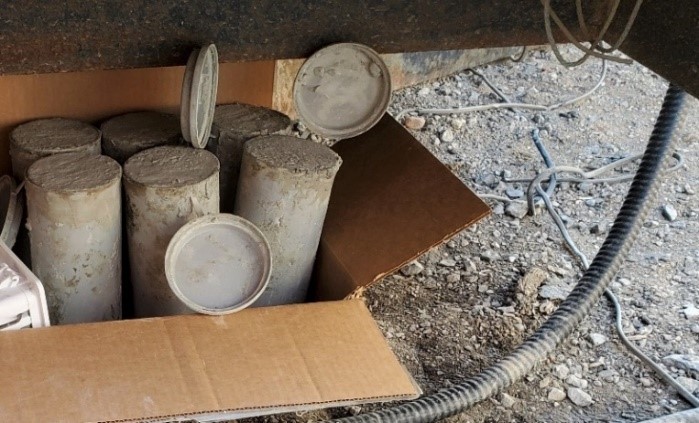
- Waiting on field-cured cylinder breaks
- Inconsistent curing conditions across large pours
- Conservative hold points built into schedules to avoid premature loading
- Disputed or failed test results that halt follow-on trades
When teams lack visibility into in-place concrete performance, decisions default to waiting. On compressed data center schedules, that lost time is rarely recovered.
Get the pros and cons of the cylinder break test. Learn more here!
Uptime and Resiliency Start at the Slab
Concrete in data centers is directly tied to operational reliability because it supports the systems that keep facilities running.
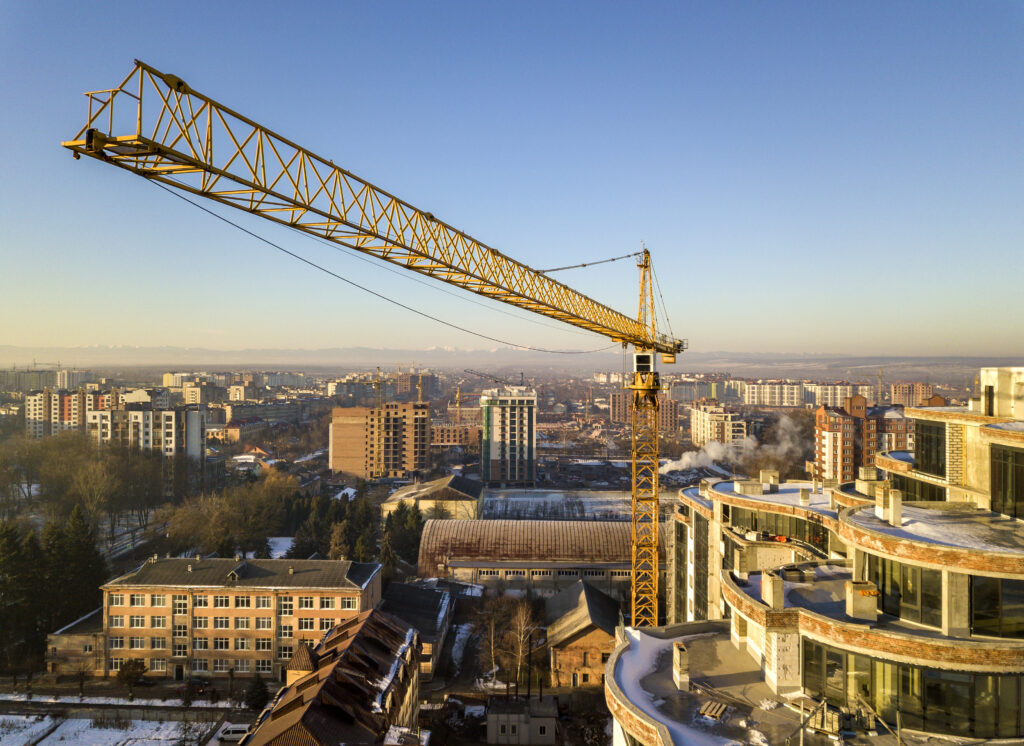
Essential elements include foundations, slabs, equipment pads, and pedestal floors, which must reliably carry heavy loads and maintain performance over time. Risks include:
- These structural elements support heavy racks, battery rooms, and backup generators, where load performance and tolerances are non-negotiable.
- Premature cracking, curing-related defects, and differential settlement can create serviceability issues and long-term reliability concerns.
- When defects emerge after equipment installation, remediation becomes significantly more complex and can increase warranty exposure and dispute risk.
As these risks directly affect uptime and important construction activities, verifying concrete performance is essential on data center projects.
Extreme Environments Increase Performance Demands
Many hyperscale sites are built in various regions with high water tables, freeze-thaw cycling, seismic risk, or high ambient temperatures. These conditions increase the importance of curing control and durability planning. Thermal behavior and moisture management directly influence early-age cracking risk and long-term performance of critical structural elements.
Fast-Track and Repeatable Builds Require Certainty
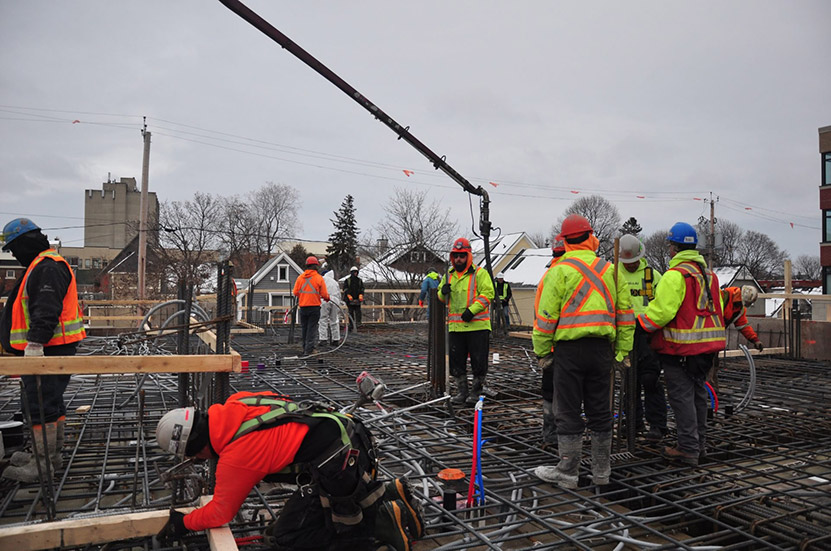
Shaving even a day off each pour cycle can scale into meaningful time-to-market gains. Accelerated schedules only work when decisions about formwork removal, slab loading, or sequencing are based on reliable performance data rather than conservative waiting periods.
A Clear Solution: Long-Range Concrete Monitoring
Long-range concrete monitoring provides continuous, site-wide visibility into how concrete is actually performing in place. This allows teams to act on real data, rather than assumptions tied to curing timelines or delayed test results.
With real-time data, contractors can confidently make earlier, more confident decisions to move ahead on field operations.
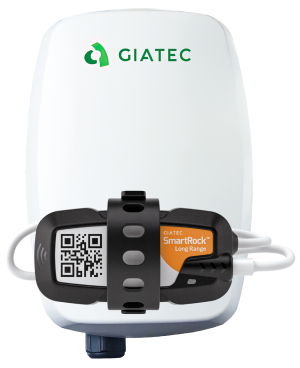
Through the maturity method, SmartRock® Long Range wireless concrete sensors remotely monitor strength and temperature in real time. Here’s how they work for data center projects:
- Embedded Wireless Sensors in the Pour
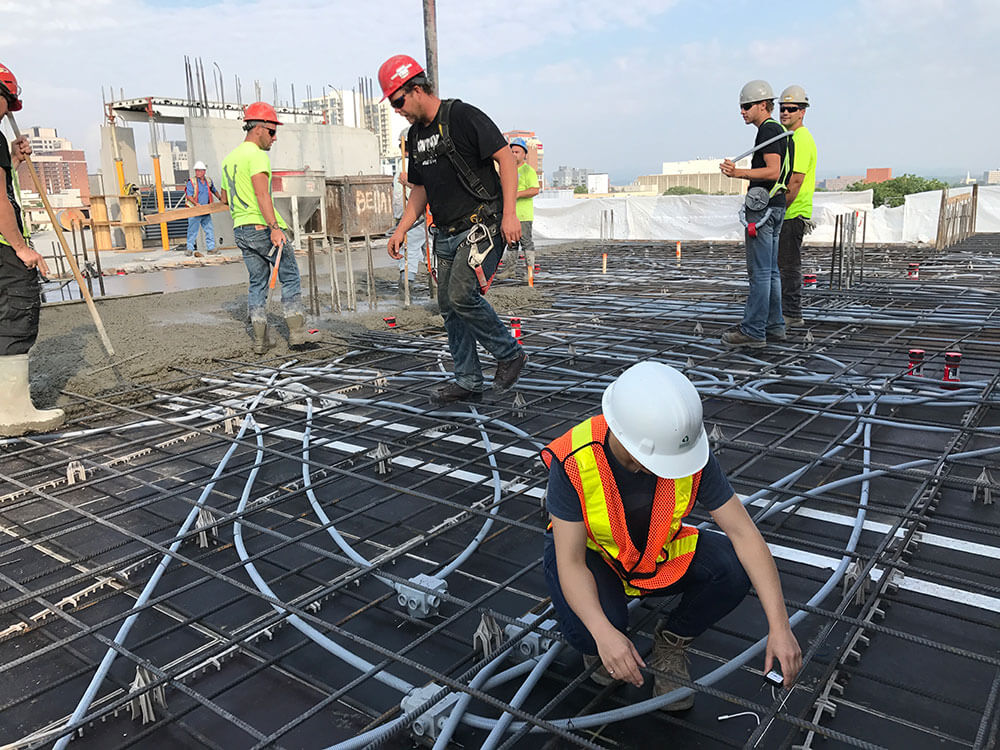
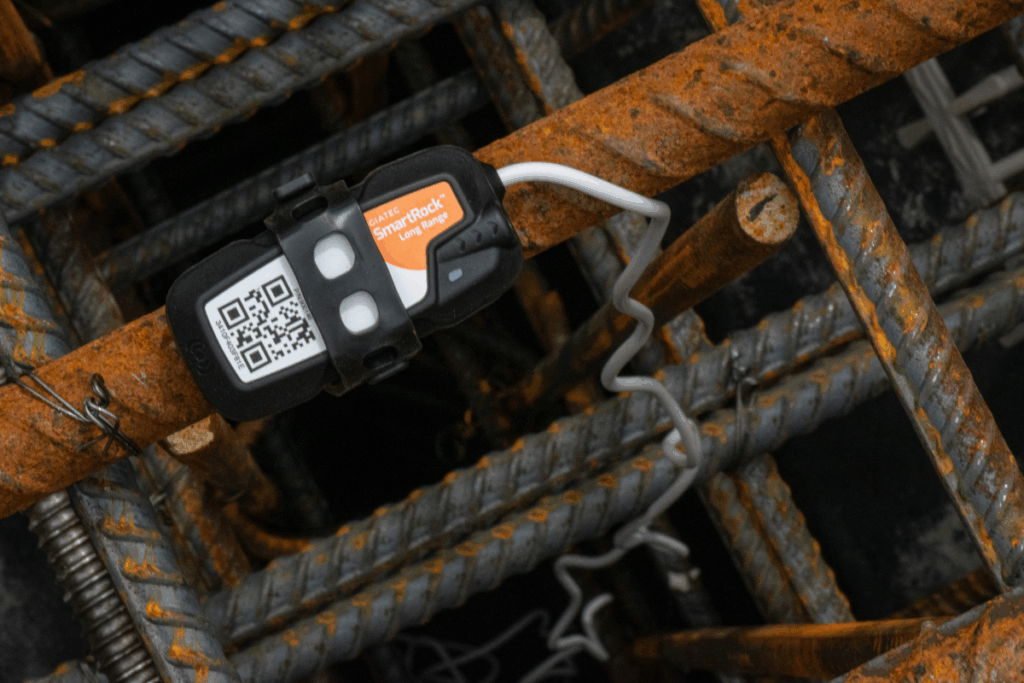
Designed for durability in the harshest conditions, the wireless sensors are installed directly on rebar and cast into the concrete. They remain embedded throughout curing with no need for retrieval. Sensors collect temperature and maturity-based strength data in real time.
- Dual-Location Measurement for Better Curing Visibility
Sensors capture behavior from two locations: the sensor body and a probe at the tip of a cable. This improves visibility into surface-to-core temperature behavior and how curing conditions influence strength development, which is particularly important for thick sections and mass pours.
- Long-Range Connectivity for Campus-Scale Sites
Data is collected automatically at regular intervals (every 15 minutes) and transmitted wirelessly over long distances up to 1000 ft (300 m), enabling monitoring across large job sites. This makes the system practical for data centers with multiple pours and structures without requiring teams to move hardware across the location.
- Cloud Platform and Mobile Access for Real-Time Decisions
Sensor data streams into cloud dashboards, such as Giatec 360™, and mobile tools, providing real-time strength progression, alerts when targets are reached, and shareable digital reports for decision-making and documentation.
To demonstrate ease of use: a SmartRock Long Range sensor is embedded in a concrete slab with no hassle. It records the in-place temperature and strength data every 15 minutes, and wirelessly transmits it to the cloud dashboard. With data-backed insights, your team can confirm the exact hour the concrete reaches the required strength for loading or post-tensioning. Thus, allowing you to move faster than expected on your tight schedule.
Long-Range Monitoring Benefits for Data Center Projects
For data center teams, long-range concrete monitoring is ultimately a schedule and risk-control tool. By providing continuous visibility into in-place concrete behavior across large sites, it supports faster construction decisions and more predictable execution on critical pours.
The most immediate impact is improved schedule certainty. When strength development is verified in real time, teams can reduce conservative hold points and keep sequencing aligned with actual concrete readiness, rather than estimated timelines.
Long-range monitoring also strengthens quality control. Standardized data capture and digital reporting improve consistency between pours, phases, and structures, helping teams document performance clearly and reduce uncertainty in construction decision-making.
Finally, because visibility is maintained remotely across campus-scale sites, owners and project teams gain a more reliable basis for oversight and coordination, particularly when managing multiple buildings or building phases.
Proven SmartRock Long Range Success on Data Center Projects
SmartRock Long Range has been used on major data center projects to provide real-time in-place strength and temperature data, helping leading contractors and their teams in North America reduce testing delays and accelerate concrete-driven schedules:
| Data Center Project | Contractor | What SmartRock Long Range Enabled |
| Amazon Data Center (Ashburn, VA) | HITT Contracting | Replaced field-cured cylinders to reduce dependency on lab results |
| Meta Data Center Campus (Fort Worth, TX) | JE Dunn | Monitored early-age behavior to prevent thermal cracking in mass pours |
| Microsoft Data Centre (San Antonio, TX) | Turner Construction | Enabled early formwork removal through real-time strength monitoring |
These projects demonstrate that SmartRock Long Range is already supporting faster, lower-risk concrete operations on current data center builds.
Want to learn more about why leading contractors choose SmartRock Long Range? Find out here!
Range Matters Specifically on Data Center Sites
Many monitoring approaches work in principle, but data center sites introduce scale and congestion that expose the limitations of short-range solutions. Long-range capability is what makes monitoring scalable across big projects, like data centers.
- Campus-Scale Coverage: Large sites spanning multiple buildings and infrastructure zones can be monitored across long distances with minimal setup complexity.
- Reduced Operational Burden: Autonomous data transmission reduces the need to relocate readers or troubleshoot coverage gaps as the site evolves.
- Reliability In Congested Environments: Fully embedded, cable-free sensors remain protected throughout reinforcement and construction activity, reducing disruption risk.
- Remote Visibility and Oversight: Cloud dashboards and digital reporting support centralized decision-making and standardized QA across multiple pours, phases, buildings, or campuses.
For data center construction, long-range monitoring provides the site-wide visibility needed to standardize concrete operations, improve decision speed, and reduce schedule risk across multiple buildings and phases.
Conclusion
In data center construction, concrete performance directly affects schedule certainty, risk control, and long-term reliability. When in-place behavior is unknown, decisions become conservative, and delays become more likely.
Long-range concrete monitoring, such as SmartRock Long Range, provides continuous visibility into strength and temperature development across large sites, enabling faster sequencing decisions, improved curing control, and more confident execution on critical pours.
Skyrise Engineering & Testing LLC., used SmartRock Long Range and saved over 140 hours on their schedule. Learn how here!