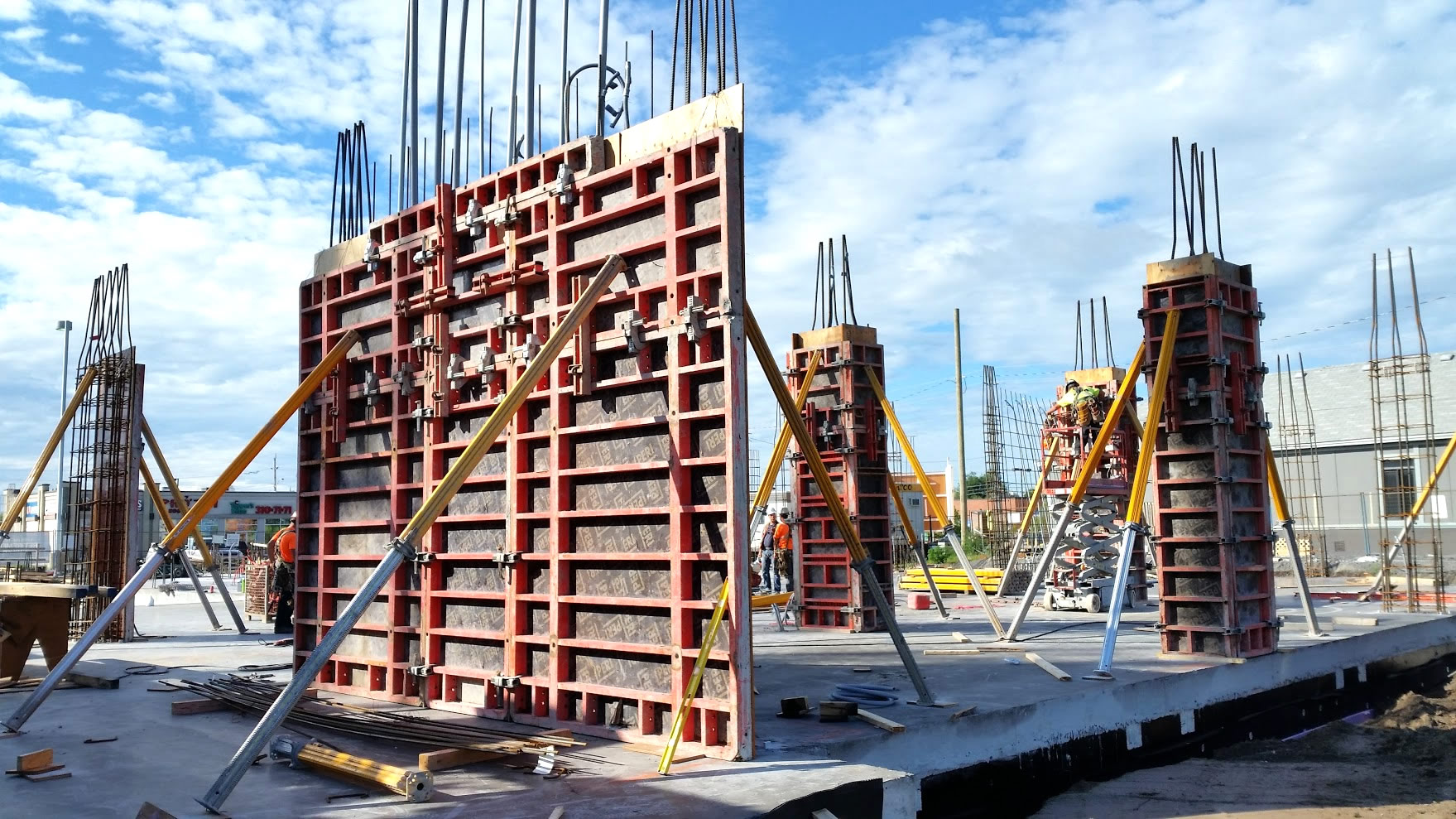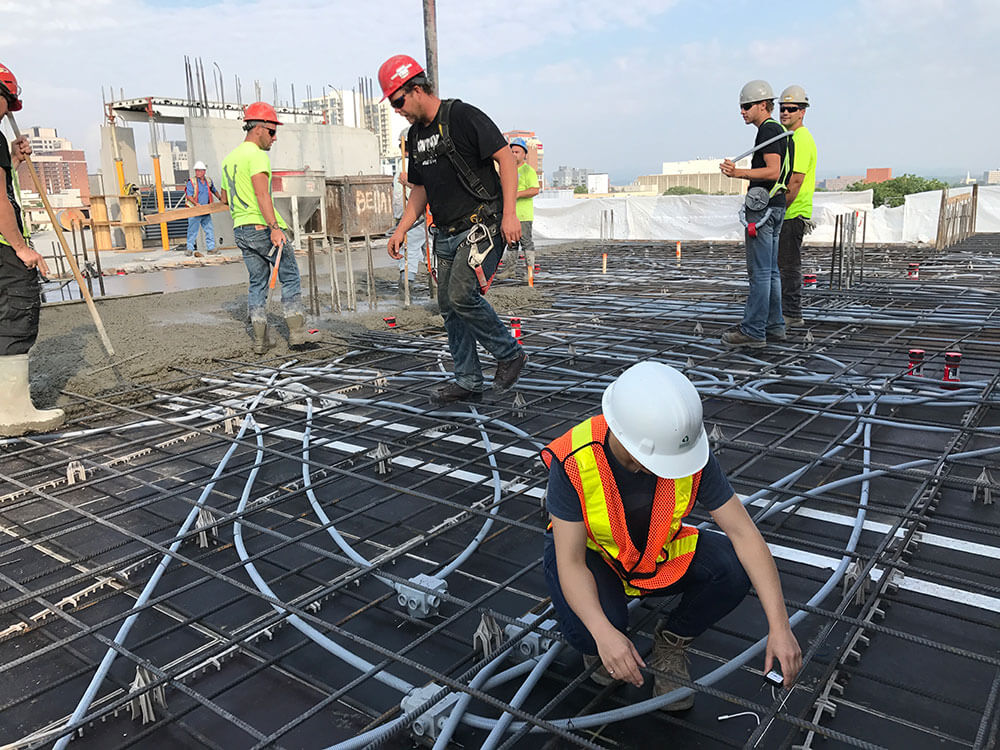

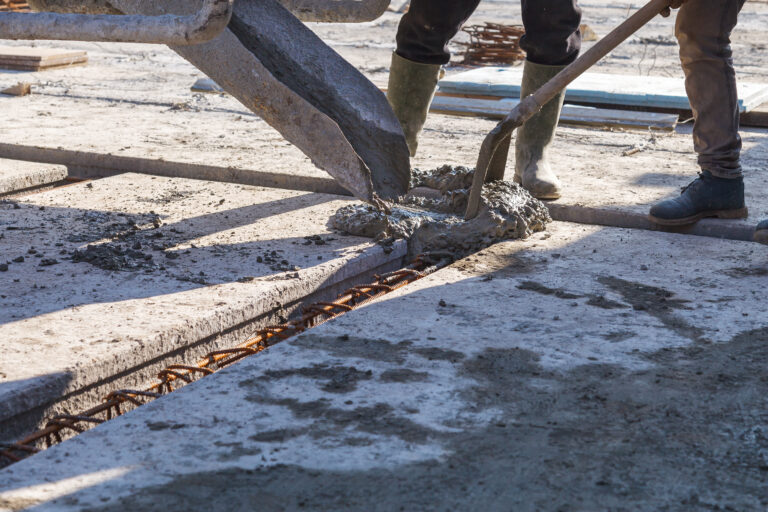
Concrete does not dry. It cures. That distinction matters more than most people on a jobsite realize, and misunderstanding it is one of the most common sources of costly delays, structural risk, and avoidable rework in concrete construction. Industry-wide, rework already eats an estimated 5% of total project cost on average, and concrete that misses its strength spec is one of its textbook triggers.
Concrete’s design strength (f’c) is conventionally specified and verified at 28 days, but that is a benchmark age, not a physical floor: high-early mixes can reach design strength sooner, while slower mixes take longer. It begins gaining measurable strength within 24 to 48 hours and reaches roughly 70% of its specified strength by 7 days. Actual cure time varies with temperature, mix design, and moisture availability. SmartRock® sensors use the maturity method (ASTM C1074) to estimate in-place strength continuously from the moment of the pour, giving project teams real-time visibility into curing performance without waiting on lab results and reducing reliance on cylinder break tests.
For teams dealing with frequent mix design changes, SmartRock Pro adds self-calibrating CEMMA technology that removes the need for manual sensor calibration entirely.
In this blog, let’s learn what drives those timelines, where cylinder break tests fall short, and how to confirm your concrete has reached the strength you need before moving to the next phase.
How Long Does Concrete Take to Cure?
Concrete curing is driven by hydration, a chemical reaction between cement and water that causes concrete to harden and gain strength over time. The rate at which it progresses depends on a combination of factors that vary from pour to pour.
Here are benchmarks for concrete cure time:
- 24 to 48 hours: Concrete typically reaches enough strength for foot traffic, and formwork on vertical elements may be removable under the right conditions.
- 7 days: Concrete generally reaches approximately 70% of its 28-day compressive strength. ACI 308 recommends this as the minimum curing duration for most elements under specified temperature conditions.
- 28 days: The conventional design strength benchmark. ASTM and ACI standards use 28-day compressive strength as the standard reference point for structural specifications.
- Beyond 28 days: Concrete continues to gain strength for months, particularly mixes containing supplementary cementitious materials (SCMs) such as fly ash or slag.
These are guidelines, not guarantees. The actual concrete cure time on your project depends on conditions no calendar can predict.
What Affects Concrete Cure Time?
These variables interact. A cold pour with a high-slag mix and a thin cross-section will cure significantly slower than calendar-based estimates assume.
| Factor | Effect on Cure Time | Practical Implication |
| Temperature | Below 50°F (10°C), strength gain slows significantly. Hot weather accelerates early gain but risks moisture loss. | Monitor internal temperature in real time, not ambient conditions. |
| Mix design | Higher SCM content (fly ash, slag) slows early strength gain. Lower water-to-cement ratio affects workability and hydration rate. | SCM mixes often need curing periods beyond the standard seven-day minimum. |
| Element size and geometry | Mass concrete retains hydration heat, accelerating internal curing. Thin sections lose heat faster. | Strength can vary significantly between sections of the same pour. |
| Moisture availability | Concrete that loses moisture too quickly through evaporation cannot complete hydration. | Curing methods that retain surface moisture are critical in hot, dry, or windy conditions. |
Want to master the science behind strength gain? Unlock the full potential of your pour with the Strength & Maturity ebook.
For decades, the cylinder break test has been the standard method of verifying concrete strength. Cylinders are cast at the time of the pour, cured under standardized lab conditions, and crushed at 7 and 28 days. The problem is fundamental: laboratory-cured cylinders do not experience what your in-place concrete experiences. There is a deeper issue, too: a cylinder only tests the concrete you cast into the mold, not the concrete that actually went into your element. If the delivered mix drifts from what was sampled, the break can pass while the structure lags behind.
Why Cylinder Break Tests Fall Short
Three specific failure modes drive delays and risk on real projects:
- Lab conditions do not match field conditions. Cylinders cure at a controlled 73°F (23°C). Your in-place concrete deals with temperature swings, wind, precipitation, and mix variability from batching, transport, and placement. When field conditions are colder, in-place concrete may lag well behind what cylinder results suggest.
- Results arrive too late. By the time 7-day or 28-day break results come back from the lab, the decision window has often already passed. You either waited unnecessarily or proceeded without verification. On a 55-story building, contractor PCL found that waiting on the first lab break could cost three or more hours per cycle, time the structure may have already gained the strength it needed.
- Human error invalidates results. A low break may reflect a flawed cylinder, not weak concrete. Errors in preparation, handling, transport, or testing can trigger costly disputes and delays that have nothing to do with actual in-place strength.
How to Reduce Reliance on Cylinder Break Tests
The concrete maturity method, standardized under ASTM C1074 and accepted by ACI 318, CSA A23.1, and most U.S. Department of Transportation specifications, estimates in-place strength based on the cumulative time-temperature history of the concrete during curing. It is a proven, code-recognized standard that many project teams use alongside cylinder breaks to make more informed, timely decisions.
The traditional limitation is calibration. Establishing the maturity-strength relationship for a given mix requires laboratory testing that takes time, adds cost, and must be repeated every time the mix design changes. There is also a subtler risk: a maturity curve is only as good as the mix it was calibrated on. If the delivered mix drifts from that calibration mix, the strength estimate drifts with it, and nothing on the screen warns you.
How SmartRock Monitors In-Place Strength in Real Time
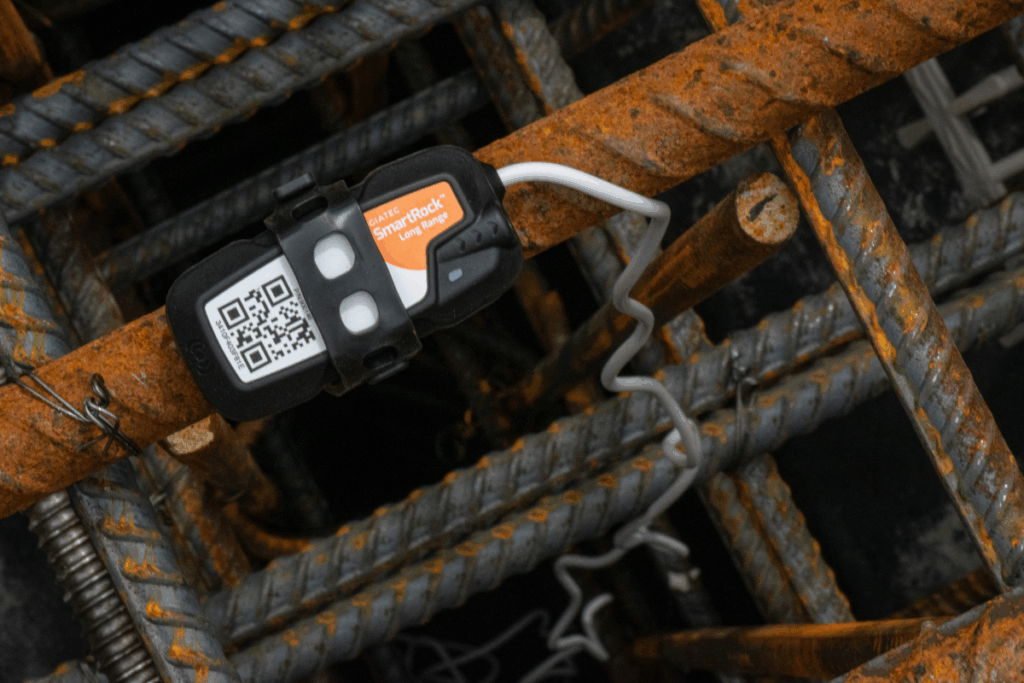
SmartRock is the world’s leading wireless sensor for monitoring concrete strength and temperature in real time. It uses the maturity method (ASTM C1074) to estimate in-place strength automatically from temperature data collected by the sensor, which attaches to the rebar and is embedded in the concrete before the pour.
On the 35-story ONE Park Tower in North Miami (developer Turnberry Associates, built by Juneau Construction), testing firm Skyrise Engineering & Testing embedded SmartRock®Long Range across roughly 45,000 yd³ (34,000 m³) of concrete and estimated two to four hours saved per pour, about 140 to 280 hours of delay avoided from sample pickup, break scheduling, and manual reporting.
On Meta’s hyperscale data center campus in Fort Worth, Texas, contractors HITT and JE Dunn used SmartRock Long Range on massive mass-concrete foundations to replace field-cured cylinders and time wall-tilt and form-stripping on live strength data instead of the calendar.
- Code-recognized method. SmartRock uses ASTM C1074, accepted by ACI 318, CSA A23.1, and most U.S. DOT specifications, giving project teams a standardized basis for in-place strength decisions.
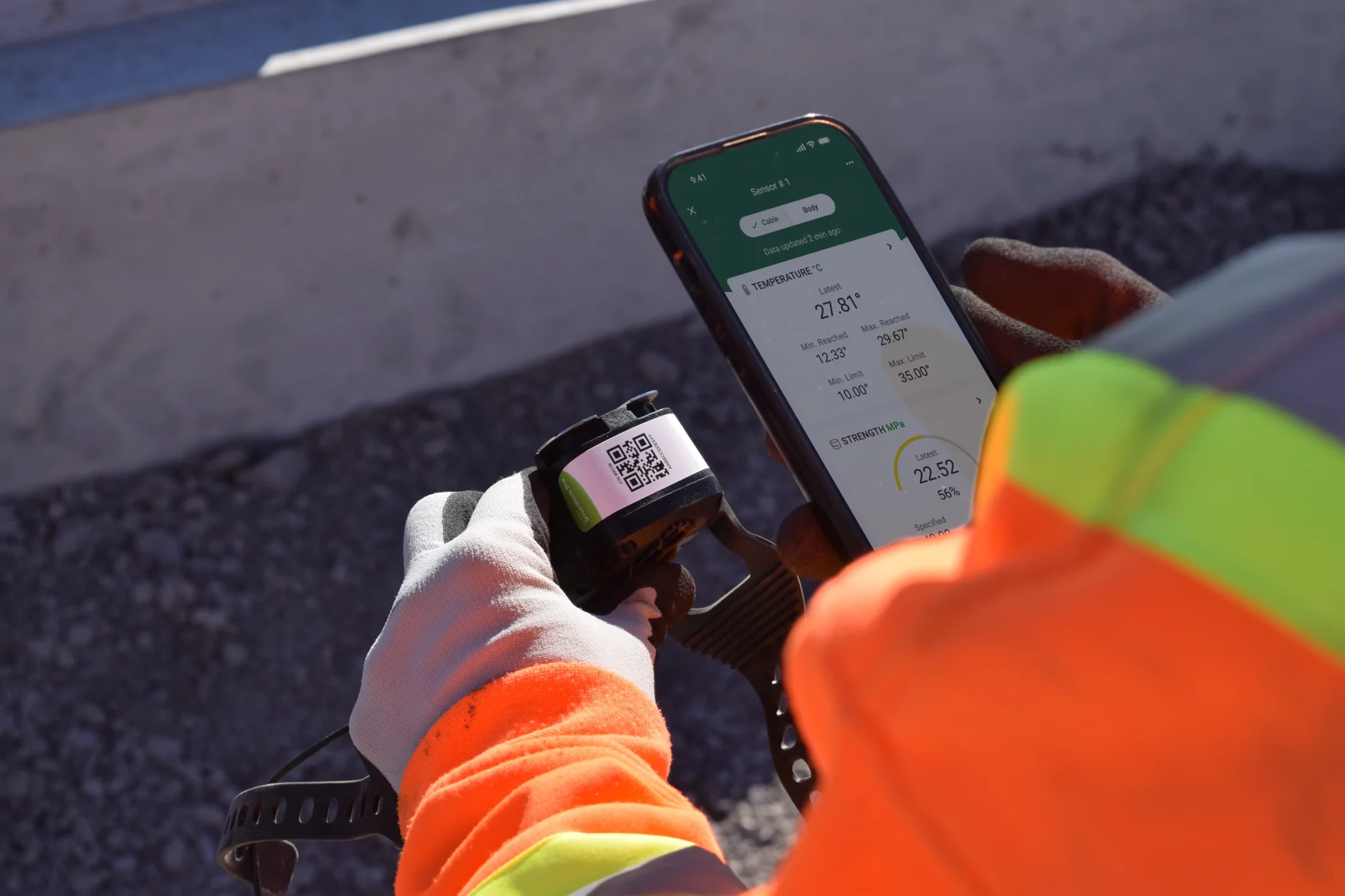
- Real-time strength and temperature data. Results are accessible through the SmartRock mobile app and SmartRock Web dashboard continuously from the moment of the pour.
- Easy installation. The sensor attaches to the rebar and is embedded in the concrete. Scan the QR code, and monitoring begins; no wires, no external data loggers.
- AI-assisted alerts. Roxi™, Giatec’s AI assistant, sends smart notifications when concrete approaches or reaches critical strength thresholds.
How SmartRock Pro®Handles Mix Changes
SmartRock Pro closes that gap. Using its patent-pending CEMMA (Concrete Electro-Mechanical Microstructure Analysis) method, it measures strength directly from the concrete’s evolving microstructure, so it self-calibrates with no maturity curve and no manual input. Because it needs no calibration, it reads the actual in-place mix and reflects the concrete that is really in your element, catching the drift that both a field-cured cylinder and a fixed maturity curve quietly miss.
Here is how the three approaches compare:
| Method | Best for | Time to result | Needs calibration? | Reflects in-place mix? | Cost |
| Cylinder breaks | Code compliance and the official record | 7 and 28 days (lab) | No | No – tests a separately cast, lab-cured specimen | Per-test lab fees plus schedule delay |
| SmartRock (maturity) | Real-time in-place strength on a consistent mix | Continuous, from the pour | Yes – mix-specific curve (ASTM C1074) | Partly – true element temperature, but strength via the calibrated mix | One sensor per location |
| SmartRock Pro | Real-time strength when mixes change or vary | Continuous, from the pour | No – CEMMA self-calibrating | Yes – measures the actual in-place concrete | One sensor per location (premium) |
See the engineering behind self-calibrating strength monitoring. Discover how leading contractors are transforming their jobsites in the Technical Insights into SmartRock Pro white paper.
Cold Weather Pours: Where the Gap Is Most Consequential
Cold weather is where the difference between cylinder results and in-place performance matters most. A cylinder cured at 73°F (23°C) will consistently outperform field-placed concrete experiencing 35°F (2°C) nights, sometimes by a significant margin.
Without real-time monitoring inside the structure, you are estimating. SmartRock captures every temperature fluctuation the pour actually experiences, so you know when strength is on track and when a cold front has pushed curing behind schedule before it becomes a problem. That visibility can also settle disputes. On a 276-unit apartment project in Kansas City, contractor Bottorff Construction faced sub-20°F (-7°C) weather and an inspection agency that ruled a pour deficient for freezing. Bottorff placed SmartRock sensors (with ready-mix partner Geiger) in a fresh pour under the same conditions and used the real-time in-place data to prove the concrete had reached an acceptable temperature and strength, then stripped forms a day earlier per pour.
Stop Guessing. Start Knowing.
Concrete cure time is not something you can rush. But waiting blindly is a choice, not a requirement. The difference between guessing when concrete is ready and knowing when it is ready shows up directly in schedule performance, structural confidence, and avoided rework.
If your projects involve critical strength milestones, cold weather pours, or the need for real-time in-place data, SmartRock gives you a code-recognized, accurate, and efficient path from pour to next phase. For teams managing frequent mix design changes, SmartRock Pro takes it a step further.
Want to hear how real-time data is reshaping concrete decisions? Listen to The Construction Revolution Podcast episode The Importance of Optimizing Concrete with Real-Time Aggregate Data!
Frequently Asked Questions
How Long Does Concrete Take to Cure Completely?
There is no single endpoint. Concrete reaches approximately 70% of its design strength at 7 days and the 28-day compressive strength benchmark at four weeks. Mixes with SCMs continue gaining strength for months beyond that. Structural operations are governed by minimum strength thresholds, not a fixed cure duration.
Is Concrete Cure Time the Same as Dry Time?
No. Concrete gains strength through hydration, a chemical reaction that requires water. Concrete that dries out too quickly may never reach its potential strength. Keeping concrete moist during the early curing period is critical, not optional.
What is the Minimum Concrete Strength Before Removing Formwork?
There is no single universal value. ACI 347 provides guidance, and most specifications require verification of a minimum in-place strength before formwork is removed. The threshold varies by element type and the loads it must carry. Relying on estimated timeframes alone introduces avoidable risk.
Can You Walk on Concrete After 24 Hours?
Generally yes, for foot traffic only under typical temperature conditions. Concrete placed at standard temperatures usually achieves sufficient surface hardness within 24 to 48 hours. Heavy equipment and construction loading require verified design strength thresholds before application.
How Does Cold Weather Affect Concrete Cure Time?
Below 50°F (10°C), strength gain slows significantly. Below 40°F (4°C), curing can nearly stop. Concrete that freezes before reaching approximately 500 psi (3.5 MPa) may suffer permanent damage. ACI 306R outlines cold weather practices. Real-time temperature monitoring inside the structure is essential because surface conditions and forecasts do not reflect what is happening within the pour.
What is the Concrete Maturity Method?
The maturity method (ASTM C1074) estimates in-place strength based on the cumulative time-temperature history of curing concrete. It is accepted by ACI 318, CSA A23.1, and most U.S. DOT specifications. The traditional limitation is that it requires mix-specific calibration through cylinder break tests, which must be repeated whenever the mix design changes.
How Does SmartRock Reduce Reliance on Cylinder Break Tests?
SmartRock uses the maturity method (ASTM C1074) to estimate in-place concrete strength continuously from temperature data collected by the sensor. Because the method is accepted by ACI 318, CSA A23.1, and most U.S. DOT specifications, many project teams use it alongside cylinder breaks to make faster, more informed decisions. SmartRock Pro goes one step further: because its CEMMA method needs no calibration curve, it reads the strength of the mix actually in your element — so if the delivered mix drifts from what you sampled, Pro reflects it, while a calibrated maturity reading can quietly miss it.
How Many SmartRock Sensors Do I Need Per Pour?
Four to five sensors is a typical starting point for a standard pour. Larger pours, mass concrete elements, or multi-zone structures may require more to capture strength variation across different areas. A Giatec representative can help you determine the right deployment for your project.